
Plants
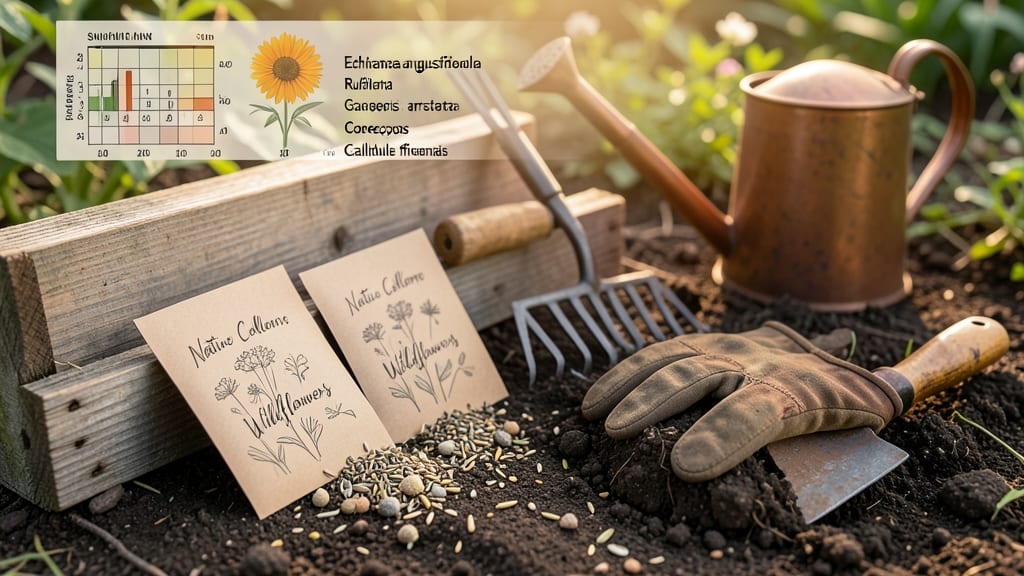
To plant wildflower seeds in Colorado at the best time means choosing between early spring and late summer, when the soil is just right and the weather cooperates.
Colorado’s diverse elevations create the perfect conditions for wildflowers—but planting at the wrong time can mean sparse blooms or failed growth. Whether you're in the high plains or the mountains, timing matters more than you might think.
In early spring, when the last frost has passed (usually by mid-April in lower elevations), the soil warms up just enough to kickstart growth. Late summer, around August or September, offers another prime window, especially for drought-resistant varieties that thrive in Colorado’s dry climate.
Below, I’ll break down the best months by elevation, soil prep tips, and how to avoid common mistakes that could ruin your wildflower dreams. Ready to transform your landscape into a vibrant tapestry of color?
Best wildflower planting months in Colorado by elevation zone
Colorado’s dramatic elevation changes—from the dry plains to the snow-capped peaks—create wildly different growing conditions for wildflowers. Planting at the wrong time can leave you with sparse blooms or seeds that never sprout. The key is matching your elevation zone with the right frost-free window and native species timing.
In the lowlands (4,000–6,000 ft), like Denver or Fort Collins, mild winters allow early spring planting as soon as the soil thaws. Meanwhile, the high country (8,000+ ft), such as near Leadville or Aspen, demands late summer sowing to avoid winter’s harsh freeze-thaw cycles.
Let’s break down the best months for each zone to ensure your wildflowers thrive.
For the lowlands, early spring planting in March or April lets seeds germinate before summer’s heat arrives. This is ideal for drought-tolerant annuals like blanketflower (Gaillardia) or purple coneflower (Echinacea), which thrive with minimal water once established.
If you prefer fall planting, aim for August–September to give seeds time to root before winter dormancy.
In the foothills, where nights can still dip below freezing into May, delay planting until April or May when soil temperatures consistently stay above 50°F. Native perennials like penstemon (Penstemon spp.), which blooms for months, benefit from this timing.
Fall planting here shifts to July–August to avoid the monsoon rains that can wash seeds away.
The high country presents unique challenges, with its short growing season and unpredictable weather. Here, only fall planting (July–August) works—spring planting risks seeds being buried by snow before germination.
Choose alpine-adapted species like sky pilot (Pilosella aurantiaca) or Indian paintbrush (Castilleja), which handle rocky, thin soils and late-season frosts.
Regardless of elevation, always prepare your soil by removing weeds and lightly raking to create a fine seedbed. Wildflower seeds need light to germinate, so avoid burying them more than 1/4 inch deep.
After sowing, keep the soil moist but not soggy—a gentle misting in the morning is ideal to prevent fungal diseases.
One common mistake is planting too early in cooler zones. If you’re in the foothills or high country, wait until the last frost date has passed and soil is workable. Use a soil thermometer to confirm temps are above 50°F for consistent germination.
For the lowlands, early spring planting is safe, but always check your local CoCoRaHS station for frost predictions.
Pro tip: Mix wildflower seeds with sand for even distribution and avoid clumping. This is especially helpful in windy high-country sites where seeds can blow away. After planting
How to choose wildflower seed mixes for Colorado’s climate zones
Colorado’s dramatic elevation shifts—from arid plains to alpine tundra—mean your wildflower success hinges on selecting the right native seed mixes. Each zone demands different species to thrive: drought-resistant annuals for lowlands, perennial meadow blends for foothills, and hardy mountain varieties for high country.
Let’s break down the best choices and prep work for each elevation band.
For low-elevation gardens (4,000–6,000 ft), focus on annual wildflowers like blanket flower (Gaillardia) and black-eyed Susan (Rudbeckia). These thrive in well-draining soil and full sun, delivering bold color with minimal water.
In contrast, foothill zones (6,000–8,000 ft) benefit from perennial mixes like columbine (Aquilegia) and lupine (Lupinus), which establish deep roots for resilience against spring frost and summer drought.
High-altitude areas (8,000+ ft) require mountain-adapted species such as alpine penstemon (Penstemon davidsonii) and sky pilot (Polemonium viscosum). These hardy plants tolerate short growing seasons and poor, rocky soil.
Always check seed packets for "high-elevation" labels—these varieties are bred to handle cooler temperatures and intense UV exposure.
🌿 Key Steps for Elevation-Specific Wildflower Success
- 1. Test soil pH (aim for 6.0–7.5). 🌱
- 2. Lowlands: Add compost to improve water retention (annual mixes). 💧
- 3. Foothills: Loosen compacted clay soil with gypsum for perennials. ✂️
- 4. High country: Skip soil amendments—native species thrive in rocky, mineral-rich soil. 🪴
- 5. Mulch lightly (straw or pine needles) to retain moisture without smothering seeds. 🌿
Soil preparation varies dramatically by zone. In lowlands, prioritize organic matter to combat drought stress, while foothills need improved drainage to prevent root rot. For mountain gardens, resist the urge to amend—native species evolved in nutrient-poor soils.
Instead, focus on removing debris and leveling rocky patches for even seed distribution.
Timing matters too. Plant annual mixes in late spring (May) for summer blooms, while perennials should go in early fall (September) to establish roots before winter. High-altitude seeds benefit from early summer planting (June) to capitalize on the short frost-free window.
Always check your last frost date—Colorado’s ranges from April in lowlands to July in the mountains.
Pro tip: Mix native grasses like blue grama (Bouteloua gracilis) with wildflowers to create low-maintenance meadows. Grasses stabilize soil, reduce erosion, and provide wildlife habitat. For pollinator-friendly gardens, include milkweed (Asclepias) and bee balm (Monarda)—these are monarch butterfly magnets and thrive across elevations.
With the right seed mix and soil prep, your Colorado garden will burst into color—whether it’s golden prairie blooms or alpine wildflower carpets. Start small, observe what thrives, and adjust future plantings based on your microclimate. Happy gardening! 🌼