
Flowers
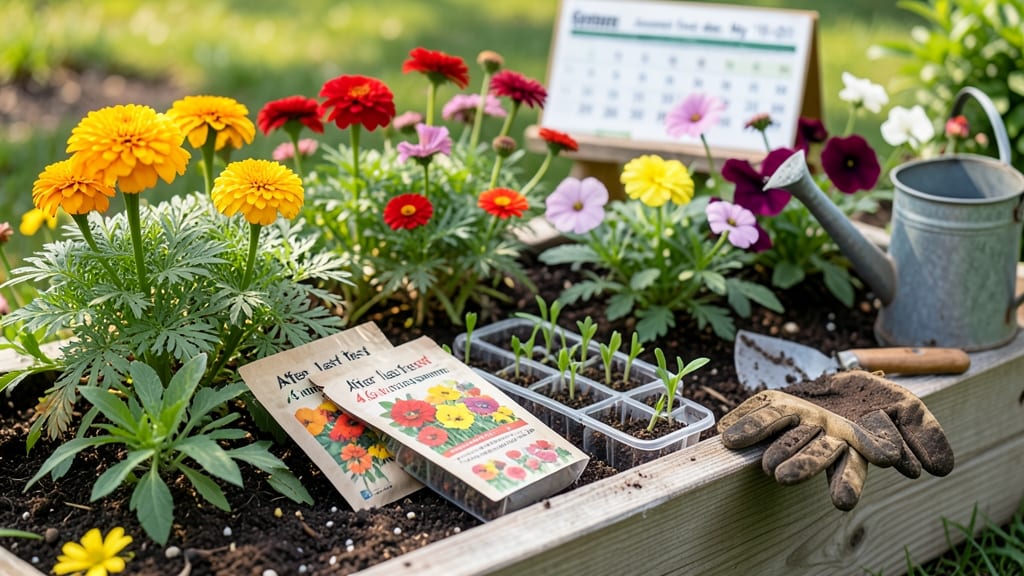
To plant flower seeds in Massachusetts at the right time means catching that narrow window between frost and summer heat — March through May for most varieties, with a few hardy exceptions.
Timing your flower seed planting in Massachusetts can mean the difference between a vibrant summer garden and wasted effort — especially with unpredictable spring weather in USDA Zones 5B and 6A. One week too early, and a late frost will nip tender seedlings in the bud.
One week too late, and your cosmos or zinnias might bolt before they even bloom.
This guide breaks down the exact frost dates by region (Boston, Worcester, and Springfield), the best flowers to start from seed vs. transplants, and how to stretch your growing season with simple tricks like row covers.
Whether you're a first-time gardener or a veteran with a few failed attempts under your belt, you'll find the precise timing and prep work you need to maximize your 🌸 blooms.
You’ll learn which flowers thrive when planted in February (yes, really), how to tell when soil is finally warm enough, and what to do if Mother Nature throws you a curveball.
By the end, you’ll have a clear, month-by-month plan to turn your Massachusetts garden into a nonstop parade of color.
Massachusetts frost dates & ideal flower seed planting windows by month
Massachusetts gardeners know timing is everything—especially when planting flower seeds. The average last frost date falls between April 15 and May 15, but regional microclimates in Boston, Worcester, and Springfield can shift this by weeks.
Understanding these variations helps you avoid frost damage while maximizing your summer bloom season.
In USDA Zones 5B and 6A, early spring can bring unpredictable cold snaps, while late summer often delivers warm spells perfect for fall plantings. I’ll break down the best month-by-month planting windows for annuals, perennials, and cold-hardy flowers, so you can plan with confidence.
Key takeaway: Most warm-season flowers (like zinnias and marigolds) thrive when planted after the last frost, while cool-season varieties (such as pansies) can handle earlier sowing. Let’s dive into the details to help you align your planting schedule with Massachusetts’ 150–180 frost-free days.
In Boston, where coastal breezes delay spring warming, aim to plant warm-season flowers like zinnias no earlier than May 10.
Meanwhile, Worcester’s inland location often sees last frosts by April 25, giving gardeners a 2-week head start on direct sowing. Springfield’s higher elevation can push last frosts to May 5, so I recommend starting seeds indoors there by March 15 for early blooms.
For cold-hardy flowers like pansies and sweet alyssum, you can even sow seeds as early as February under protective covers. These cool-season champions tolerate light frosts and often rebound after cold snaps, making them ideal for extending your spring and fall color.
If you’re planting perennials like lupines or columbine, March is your best bet—these long-lived beauties need time to establish roots before summer heat arrives. I’ve found that direct sowing in March (when soil temperatures hit 40°F) gives them a competitive edge over transplanted starts.
For warm-season annuals, patience pays off. Waiting until after the last frost (typically May 1–15) ensures your zinnias, marigolds, and cosmos won’t bolt or wilt in sudden cold. Pro tip: Use a soil thermometer—these flowers need soil temps above 50°F to germinate reliably.
Don’t overlook fall planting! August and September are perfect for calendulas, stock, and asters, which thrive in cool autumn weather. These late-season bloomers add vibrant color right up until the first frost, often in mid-October.
I’ve had success sowing calendulas in early August—they germinate quickly and bloom by September.
Regardless of your Massachusetts location, always check the National Weather Service for localized frost advisories. A 5-day forecast can save your seedlings from unexpected
Best flowers to plant as seeds vs. transplants in Massachusetts gardens
Deciding whether to start your Massachusetts garden with flower seeds or transplants depends on your timeline and the specific blooms you want. Cosmos and marigolds thrive when sown directly into warm soil, while snapdragons and petunias often perform better as transplants.
Understanding these differences can save you time and frustration during our short growing season.
For direct-sown seeds, aim for soil temperatures above 60°F—typically late May to early June in most of Massachusetts.
This timing avoids frost damage while giving flowers enough time to establish before fall. Transplants, on the other hand, can handle cooler soil and are often safer to plant as early as mid-April after the last frost.
Pros-Cons Box: Seed vs. Transplant Planting in Massachusetts
Seed Planting
- More variety available
- Cost-effective for bulk planting
- Direct adaptation to local soil
- Slower germination (3-14 days)
- Risk of frost damage if planted too early
- Requires consistent moisture
Transplant Planting
- Faster establishment (blooms sooner)
- Higher survival rate in cooler soil
- Easier to space correctly
- Limited variety selection
- Higher upfront cost
- Potential transplant shock if not acclimated
When planting seeds, zinnias and sunflowers are excellent choices—they germinate quickly in warm soil and tolerate our summer heat.
Start them indoors 4-6 weeks before the last frost date (mid-April) or sow directly after Memorial Day. Marigolds, another favorite, can handle cooler soil and are often sown directly in late April to early May.
For transplants, focus on cool-season flowers like pansies and snapdragons, which can be planted as early as March to April under row covers. Petunias and geraniums also thrive as transplants and can be set out after the last frost.
These options give you a head start and longer bloom times, which is crucial for our shorter growing season.
If you're starting seeds indoors, begin 6-8 weeks before the last frost date (around mid-February to early March). Use grow lights to prevent leggy seedlings, and keep soil temperatures consistent at 65-75°F.
For outdoor sowing, wait until soil temperatures reach at least 55°F—typically late May—to avoid bolting or poor germination.
For fall planting, consider cosmos and black-eyed Susans as seeds—they self-seed easily and can be sown directly in late summer (August). If you prefer transplants, opt for mums or aster flowers, which can be planted in early September for a late-season burst of color before frost.