
Light Requirements
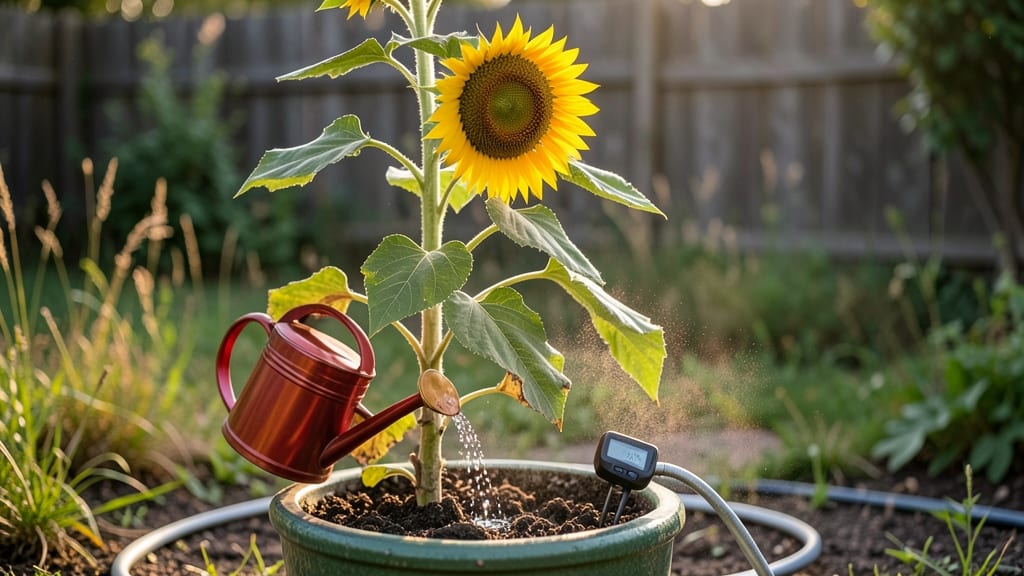
Watering sunflowers correctly to meet their water requirements ensures they grow tall and strong 🌻 — their needs change dramatically from seedling to full bloom, and overwatering or underwatering can ruin even the most promising plants.
Picture this: you’ve just planted your seeds in April, and the soil feels damp after a morning water. A week later, the tiny sprouts peek through, but instead of thriving, they wilt by noon. That’s the classic sign of inconsistent moisture—a problem that’s easier to fix than you think.
Sunflowers are surprisingly adaptable once established, but young plants need consistent moisture to develop deep roots. In USDA Zone 6a, where summers can be dry, deep watering every 3-5 days keeps them thriving without drowning the roots.
The key is timing: water in the morning to let excess moisture evaporate before evening.
In this guide, I’ll break down exactly how much water sunflowers need at each stage—from germination to harvest—and how to spot the warning signs of over- or underwatering.
You’ll learn the best techniques for efficient irrigation, whether you’re using drip systems or a simple watering can, so your sunflowers reach their full, towering potential.


How much water sunflowers need at each growth stage
Sunflowers thrive with the right balance of water, but their needs change dramatically as they grow. From delicate seedlings to towering blooms, understanding these stages will help you avoid common pitfalls like wilting or root rot.
The key is consistent moisture without soggy soil—especially during their fastest growth phases. Let’s break down exactly how much water sunflowers need at each critical stage.
Your sunflower’s water needs start with germination and continue through vegetative growth, bud formation, and flowering. Each phase demands a different approach, influenced by factors like soil type and climate.
For example, sandy soil drains quickly, requiring more frequent watering, while clay soil holds moisture longer. In hot, dry climates, you’ll need to water more often than in cooler, humid regions.
Here’s a quick reference table to guide your watering schedule at each stage:
| Growth Stage | Water Frequency | Amount per Watering | Key Notes |
|---|---|---|---|
| Germination (0-14 days) | Daily (light misting) | 1/4 inch (0.6 cm) | Keep soil consistently moist but not waterlogged. |
| Seedling (2-4 weeks) | Every 2-3 days | 1/2 inch (1.3 cm) | Focus on root development—avoid overhead watering. |
| Vegetative Growth (4-8 weeks) | Every 3-5 days | 1-2 gallons (3.8-7.6 L) | Deep watering to encourage stem strength. |
| Bud Formation (8-10 weeks) | Every 4-6 days | 2-3 gallons (7.6-11.4 L) | Critical for flower development—reduce frequency if rainy. |
| Flowering (10-12 weeks) | Every 5-7 days | 1-2 gallons (3.8-7.6 L) | Maintain moisture but reduce water as blooms mature. |
During the germination stage, your sunflower seeds need a moist environment to sprout successfully. Use a spray bottle or gentle watering can to keep the soil damp but not soggy. Overwatering at this stage can lead to rot or fungal diseases, so aim for consistent moisture without excess.
Once seedlings emerge, reduce to light watering every 2-3 days to prevent damping off.
The seedling stage is where your sunflowers develop their root systems. This is a critical time for deep watering—aim the water directly at the base of the plant to encourage strong roots. Avoid wetting the leaves, which can promote powdery mildew.
If your soil is sandy, you may need to water more frequently, while clay soil can hold moisture longer. Always check the top inch of soil before watering.
As your sunflowers enter vegetative growth (4-8 weeks), they’ll start growing rapidly, reaching heights of 3-6 feet. This phase demands the most water, typically 1-2 gallons per plant every 3-5 days.
Deep watering—soaking the soil to a depth of 6-8 inches—helps strengthen stems and prevents lodging (when plants fall over). Mulching around the base can retain moisture and reduce evaporation.
When buds begin forming (8-10 weeks), your sunflowers need consistent hydration to support their energy-intensive blooming process. Increase the water amount to 2-3 gallons every 4-6 days, but monitor for signs of overwatering, like yellowing leaves or mold.
If your region experiences high humidity, reduce watering slightly to avoid fungal issues. This is also the time to reduce fertilizer, as excess nutrients can lead to weak stems.
Once your sunflowers reach the flowering stage, their water needs decrease slightly. Focus on maintaining moderate moisture—about 1-2 gallons every 5-7 days
Overwatering now can cause buds to split or rot, while underwatering may lead to drooping petals. Pay attention to your local climate; in hot, dry summers, you may need to water more frequently, while cooler weather allows for longer intervals. Climate plays a huge role in sunflower watering. In hot, dry climates, like the southwestern U.S., sunflowers may need daily watering during peak summer months. In contrast, cooler, humid regions, such as the Pacific Northwest, can stretch watering intervals to every 5-7 days. Always adjust based on weather conditions—after a heavy rain, skip watering entirely to avoid root suffocation. Soil type is another critical factor. Sandy soil drains quickly, requiring more frequent watering, while clay soil holds moisture longer. If you’re unsure about your soil type, do a simple test: Grab a handful of damp soil and squeeze it. If it crumbles easily, it’s sandy; if it holds a shape, it’s clay. Adjust your watering schedule accordingly—sandy soil may need watering every 2-3 days, while clay soil can go
Sunflowers may look tough, but they’re actually sensitive to watering mistakes. Too little water causes wilting and stunted growth, while too much leads to root rot and mold. Learning to spot these signs early can save your plants—and your patience! 🌱 First, check the soil moisture level by sticking your finger 1-2 inches deep. If it feels dry, your sunflower needs water. If it’s soggy, you’re overdoing it. Yellowing leaves often signal overwatering, while dry, crispy edges mean underwatering. 💧 Sunflowers need 1-2 gallons of water per week during growth, but deep, infrequent watering is better than shallow daily doses. Morning watering prevents fungal diseases, while evening water encourages rot. Adjust for clay soil (less water) or sandy soil (more water). Overwatered sunflowers often show dark, mushy stems at the base—a clear sign of root rot. You might also see white mold on leaves or soil. If you notice these, stop watering immediately and let the soil dry out. For severe cases, trim affected roots and repot in fresh, well-draining soil. ✂️ Underwatered sunflowers droop dramatically even when soil is dry. Their leaves may curl inward or develop brown, crispy patches. If you see this, water deeply until the soil is moist 6 inches down. Mulch around the base to retain moisture and reduce evaporation. ☀️ For a quick fix, try the "finger test": Press your finger into the soil. If it feels damp but not soggy, you’re golden. If it’s bone-dry, water thoroughly. If it’s sticky and wet, hold off until it dries. Consistency is key—sunflowers hate moisture extremes. 🌿 Pro tip: Use a moisture meter for accuracy, especially in containers where roots can’t spread. And always water at the base of the plant to avoid wetting leaves, which attracts pests and diseases. With the right balance, your sunflowers will thrive and tower! 🌻Signs of overwatering and underwatering in sunflowers (with fixes)
Sunflower Water Requirements