
Watering
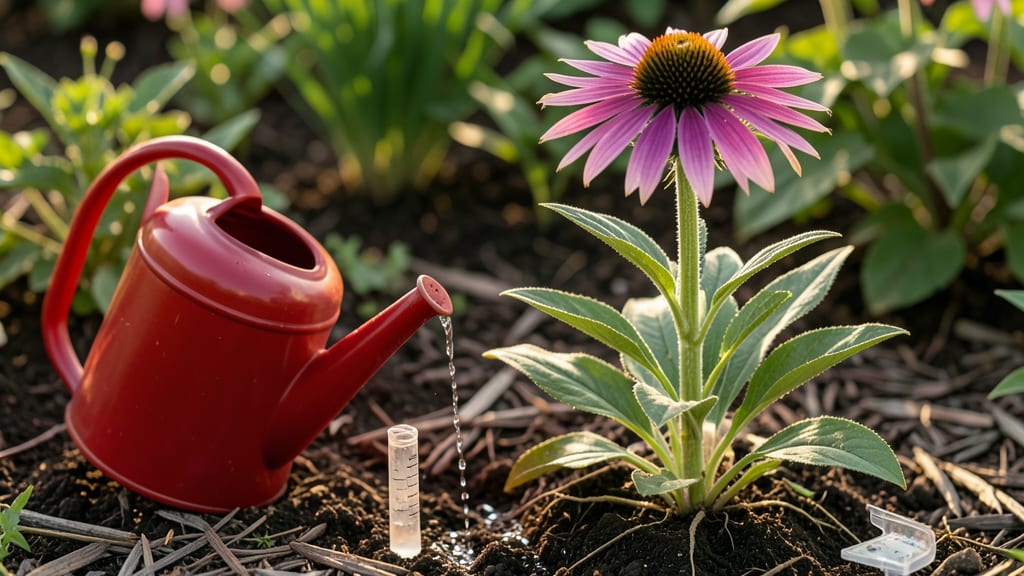
To water coneflowers properly, focus on deep soaks every 7 to 10 days once they’re established—this drought-resistant beauty thrives with less fuss than you’d expect.
Picture this: you’ve just planted your 🌼 coneflowers in spring, and the soil feels like a sponge. That first month? Watering weekly keeps roots happy, but skip the daily sprinkle—it’s the fastest way to drown these hardy perennials.
Here’s the trick: mature coneflowers in Zone 6a can go weeks without rain, but young plants and summer heat demand extra attention. Too much water? Yellow leaves. Too little? Wilting stems. I’ll show you how to strike the perfect balance so your blooms stay vibrant.
In this guide, you’ll get a season-by-season watering schedule, soil tests to avoid guesswork, and fixes for common mistakes—so your coneflowers reward you with bold blooms all season long.
Coneflower watering schedule by season: expert guidelines for healthy growth
Coneflowers (Echinacea) are famously drought-tolerant, but that doesn't mean they thrive on neglect. The key to vibrant blooms lies in a seasonal watering routine that adapts to your plant's growth stage and local climate.
Overwatering can smother roots, while underwatering stresses even the hardiest varieties. Let's break down the perfect schedule to keep your coneflowers happy year-round.
Newly planted coneflowers need the most attention, requiring consistent moisture to establish roots. Mature plants, however, can go weeks without water once established. The secret is monitoring soil moisture and adjusting based on rainfall and temperature. Always water deeply—aim for 1-1.5 inches per week—to encourage strong root development.
| Season | Watering Frequency | Depth | Best Time | Soil Test |
|---|---|---|---|---|
| Spring (March-May) | Weekly (new plants) Bi-weekly (established) |
6-8 inches | Morning | Top 2 inches dry |
| Summer (June-August) | Every 5-7 days (hot/dry) Weekly (moderate) |
8-10 inches | Early morning | Top 3 inches dry |
| Fall (September-Nov) | Bi-weekly (early fall) Monthly (late fall) |
4-6 inches | Morning | Top 1 inch dry |
| Winter (December-Feb) | Monthly (if no snow) | 2-3 inches | Midday (if needed) | Frozen ground |
Spring is all about root establishment. Water newly planted coneflowers weekly for the first 4-6 weeks, then taper to bi-weekly as roots spread. Test soil moisture by sticking your finger 2 inches deep—if it feels dry, it's time to water.
Mulch with 2-3 inches of organic material to retain moisture and regulate soil temperature.
Summer brings peak blooming but also intense heat. Increase watering to every 5-7 days during heatwaves, especially in containers. Look for wilting leaves by midday as your cue to water.
Always water at the base of the plant to avoid fungal issues from wet foliage. Drip irrigation or soaker hoses work best for deep, even watering.
Fall watering should gradually decrease as coneflowers prepare for dormancy. By October, reduce to monthly watering unless your region experiences prolonged dry spells. This helps harden off plants for winter. Remove dead blooms but leave foliage until spring to protect roots from freezing temperatures.
Winter care is minimal—no watering unless you're in a region with consistent freeze-thaw cycles that prevent natural moisture absorption. If snow covers your plants, they're getting enough water. Check for ice encasement and gently brush off snow to prevent damage to stems.
Container-grown coneflowers dry out 3x faster than in-ground plants. Monitor them daily in summer, watering every 3-5 days regardless of the season's schedule. Use pots with drainage holes and water until it runs freely from the bottom. Overcrowded containers need more frequent watering due to limited root space.
Local rainfall can drastically reduce your watering needs. Use a rain gauge to track weekly totals and adjust your schedule accordingly. If you receive 1 inch or more of rain, skip your scheduled watering for that week. Always prioritize deep watering over frequent light watering to build drought resistance.
Watch for yellowing leaves or mushy stems—signs of overwatering. On the flip side, brown leaf edges or drooping foliage indicate thirst. Adjust your schedule based on these visual cues rather than sticking rigidly to the calendar.
With this flexible approach, your coneflowers will reward you with bold blooms for years.
Signs your coneflowers are overwatered or underwatered (and how to fix it)
Your coneflowers might look tough, but even these drought-resistant plants suffer when watering goes wrong. Overwatering or underwatering both cause stress, and the symptoms can look surprisingly similar at first glance.
The key is knowing what to watch for—and how to fix it fast before your plants throw in the towel.
Start by checking the soil moisture and leaf condition. Yellowing leaves or mushy stems scream overwatering, while dry, crispy foliage or wilting in heat signals thirst. Both extremes weaken your plants, making them vulnerable to pests and diseases.
Let’s break down the red flags and solutions so you can rescue your coneflowers before they fade away.
How often to water coneflowers? Once established (after 2 years), they need water every 7-10 days—or less in rainy seasons. New plants? Water deeply every 5-7 days until roots establish. Test soil moisture 2 inches down: if dry, water; if soggy, wait. Morning watering prevents fungal growth from damp leaves.
If your coneflower leaves turn yellow and feel soft or mushy, you’re likely overwatering. This creates the perfect environment for root rot and fungal diseases. The first step is to stop watering immediately and let the soil dry out.
Improve drainage by adding organic matter like compost or perlite to heavy soils. For severe cases, dig up the plant, trim any rotted roots, and repot in fresh, well-draining soil.
On the flip side, underwatered coneflowers show signs like drooping leaves, crispy edges, or stunted growth. Unlike overwatered plants, underwatered ones often recover quickly with a deep watering. Focus on watering the root zone (not the leaves) in the early morning to reduce evaporation.
Mulch around the base with 2-3 inches of straw or wood chips to retain moisture and cool roots.
Don’t ignore pale or spotted leaves—this could signal powdery mildew, a fungal issue often tied to overwatering or poor air circulation. Prune affected foliage immediately and space plants 18-24 inches apart for airflow. A neem oil spray (1 tsp per quart of water) can help prevent future outbreaks.
For wilting despite moist soil, check for pests like aphids or spider mites, which suck plant juices and cause stress.
Create a troubleshooting checklist for your coneflowers: ☑️ Check soil moisture before watering ☑️ Inspect leaves for yellowing, spots, or wilting ☑️ Test drainage by digging 6 inches deep ☑️ Adjust watering based on season (more in summer, less in winter) ☑️ Mulch annually to regulate soil moisture With these fixes, your coneflowers will bounce back with bold blooms and healthy foliage all season long.
Remember, coneflowers thrive on balance. They’re built to handle drought but despise soggy feet. Pay attention to their signals, and you’ll enjoy vibrant purple blooms from early summer to frost. Happy gardening!