
Plants
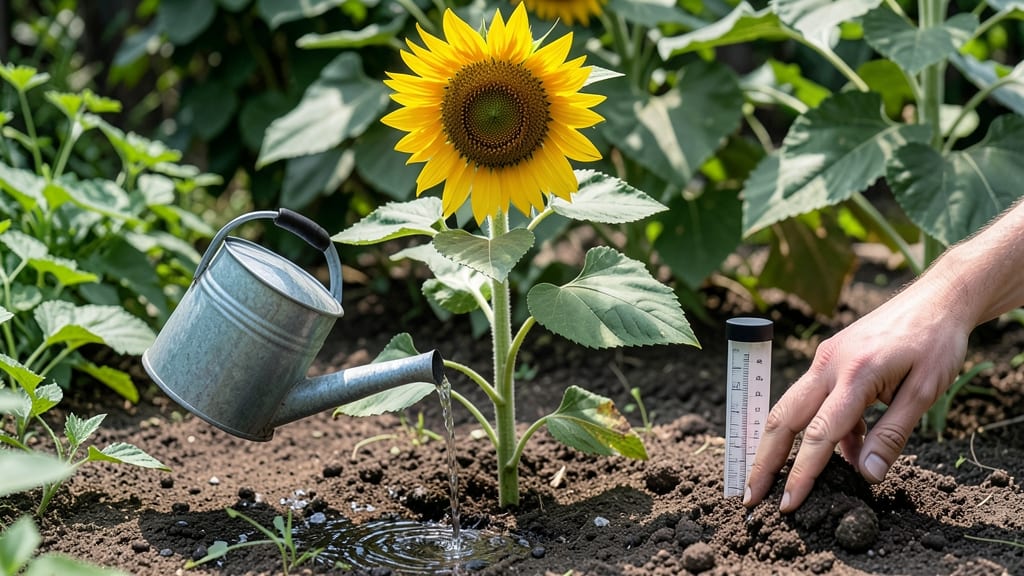
A sunflower plant needs deep, infrequent watering—about 1 to 1.5 gallons per week once established, delivered straight to the roots to encourage strong stems and vibrant blooms.
Picture this: you’ve just planted your 🌻 seeds in Zone 6a, and the soil feels like a sponge, soaking up every drop. But here’s the catch—overwatering is the silent killer of sunflowers, causing root rot and stunted growth. Too little, and they’ll wilt before they reach their towering potential.
Most gardeners assume sunflowers are drought-proof, but the truth is, they need consistency—not just a sprinkle here and there. The key is watering deeply every 3 to 5 days in spring and summer, then tapering off as temperatures drop.
Mulching helps lock in moisture, so you’re not stuck guessing whether your plants are thirsty or drowning.
In this guide, I’ll break down exactly how much water your sunflowers need at each growth stage, how to tell if you’re overdoing it, and the simple tricks to keep them thriving from seed to full bloom.


Sunflower watering requirements by growth stage: from seed to bloom
Sunflowers thrive with consistent moisture during their early stages, but their water needs shift dramatically as they mature. Unlike many drought-tolerant plants, young sunflowers are particularly sensitive to both overwatering and underwatering.
Understanding these stages helps you tailor your watering schedule for optimal growth and vibrant blooms. Let’s break down what your sunflowers need at each critical phase.
At the germination stage, seeds require moisture consistency to sprout successfully. The soil should stay evenly damp but never soggy—overwatering here can cause seed rot.
Once sprouted, young seedlings need frequent light watering to establish roots. As they grow taller, their root systems deepen, allowing them to access water more efficiently.
| Growth Stage | Watering Frequency | Depth | Key Notes |
|---|---|---|---|
| Germination | Daily (light mist) | Top 1 inch | Keep soil damp, avoid puddles |
| Vegetative (0-3 ft) | Every 2-3 days | 6-8 inches | Deep watering encourages root growth |
| Budding (3-6 ft) | Every 4-5 days | 10-12 inches | Reduce frequency, increase depth |
| Flowering (6+ ft) | Weekly (deep soak) | 12+ inches | Prevents stem weakness and bolting |
During the vegetative growth stage (when plants reach 3 feet tall), sunflowers need more frequent watering to support rapid stem and leaf development. Aim for deep watering every 2-3 days, ensuring moisture reaches 6-8 inches deep.
This encourages roots to grow downward, making them more resilient to drought later on. Mulching with straw or wood chips helps retain moisture and regulates soil temperature.
As sunflowers enter the budding stage (typically when they’re 3-6 feet tall), their water needs shift again. At this point, they require less frequent but deeper watering—about every 4-5 days with 10-12 inches of moisture penetration.
Overwatering now can lead to blossom end rot or weakened stems. Pay attention to soil moisture levels by sticking your finger 2 inches into the soil; if it’s dry, it’s time to water.
The flowering stage is when sunflowers become the most drought-tolerant, but they still need consistent deep watering to maintain stem strength and seed development. Water once a week with a deep soak that reaches 12+ inches into the soil.
This prevents the stems from becoming hollow or brittle, which can cause them to snap under their own weight. Avoid wetting the flower heads to reduce fungal risks like powdery mildew.
Your local climate plays a huge role in sunflower watering needs. In hot, dry regions, you may need to water daily during germination and every 2-3 days during vegetative growth. In cooler, humid climates, you can stretch watering intervals to every 5-7 days once established.
Always adjust based on rainfall—skip watering if you’ve had 1 inch of rain in the past week.
Soil type also affects how often you need to water. Sandy soil drains quickly, requiring more frequent watering (every 2 days), while clay soil holds moisture longer, allowing you to water every 5-6 days.
For loamy soil (the ideal type for sunflowers), aim for every 3-4 days during active growth. Always water at the base of the plant in the morning to minimize evaporation and fungal risks.
One common mistake gardeners make is watering sunflowers at night, which can lead to fungal diseases like powdery mildew. Always water early in the morning so leaves have time to dry before evening.
Another tip: use a soaker hose or drip irrigation to deliver water directly to the roots, reducing waste and preventing leaf wetting. This method also ensures even moisture distribution, which is critical for tall sunflowers.
If you notice yellowing leaves or wilting stems, it’s often a sign of underwatering or overwatering. Underwatered sunflowers will have crispy leaf edges and may droop, while overwatered plants develop mushy stems or yellowing between veins.
Adjust your watering schedule based on these visual cues, and always prioritize soil health over strict schedules. Healthy sunflowers are resilient once established!
By tailoring your watering approach to each growth stage and considering your local conditions, you’ll give your sunflowers the best chance to thrive. With the right balance of moisture, your sunflowers will reward you with towering stems and <
Weekly watering schedule for sunflowers: adjusting for climate and soil conditions
Sunflowers thrive with consistent moisture during their early growth stages, but their water needs shift dramatically as they mature. In hot, dry climates, your sunflowers may need water every 2-3 days, while cooler, humid regions might only require weekly watering.
The key is understanding your local conditions and soil type to avoid both drought stress and root rot.
Start by checking your soil drainage. Sandy soils dry out quickly and require more frequent watering, while clay soils hold moisture longer and need less. For most gardeners, a deep watering 2-3 times per week during peak summer months is ideal.
Always water at the base of the plant to encourage strong root development and prevent fungal diseases.
How Much Water Does a Sunflower Plant Need?
Sunflowers need 1-1.5 gallons of water per week during active growth, but this varies by stage. Overwatering is more dangerous than underwatering—soggy soil leads to root rot and weak stems. Always let the top 1-2 inches of soil dry between waterings to maintain healthy roots.
Use a moisture meter or the finger test to check soil moisture. Stick your finger 1-2 inches into the soil—if it feels dry, it's time to water. In container-grown sunflowers, water when the top inch of soil is dry, as pots dry out faster than garden beds.
Mulching with straw or wood chips helps retain moisture and reduces evaporation, cutting your watering needs by up to 30%.
Adjust your schedule based on weather patterns. After a heavy rain, skip watering for a day or two to avoid waterlogged soil. In high-humidity areas, reduce watering slightly to prevent fungal growth.
Conversely, during heatwaves, increase frequency to daily watering in the early morning to prevent wilting. Always water before 10 AM to allow foliage to dry quickly and reduce disease risk.
As sunflowers mature, they become more drought-tolerant but still need consistent moisture for bloom development. During the flowering stage, reduce watering slightly to encourage stronger stems. Overwatering at this point can lead to blossom end rot or weak stems that snap under the weight of large flower heads.
Aim for deep, infrequent watering rather than shallow, frequent sessions.
Monitor your sunflowers for signs of stress. Wilting leaves or yellowing foliage often indicate underwatering, while mushy stems or leaf spots signal overwatering. Adjust your schedule weekly based on these visual cues and your local climate.
With the right balance, your sunflowers will reward you with vibrant blooms and towering stems that reach their full potential.