
Planting
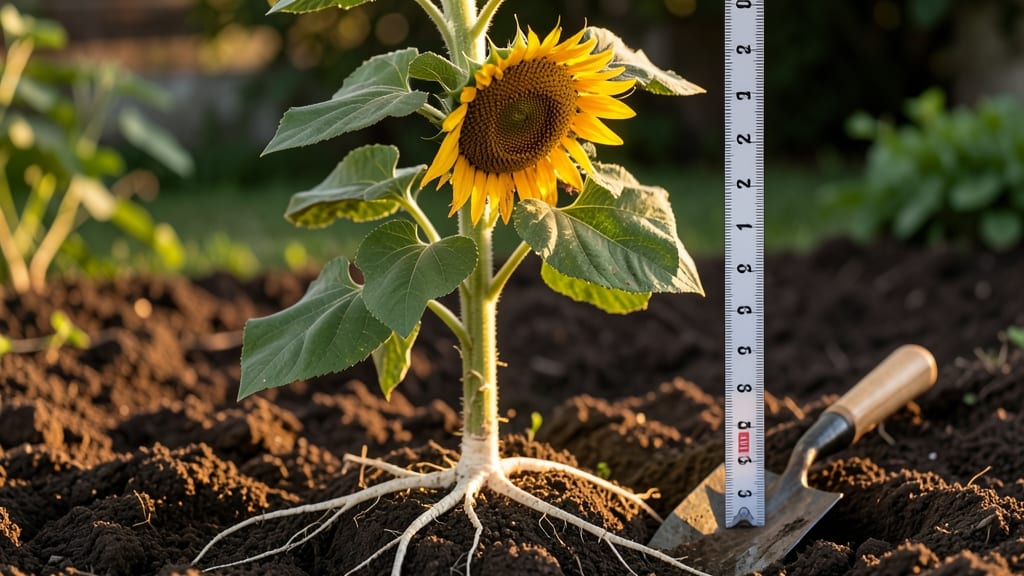
Sunflower roots grow surprisingly deep—often 2 to 3 feet or more—to anchor these towering plants and access moisture in dry soil.
Picture this: a 12-foot sunflower standing firm in a summer breeze, its roots plunging deep like a tree’s. Without that depth, even the sturdiest stems topple over, leaving you with a heartbreaking harvest loss.
The secret to preventing this isn’t just about planting deeper—it’s about understanding how root depth varies by variety and soil type.
Most gardeners overlook root depth until their sunflowers lean dangerously. But knowing whether your 🌻 variety has a shallow taproot or deep lateral spread can mean the difference between a thriving plant and one that struggles to stay upright.
Below, I’ll break down the science, share planting tricks to encourage strong roots, and reveal which varieties need extra support.
You’ll leave here with a clear plan: how to prep your soil, when to stake your plants, and why some sunflowers need more space than you think. Let’s get those roots growing right from day one.
Sunflower root depth explained: how deep do they grow?
Sunflowers develop one of the most fascinating root systems in the garden world, combining a powerful taproot with extensive lateral roots to anchor their towering stems. That primary taproot can plunge 2-3 feet deep, while lateral roots spread outward up to 3 feet wide, creating a stable foundation.
This deep-reaching system helps them access water and nutrients during dry spells while preventing top-heavy plants from toppling in wind.
The depth of sunflower roots varies dramatically between varieties, with dwarf varieties developing shallower roots (12-18 inches) compared to giant cultivars that can reach 36 inches or deeper. Soil type plays a crucial role too—loamy soils allow deeper penetration, while compacted or rocky soils may restrict root growth.
Understanding these variations helps gardeners choose the right variety for their soil conditions and planting goals.
| Variety Type | Taproot Depth | Lateral Spread | Soil Adaptability |
|---|---|---|---|
| Dwarf Varieties (e.g., 'Teddy Bear', 'Moulin Rouge') | 12-18 inches | 12-18 inches | Moderate (prefers loose soil) |
| Standard Varieties (e.g., 'Mammoth', 'Russian Giant') | 24-30 inches | 24-30 inches | High (adapts to most soils) |
| Giant Varieties (e.g., 'Mammoth Russian', 'American Giant') | 30-36+ inches | 30-36+ inches | Very High (needs deep soil) |
| Wild Sunflowers (e.g., Helianthus annuus subspecies) | 18-24 inches | 18-24 inches | High (drought-resistant) |
For giant sunflower varieties, the root depth can exceed 3 feet, which is why they often require deeper soil preparation—at least 18 inches of loose soil is ideal. These deep roots help them access groundwater during droughts, making them more resilient than their shorter counterparts.
However, this also means they're more sensitive to compacted layers in the soil profile, which can stunt growth.
The taproot system dominates early growth, providing stability as the plant shoots upward. By the time sunflowers reach maturity (6-16 feet tall), their lateral roots have expanded significantly, creating a wide nutrient-gathering network.
This dual system explains why sunflowers can thrive in poor-quality soils—they simply grow deeper to find what they need. In contrast, container-grown sunflowers develop shallower roots due to limited space.
Soil type significantly influences root depth. In sandy soils, roots may grow deeper but narrower to access moisture, while in clay soils, they spread more laterally to avoid compaction. Loamy soils strike the perfect balance, allowing roots to penetrate deeply while maintaining structural integrity.
Gardeners in urban areas with shallow topsoil often struggle with sunflower growth unless they amend the soil with compost or organic matter to encourage deeper root penetration.
One surprising fact about sunflower roots is their rapid early growth. Within just 2-3 weeks after germination, the taproot can extend 6-12 inches deep, establishing the foundation for the plant's future height.
This early development is why proper seed depth planting (1 inch deep) is critical—too shallow, and roots struggle to anchor; too deep, and they may fail to emerge. The root-to-shoot ratio remains balanced throughout growth, ensuring the plant doesn't become top-heavy before its roots can support it.
For gardeners growing sunflowers in containers or raised beds, root depth becomes a limiting factor. Most dwarf varieties tolerate 12-inch-deep containers, but standard and giant varieties need at least 18-24 inches of soil depth to thrive.
Without adequate depth, you'll see stunted growth, yellowing leaves, or plants that lean excessively as they search for stability. Adding a support stake can help, but it's always better to match the container size to the sunflower variety's root requirements.
Understanding sunflower root depth also helps with watering strategies. Deep-rooted varieties benefit from deep, infrequent watering (every 3-5 days) to encourage roots to grow downward, while shallow-rooted dwarf varieties prefer frequent, shallow watering.
Overwatering can lead to root rot, especially in compacted soils where excess moisture lingers. Always water at the base of the plant to avoid wetting the foliage, which can promote fungal diseases.
When selecting sunflower varieties for your garden, consider both above-ground height and below-ground depth. A 6-foot-tall sunflower might seem manageable, but if its roots only reach 18 inches deep, it could struggle in windy conditions or dry spells.
Conversely, a 12-foot giant with 3-foot-deep roots will stand tall and sturdy. Matching variety to your soil and climate ensures your sunflowers reach their full potential—both above and below ground.
In my own garden, I've learned that amending soil with compost before planting makes a noticeable difference in sunflower root depth. Last season, my 'Mammoth Russian' sunflowers grew roots nearly 3 feet deep in amended soil compared to just 2 feet in unamended garden beds.
The difference in plant stability and drought resistance was remarkable. This simple
How sunflower root depth affects plant stability and growth
Sunflowers rely on their roots to anchor them against wind and pull up water from deep soil layers. The deeper the roots, the more stable your plants will be—especially important when growing tall varieties that can reach 12 feet or more.
Shallow roots struggle in loose or sandy soil, while deep roots thrive in loamy or clay-rich conditions where they can spread extensively.
Root depth also determines how efficiently sunflowers access nutrients and moisture. Plants with shallow root systems (common in dwarf varieties) need frequent watering, while deep-rooted giants can withstand drought once established. This difference directly impacts your watering schedule and soil preparation strategies.
⚠️ WARNING: Planting Too Deep or Too Shallow ⚠️
Consider the wind exposure in your garden. Tall sunflowers with shallow roots (like 'Teddy Bear' dwarf varieties) often topple in breezy areas, while deep-rooted types like 'Russian Giant' stay upright even in strong winds.
If you live in a windy region, choose varieties with proven deep root systems or use stakes for support.
Nutrient competition becomes critical when planting sunflowers near other deep-rooted plants like corn or tomatoes. Their extensive root systems can compete for water and nutrients, stunting sunflower growth. Always maintain 18-24 inches of spacing between sunflowers and other deep-rooted crops to avoid this issue.
For container gardening, shallow root varieties like 'Moulin Rouge' thrive in 5-gallon pots with 12-inch deep soil, while giant varieties require 18-inch deep containers to prevent root binding. Use well-draining potting mix with added compost for nutrients to support deep root growth.
Adjust your soil preparation based on your sunflower variety. For dwarf types, focus on loose topsoil, while giant varieties need deeply amended soil with organic matter. Test your soil's drainage and pH—ideal conditions are 6.0-7.5 pH and well-draining to prevent root rot in waterlogged areas.