
Planting
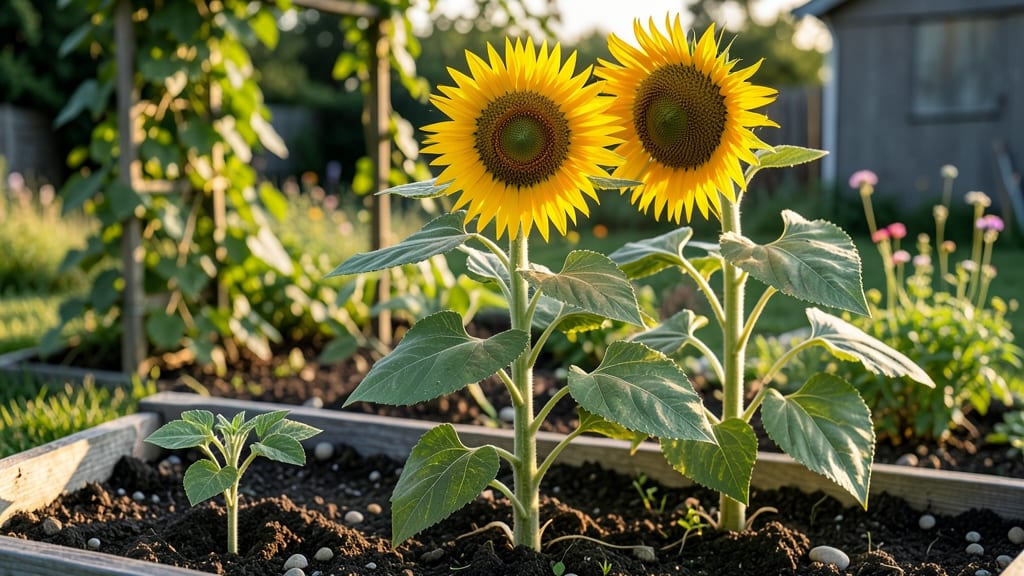
Tracking the sunflower growth time from seed to showstopping bloom takes about 80-120 days, depending on variety and conditions—but those weeks fly by when you know what to expect.
Picture this: a tiny seedling pushes through the soil, then stretches toward the sun like a little green rocket. Within weeks, it’s a 6-foot giant, and by summer, you’re harvesting seeds or cutting blooms for vases.
That’s the magic of sunflower growth—but only if you plant at the right moment and give them what they need.
Too little sunlight or water slows them down, while rich soil and consistent care can shave weeks off their timeline. The key is understanding each growth stage, from sprouting to that first golden bloom, so you can troubleshoot delays before they happen.
In this guide, I’ll break down the exact timeline for each phase, plus the simple tweaks that make your sunflowers grow faster—so you can enjoy those towering stems sooner than you think.


Sunflower growth time: key stages from seed to full bloom
Sunflowers are one of the fastest-growing plants in your garden, transforming from tiny seeds into towering blooms in just 80-120 days. Understanding each growth stage helps you track progress and troubleshoot delays. From the first sprouts to fully open sunflower blooms, here’s what to expect at every step.
Your sunflower’s journey begins with germination, typically occurring within 7-14 days after planting. This stage is all about breaking through the soil, with tiny green shoots pushing upward. Watch for the first seed leaves (cotyledons) to emerge, signaling successful germination.
Once sprouted, your sunflower enters the vegetative growth stage, where it focuses on building a strong stem and leaves. This phase lasts 3-6 weeks, with plants reaching 3-6 feet tall by the time buds form. Look for the characteristic lance-shaped leaves that grow larger as the plant matures.
Here’s a quick reference for tracking your sunflower’s progress through each critical stage:
The budding stage marks the transition from leafy growth to flower development, occurring around 6-10 weeks after planting. You’ll notice a tight green bud forming at the top of the stem, which will soon open into the iconic sunflower bloom.
This is when your plant shifts energy from foliage to reproduction.
Once buds open, your sunflower enters the flowering phase, lasting 10-14 days. The vibrant petals unfurl fully, revealing the brown center where bees and birds flock for nectar.
This stage is your reward for patience—watch as the flower head reaches its maximum size, often 4-12 inches wide depending on the variety.
After flowering, the final stage is seed maturity, which takes 2-4 weeks. The petals will wilt and fall away, leaving the seed head to dry on the stem. When the back of the flower turns yellow and seeds rattle inside, it’s time to harvest.
This stage is also when you can collect seeds for future planting or enjoy sunflower seed snacks.
Pro tip: Use a plant marker to track your sunflower’s growth stages. Note the date when each milestone occurs—this helps you predict future blooms and troubleshoot if growth slows unexpectedly. With the right care, your sunflower will complete its lifecycle in just 3-4 months, from seed to seed!
🌻
Factors that speed up or slow down sunflower growth time
Sunflowers are fast growers, but their growth speed can vary dramatically based on environmental conditions and care. While most varieties reach maturity in 80-120 days, some may bloom in as little as 50 days under ideal conditions, while others take 140+ days in less-than-optimal settings.
Understanding these key factors will help you optimize your sunflower's timeline for stunning, towering blooms.
The most critical factor is sunlight exposure. Sunflowers thrive on 6-8+ hours of direct sunlight daily. In full sun, they grow 20-30% faster compared to partial shade, where growth slows significantly.
Even a few hours less sunlight can extend the flowering phase by 2-3 weeks, delaying your harvest.
Soil quality plays a surprisingly large role in sunflower growth speed. Well-draining, nutrient-rich soil with a pH of 6.0-7.5 allows roots to establish quickly, while poor or compacted soil can slow growth by up to 30%.
Before planting, mix in 2-3 inches of compost to provide essential nutrients like nitrogen and phosphorus, which fuel rapid stem elongation.
Watering habits directly impact how quickly your sunflowers mature. Deep watering every 3-5 days ensures consistent moisture without waterlogging the soil. Overwatering can lead to root rot, while underwatering causes stunted growth and smaller blooms.
Mulching around the base of your plants helps retain moisture and keeps roots cool, which is especially important during hot summer months.
Temperature also influences growth speed dramatically. Sunflowers grow fastest in temperatures between 70-80°F (21-27°C). If you plant too early when soil temperatures are below 50°F (10°C), germination can slow by 50% or more.
To accelerate growth, use row covers or wait until the soil has warmed naturally. In cooler climates, consider starting seeds indoors 4-6 weeks before the last frost.
Finally, the variety you choose makes a huge difference in growth time. Dwarf sunflowers like 'Teddy Bear' mature in as little as 50-70 days, while standard varieties like 'Russian Giant' take 90-120 days.
If you're aiming for early blooms, select a fast-maturing variety like 'Moulin Rouge' (60 days) or 'Autumn Beauty' (75 days) for vibrant, long-lasting flowers.