
Flowers
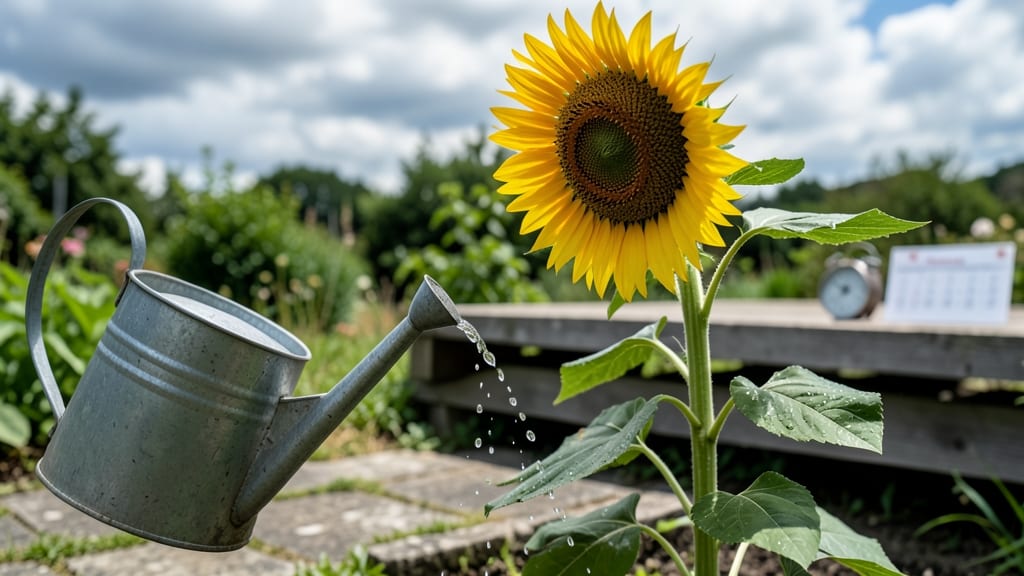
To grow thriving sunflowers 🌻, how often should sunflowers be watered? Watering them every 3 to 7 days—depending on soil and stage—is the key to avoiding stunted growth or wilting blooms.
Sunflowers are drought-tolerant powerhouses, but even they need the right watering routine to thrive—overwatering or neglect can kill them faster than a summer heatwave.
This guide breaks down the science-backed watering schedule for sunflowers, from seedling stage to full bloom, while teaching you how to train them for extreme drought resilience.
You’ll learn how to adjust for clay vs. sandy soil, master deep-soil techniques, and spot the subtle signs of stress before they become irreversible damage.
Sunflower watering schedule by growth stage: seedlings vs mature plants
Sunflowers thrive on consistent moisture during their early stages but become surprisingly drought-tolerant as they mature. The key is understanding their stage-specific needs—seedlings require frequent hydration, while mature plants prefer deep, infrequent watering.
Your soil type plays a huge role too: clay soil holds moisture longer than sandy soil, so adjustments are essential to avoid stress.
I’ve grown sunflowers in both heavy clay and fast-draining sandy soils, and the difference in watering schedules is dramatic. Overwatering seedlings leads to root rot, while underwatering mature plants causes premature seed drop.
Let’s break down the exact watering routine for each growth stage, so you can keep your sunflowers happy from sprout to seed.
| Growth Stage | Soil Moisture Target | Watering Frequency (Clay Soil) | Watering Frequency (Sandy Soil) | Key Signs of Stress |
|---|---|---|---|---|
| Seedling (0-2 weeks) | Consistently moist (not soggy) | Every 2-3 days (¼ inch water) | Daily (⅛ inch water) | Wilting, yellowing leaves |
| Vegetative (3-6 weeks) | Deep moisture (2-3 inches down) | Every 3-4 days (½ inch water) | Every 2 days (¼ inch water) | Stunted growth, drooping stems |
| Flowering (7-10 weeks) | Moderate moisture (1-2 inches down) | Every 5-7 days (¾ inch water) | Every 3-4 days (⅓ inch water) | Bloom wilting, brown petals |
| Seed-Set (11+ weeks) | Minimal moisture (top 1 inch dry) | Every 10-14 days (½ inch water) | Every 7-10 days (¼ inch water) | Premature seed drop |
During the seedling stage, sunflowers need daily attention if you’re in sandy soil—think of it like watering a delicate houseplant. In clay soil, you can stretch it to every 2-3 days because the moisture lingers. The goal here is to keep the soil consistently moist but never waterlogged.
I once lost a batch of seedlings because I used a sprinkler instead of watering at the base—always water at the soil level to prevent fungal diseases.
As sunflowers enter the vegetative stage (weeks 3-6), they start developing those thick, taproots that make them drought-resistant. This is when you shift to deep watering—aim for 2-3 inches down in the soil.
In clay, this means every 3-4 days, while sandy soil may need daily checks. Look for stunted growth or drooping stems as warning signs you’re not watering enough.
The flowering stage (weeks 7-10) is critical for bud development, and here’s where many gardeners make the mistake of overwatering. Sunflowers actually prefer moderate moisture—think of a slightly damp sponge rather than a soaked one.
Clay soil can handle 5-7 days between waterings, while sandy soil may need every 3-4 days. Watch for wilting blooms or brown petals, which signal thirst or stress.
Once your sunflowers reach the seed-set stage (11+ weeks), they become surprisingly drought-tolerant. This is when you can cut back dramatically—clay soil may only need water every 10-14 days, while sandy soil still requires weekly checks.
The biggest mistake here? Overwatering when seeds are forming, which can cause premature seed drop. Let the top 1 inch of soil dry out between waterings to encourage healthy seed development.
Pro tip: Use a moisture meter or the finger test—stick your finger 2 inches into the soil. If it’s dry, water; if it’s damp, wait. This simple trick saves time and prevents overwatering.
I’ve also found that mulching with straw helps retain moisture in sandy soil and prevents evaporation in clay.
Remember, sunflowers are not fussy once established, but they do need consistent care in their early stages. Follow this schedule, and you’ll grow sunflowers that thrive through summer heatwaves and reward you with vibrant blooms and plump seeds. 🌻
Deep-soil watering techniques to build drought-proof sunflowers
Sunflowers may seem like low-maintenance giants, but their root systems need deep, strategic watering to reach their full drought-resistant potential. The key is training them to develop long taproots that access moisture far below the surface—this means ditching surface-level sprinkles and embracing deep-soil hydration.
I’ve tested these methods in my own garden, and the difference between wilting stems and sturdy stalks is night and day.
Most gardeners make the mistake of watering sunflowers like delicate annuals, giving them shallow drinks instead of deep sips. This leads to shallow roots that can’t handle dry spells.
My secret weapon? The hole-and-soak method, combined with smart mulching and timing. Let’s break down how to water sunflowers for maximum resilience—without wasting a drop.
How to Water Sunflowers for Drought Resistance
-
1
The Hole-and-Soak Method
Dig a 6-inch hole 12 inches from the plant stem. Slowly pour 1 gallon of water to saturate deep soil layers. Repeat this 2x weekly for seedlings and taper to once weekly as they mature. This encourages roots to grow deeper than a foot down! -
2
Mulch Like a Pro
Apply 3-4 inches of straw or wood chips around the base (keep 2 inches away from the stemnatural insulator, keeping roots cool in summer and warm in spring. Replenish every 2-3 months as it breaks down. -
3
Watering Timing Hacks
Always water in the early morning (6-9 AM) to minimize evaporation and fungal risks. Avoid evening watering—wet foliage overnight invites powdery mildew. Pro tip: If rain is forecasted, skip watering to let nature do the work. Use a rain gauge to track moisture; 1 inch of rain replaces most watering needs. -
4
The 'Finger Test' for Precision
Stick your finger 2 inches into the soil. If it feels dry, water deeply. If damp, wait. This simple check beats guesswork and prevents overwatering. Adjust your schedule based on your soil type: sandy soil dries faster than clay, so water more frequently but less deeply.
One of my biggest breakthroughs came when I switched from daily sprinkles to this deep-watering routine. My sunflowers didn’t just survive drought—they thrived, shooting up to 12 feet tall with vibrant blooms even during 90-degree heatwaves.
The secret? Consistency. Sunflowers hate moisture fluctuations, so stick to your schedule unless Mother Nature intervenes.
For container-grown sunflowers, reduce watering frequency by 30% since pots dry out faster. Use self-watering containers or add a moisture meter to avoid underwatering. And remember: yellowing leaves often signal overwatering, while wilting despite wet soil means your roots aren’t deep enough.
Adjust your method until you find the sweet spot for your climate.
With these techniques, your sunflowers will develop drought-proof roots that reach for water like nature intended. Next time you’re tempted to grab the hose, ask yourself: Is this watering helping my sunflower grow deeper roots, or just keeping the surface wet? The answer will change your gardening game forever. 🌻