
Flowers
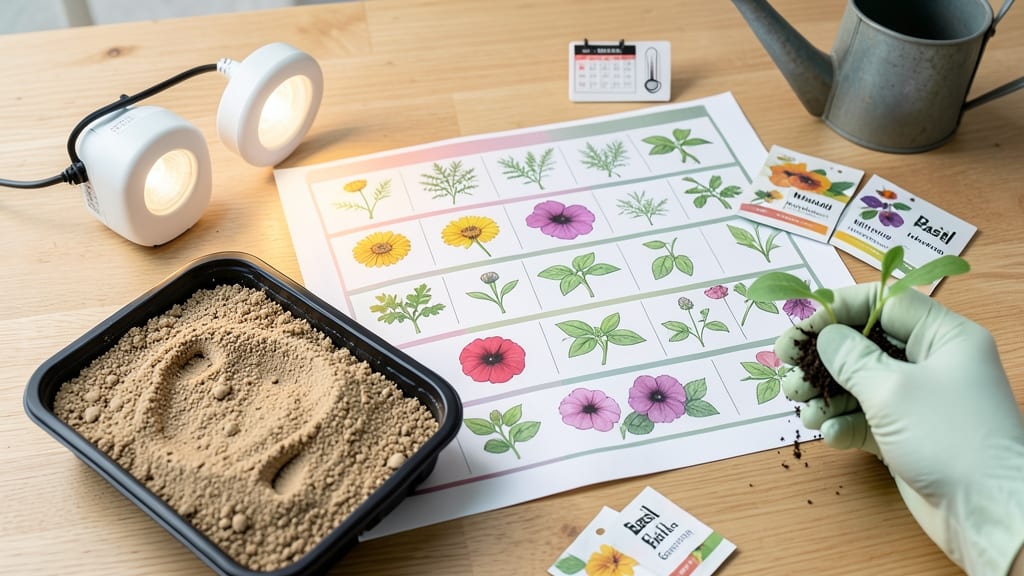
USDA zone flower seed starting chart: exact weeks before last frost
Getting your flower seeds indoors at the right time ensures strong, healthy plants ready to bloom when the weather warms up. The key? Knowing your USDA zone and counting back from your average last frost date.
Cold-hardy varieties like pansies and snapdragons can handle earlier starts, while tender petunias and geraniums need precise timing to avoid bolting or leggy growth.
Most flower seeds should start indoors 4-12 weeks before your last frost date, depending on the variety. For example, slow-growing perennials like foxgloves need a longer head start (10-12 weeks), while fast-growing annuals like marigolds only require 4-6 weeks.
Below, I’ve broken down the ideal start times for popular flowers across USDA Zones 3-11, so you can tailor your schedule to your climate.
🌱
For example, if you’re in Zone 5 with an average last frost date of April 20, you’d start petunias indoors around March 1 (8 weeks before frost) and transplant them outdoors by May 15.
Meanwhile, foxgloves in the same zone would need to start indoors by January 20 (12 weeks before frost) to establish strong roots before transplanting in May.
In warmer zones like Zone 10, where frost is rare, you can start tender annuals like geraniums as early as September for fall blooms or January for spring planting.
Always check your local last frost date—even within the same zone, microclimates can shift start times by 1-2 weeks.
Pro tip: Use a seed-starting heat mat to maintain 65-75°F soil temperatures for faster germination, especially for slow starters like delphiniums. If your windowsill gets too hot (above 80°F), seedlings may become leggy or bolt prematurely.
A simple fix? Move trays to a cooler spot or use grow lights for consistent light.
🌿
Don’t forget to harden off seedlings before transplanting—gradually expose them to outdoor conditions over 7-10 days to prevent shock. Start with 2-3 hours of shade on day one, then increase exposure and sunlight over the week.
This toughens up seedlings so they’re ready to thrive in your garden once the frost has passed for good.
Finally, keep a gardening journal to track your start dates and outcomes. Note which flowers bloomed earliest or struggled with legginess, and
How to adjust your flower seed schedule for early vs. late bloomers
Not all flower seeds follow the same timeline—some like marigolds and zinnias shoot up in weeks, while others like foxgloves or delphiniums take months to mature. I’ve learned the hard way that planting everything at once leads to either overcrowded seedlings or missed blooms.
The key is matching your seed-starting schedule to each plant’s growth speed and your last frost date.
For fast growers like cosmos or sunflowers, I start seeds just 4-6 weeks before transplanting outdoors. But for slow starters like peony or lupine, I begin indoors 10-12 weeks early—sometimes even in winter—to give roots time to establish.
This adjustment prevents the dreaded transplant shock that kills fragile seedlings.
Early Bloomers (Fast-Growing)
- ✅ Pros: Quick blooms, ideal for succession planting
- ✅ Pros: Less risk of bolting if started late
- ✅ Pros: Perfect for cutting gardens (e.g., zinnias, marigolds)
Cons:
- ❌ Cons: Overcrowding if not thinned properly
- ❌ Cons: Short bloom time (e.g., cosmos may fade by summer’s end)
Late Bloomers (Slow Starters)
- ✅ Pros: Longer bloom season (e.g., foxgloves bloom all summer)
- ✅ Pros: More forgiving with transplant shock
- ✅ Pros: Ideal for perennial flowers (e.g., delphiniums)
Cons:
- ❌ Cons: Requires early indoor start (risk of leggy seedlings)
- ❌ Cons: Bolting risk if soil temps rise too fast
💡 Pro Tip: Use succession planting—sow fast growers every 2-3 weeks to extend blooms!
To extend your blooming season, I use succession planting for fast growers. For example, I’ll start a batch of zinnias every 3 weeks in early spring, ensuring continuous color until frost. For slow starters, I harden off seedlings gradually—starting 1 week before transplanting—to prevent shock.
A simple trick is to place them outdoors in morning sun only, then bring them back inside.
Another game-changer? Adjusting soil temps. Fast growers like basil (yes, it’s a flower magnet!) thrive in 70-75°F soil, while slow starters like foxgloves prefer 60-65°F.
I use a seedling heat mat for delicate varieties to speed up germination without risking legginess. This small tweak can shave 1-2 weeks off the growing timeline.
If you’re in a warmer zone (8-11), you can push your schedule later—even start some seeds in February for fall blooms. But in cooler zones (3-6), I begin 6-8 weeks earlier to account for shorter growing seasons.
Always check your last frost date and adjust by 2 weeks if you’re unsure.
Remember: Transplant shock is real, but not inevitable. Acclimate seedlings for 7-10 days before moving them outdoors, and water deeply the day before transplanting. This simple step boosts survival rates from 60% to nearly 90% in my garden.
With these adjustments, you’ll have longer bloom seasons and fewer sad, wilted seedlings.