
Flowers
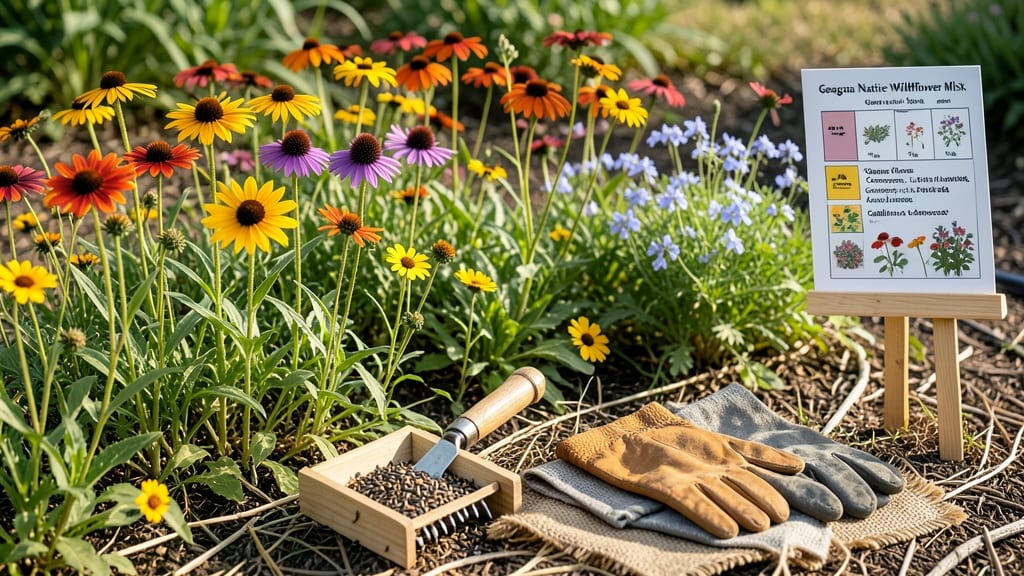
Planting wildflowers in Georgia at the right time turns your yard into a year-round pollinator paradise—and missing the window means waiting another year for those bold blooms.
Georgia’s frost-free dates vary wildly from county to county, so timing is everything. In South Georgia, you can start as early as mid-February, while North Georgia gardeners wait until mid-April to avoid surprise frosts.
Get it wrong, and you’ll watch your seeds sprout too late—or worse, rot in damp soil.
This guide breaks down the perfect planting windows for your region, plus soil prep tricks to give your wildflowers the best start. Whether you’re seeding a meadow or a small patch, these steps will have 🌼 blooms popping up faster than you can say “butterfly”.
Ready to skip the guesswork? I’ll walk you through county-specific frost dates, seed mix tips for Georgia’s climate, and the 3-step care routine that keeps wildflowers thriving year after year.
Georgia’s frost-free dates by county: the best time to plant wildflowers
Georgia’s wildflower season hinges on frost-free dates, which shift dramatically from South Georgia’s coastal warmth to North Georgia’s cooler mountain air. Planting too early risks frost damage, while waiting too long may miss ideal germination windows.
For spring-blooming varieties, aim for 4-6 weeks before last frost, and for fall plantings, seed 6-8 weeks before first frost. Let’s break down your county’s unique timeline.
Georgia spans USDA Hardiness Zones 7a-9a, but microclimates create 3 distinct planting zones. South Georgia (e.g., Camden, Thomasville) enjoys earlier frost-free dates (mid-February to early March), while North Georgia (e.g., Dahlonega, Blairsville) waits until mid-April.
Central Georgia (e.g., Macon, Athens) falls in between, with late March to early April windows. Use this guide to align your planting with your county’s local frost data.
Pro Tip: Check your county’s 30-year average frost dates via the Georgia Climate Project or Almanac’s Frost/Freeze Calculator. For example, Appling County (Zone 8a) averages a February 20 frost-free date, while Fannin County (Zone 7a) waits until April 15. Planting outside these windows risks seedling loss or stunted growth.
| Region | USDA Zone | Avg. Last Frost | Spring Planting Window | Fall Planting Window |
|---|---|---|---|---|
| South Georgia (e.g., Camden, Thomasville) | 8a-9a | Feb 15 - Mar 1 | Feb 1 - Mar 15 | Sep 1 - Oct 15 |
| Central Georgia (e.g., Macon, Athens) | 7b-8a | Mar 15 - Apr 1 | Mar 1 - Apr 10 | Aug 15 - Sep 30 |
| North Georgia (e.g., Dahlonega, Blairsville) | 7a-7b | Apr 1 - Apr 15 | Mar 20 - Apr 30 | Aug 1 - Sep 15 |
| Coastal Georgia (e.g., Savannah, Brunswick) | 8b-9a | Jan 30 - Feb 10 | Jan 15 - Feb 28 | Sep 15 - Nov 1 |
For spring plantings, focus on cool-season wildflowers like lupine, phlox, and coreopsis. These thrive when soil temps reach 50-60°F. In North Georgia, wait until mid-April to avoid late frosts, while South Georgia can start as early as February 1.
Use a seed starter mix and cover seeds lightly with 1/8-inch soil to retain moisture.
Fall plantings offer a second bloom season with warm-season varieties like black-eyed Susan, coneflower, and salvia. Seed these 6-8 weeks before first frost, typically August-September in most counties. Coastal Georgia can extend fall plantings into early November thanks to milder winters.
Mulch lightly after planting to protect seeds and retain soil warmth.
If you’re in a transition zone (e.g., Middle Georgia), consider staggered plantings. Sow half your seeds in early spring and the rest in late summer to ensure continuous blooms.
For example, Bibb County (Zone 7b) might plant 30% in March and 70% in August for a year-round display.
Always check local weather forecasts before planting. A late frost in March can wipe out tender seedlings, while unseasonable heat in fall may dry out seeds before germination. Use frost cloth for early spring plantings in North Georgia to extend the growing season by 2-3 weeks.
For container gardening, adjust timelines by 1-2 weeks earlier since pots warm up faster than soil. Place containers in south-facing spots and use black plastic mulch to raise soil temps by 5-10°F. This trick works especially well in Zone 7a counties like Floyd or Gordon.
Remember: Native wildflowers adapt best to local conditions. Pair your planting schedule with
How to choose wildflower seed mixes for Georgia’s climate and soil
Georgia’s diverse climate and soil types—from red clay in the Piedmont to sandy loam in coastal areas—demand careful wildflower selection. Native varieties like Black-Eyed Susan and Coreopsis thrive here, while annuals like Cosmos add quick color.
The key? Matching seeds to your USDA Zone (7a-9a) and soil conditions for drought-resistant blooms that last.
Start by testing your soil pH—most Georgia wildflowers prefer slightly acidic to neutral (6.0-7.0). Amend clay soil with compost or sand to improve drainage, while sandy soil benefits from organic matter to retain moisture. Drought-tolerant mixes (e.g., Eastern Gamma Grass or Partridge Pea) are ideal for low-maintenance meadows that survive Georgia’s hot summers.
Native wildflowers support local pollinators like monarch butterflies and bees, while annuals offer seasonal bursts of color. For long-lasting blooms, mix perennials (3-5 years) with annuals (1 season). Example combos: Purple Coneflower + Blanket Flower for sunny slopes or Virginia Bluebells + Bloodroot for woodland edges.
✅ Native Wildflower Mixes
- Pros: Supports pollinators, drought-resistant, low-maintenance
- Cons: Slower germination, limited color variety
❌ Annual Wildflower Mixes
- Pros: Fast blooms, vibrant colors, easy to replace
- Cons: Requires reseeding, less eco-friendly
Prep your planting site by removing weeds and debris, then lightly rake or scratch the soil to create seed-to-soil contact.
For large areas, use a broadcast spreader for even distribution. Lightly cover seeds with 1/4 inch of soil (or none for tiny seeds like Phlox) to prevent bird scatter.
Companion planting boosts bloom longevity. Pair tall wildflowers like Joe Pye Weed (4-7 ft) with low growers such as Creeping Phlox (3-6 inches) to create layered meadows. Avoid competitive grasses like Bermuda, which can outcompete delicate wildflowers. Instead, add clover or vetch for nitrogen fixation.
After planting, water deeply once weekly for the first 4-6 weeks to encourage root establishment. Mulch lightly with straw or pine needles to retain moisture and suppress weeds.
Once established, drought-tolerant mixes need minimal watering—just 1 inch every 2 weeks during dry spells. Deadhead spent blooms to prolong seasonal color.