
Flowers
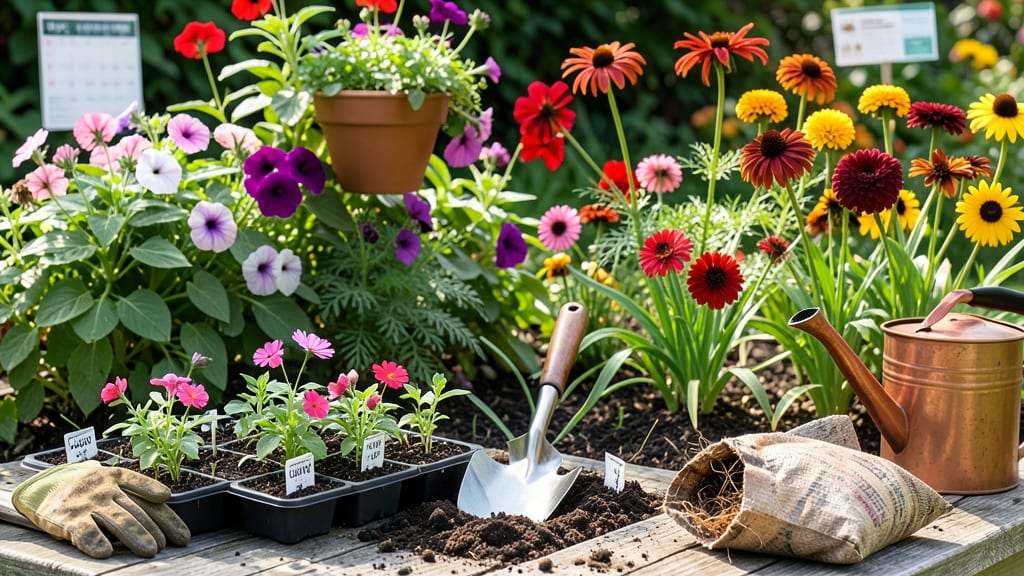
To plant flowers in Georgia at the perfect time means timing it with your region’s frost dates — whether you’re in the cool mountains or the humid Coastal Plain.
Georgia’s diverse climate—from the cool Blue Ridge Mountains to the humid Coastal Plain—means your flower planting timeline should match your region to avoid frost damage and maximize blooms.
Get it wrong, and you might end up with wilted seedlings or flowers that never open. But nail it, and you’ll enjoy vibrant blooms from spring through fall, with the right varieties for each season.
In this guide, I’ll break down the best planting windows by region, highlight the top flowers for Georgia’s climate, and share tips to protect your garden from unexpected late frosts or heat waves.
Georgia’s frost-free dates by region: best planting windows for annuals & perennials
Georgia’s climate varies dramatically from the cool mountain regions to the humid coastal plains, creating distinct planting windows for your garden. Knowing your frost-free dates helps you avoid late spring freezes and extend fall blooms.
Whether you’re planting azaleas in the North Georgia or petunias in Savannah, timing is everything for vibrant flowers.
Each region’s USDA hardiness zone and average last frost date determine when to plant. For example, North Georgia’s Zone 7 has a later frost risk than Zone 8 in Coastal Georgia.
I’ll break down the best months for spring annuals and fall perennials in five key regions, so you can plan with confidence.
| Region | USDA Zone | Avg Last Frost | Spring Planting Window | Fall Planting Window |
|---|---|---|---|---|
| North Georgia (e.g., Blue Ridge) | Zone 7a-7b | March 15-April 1 | April 15-May 15 | September 1-October 15 |
| Piedmont (e.g., Athens, Macon) | Zone 7b-8a | March 1-April 1 | April 1-May 10 | August 15-October 1 |
| Metro Atlanta | Zone 7b-8a | March 15-April 1 | April 10-May 10 | August 15-September 30 |
| South Georgia (e.g., Columbus, Valdosta) | Zone 8a-8b | February 15-March 15 | March 1-April 15 | July 15-October 15 |
| Coastal Georgia (e.g., Savannah, Brunswick) | Zone 8b-9a | January 15-February 15 | February 1-April 1 | June 15-November 1 |
In North Georgia, where Zone 7a-7b dominates, wait until mid-April to plant petunias and marigolds, as late frosts can still occur. The Piedmont region offers a slightly earlier window, with Zone 7b-8a allowing you to start zinnias and cosmos by early April.
For Metro Atlanta, aim for late March to early April to align with soil warming.
For fall planting, Coastal Georgia gardeners have the longest season, with Zone 8b-9a allowing pansies and calendulas to thrive until November. Meanwhile, North Georgia’s shorter fall window means mums and astilbes should be in the ground by mid-September to avoid early frost damage.
Always check your local Cooperative Extension Service for updates, as microclimates can shift frost dates by weeks.
Pro tip: Use row covers or cold frames to extend your spring planting window in cooler regions. For heat-loving annuals like lantana or portulaca, wait until after May 1 in North Georgia to avoid wilting.
In Coastal Georgia, you can even plant tropical flowers like hibiscus in early spring for year-round color.
Perennials like azaleas and camellias thrive when planted in fall (September-October), giving roots time to establish before winter. For spring-blooming perennials such as iris or daylilies, divide and transplant in early spring (March-April) to encourage robust growth.
Always amend your soil with compost before planting to improve drainage and nutrient availability.
Remember, Georgia’s unpredictable weather can
Top 10 flowers to plant in Georgia (with exact months for peak blooms)
Georgia’s diverse climate means some flowers thrive year-round while others need precise timing. I’ve selected 10 heat-tolerant and frost-resistant varieties that bloom reliably across the state’s regions. These picks ensure colorful gardens from spring through fall, even with Georgia’s unpredictable weather patterns.
Whether you’re in USDA Zone 7b (North Georgia) or Zone 8b (Coastal Plain), these flowers adapt well. I’ve included exact planting months and maintenance tips to help you avoid common pitfalls like late spring frosts or summer wilting.
🌱 Georgia’s Best Bloomers: Planting & Blooming Schedule
- 1 Black-Eyed Susan (Rudbeckia hirta): Plant March–April for summer blooms (June–September). Thrives in full sun and drought conditions—ideal for North Georgia’s rocky soil.
- 2 Gardenia (Gardenia jasminoides): Plant February–March (Coastal) or April (Piedmont). Prefers acidic soil (pH 5.0–6.0) and partial shade to avoid scorching. Blooms May–October.
- 3 Salvia (Salvia coccinea): Direct-sow April–May for heat-resistant blooms (May–November). Loves well-draining soil and 6+ hours of sun—perfect for Atlanta’s urban gardens.
- 4 Coreopsis (Coreopsis lanceolata): Plant March–April for drought-proof blooms (April–July). Deadhead spent flowers to extend blooming. Tolerates USDA Zone 3–9.
- 5 Zinnia (Zinnia elegans): Sow April–June (after last frost) for summer/fall color (June–October). Pinch back young plants to encourage bushier growth and more blooms.
- 6 Camellia (Camellia japonica): Plant November–December (bare-root) or February–March (container-grown). Coastal gardeners get winter–spring blooms (December–March). Mulch heavily to protect roots.
- 7 Lantana (Lantana camara): Plant March–April for heat-loving blooms (May–November). Deadhead to prevent seed pod formation and encourage continuous flowers.
- 8 Marigold (Tagetes spp.): Direct-sow March–May or August–September for fall blooms. Repel pests naturally with their strong scent—plant near tomatoes or roses.
- 9 Coneflower (Echinacea purpurea): Plant September–October (fall) or March–April (spring). Native pollinator magnet with blooms from June–September. Tolerates poor soil.
- 10 Petunia (Petunia × hybrida): Transplant April–May (after frost) for summer color (May–October). Choose heat-tolerant varieties like ‘Wave’ or ‘Supertunia’ for Georgia’s humidity.
For year-round color, combine spring bloomers (azaleas, daffodils) with summer/fall stars (zinnias, salvias). I recommend mulching in late fall to protect roots during Georgia’s mild winters (Zones 7–8).
Pro tip: Use slow-release fertilizer in spring (March–April) to give perennials a head start. For annuals, feed every 4–6 weeks with a balanced 10-10-10 formula. Avoid overwatering—Georgia’s clay soil drains poorly in some areas.
🌿 Start with 3–5 plants of each variety to test your garden’s conditions. Once you see what thrives, expand your color palette! Georgia’s long growing season lets you enjoy blooms from February camellias to October zinnias. 🌸