
Flowers
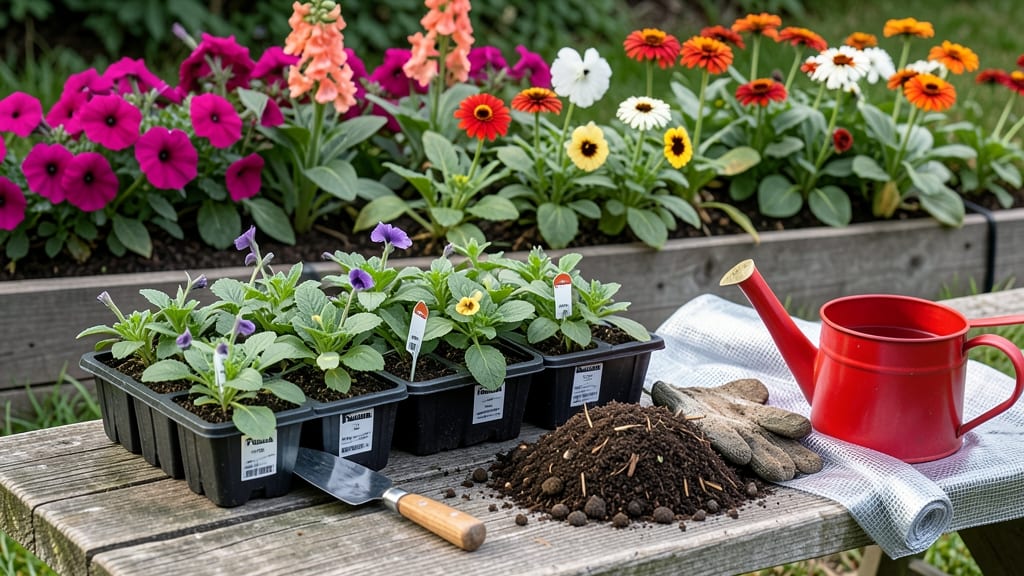
To plant flowers in Seattle, time your efforts between mid-March and May for spring blooms and August to September for fall varieties—missing these windows risks frost or heat damage before they thrive.
Seattle’s mild but unpredictable climate makes timing your flower planting crucial—get it wrong, and frost or heat waves can ruin your blooms before they even sprout.
Whether you’re sowing hardy perennials like rhododendrons or frost-sensitive annuals such as petunias, knowing the last frost date (March 15) and first frost (November 15) is the key to success.
Below, I’ll break down the best planting months for your favorite 🌸 flowers, how to adjust for Seattle’s microclimates, and which varieties thrive year-round in USDA Zone 8a.
Seattle’s frost dates by month: best planting windows for annuals and perennials
Seattle’s USDA Zone 8a/9a climate offers a 165-day frost-free growing season, but timing is everything. The last average frost date lands between March 15–April 15, while the first frost typically arrives October 15–November 15.
These dates create your planting windows—but microclimates like the Puget Sound’s coastal warmth or the Eastside’s inland chill can shift them by 2–3 weeks.
For cool-season flowers like pansies and snapdragons, plant 2–4 weeks before the last frost (February–early March). Warm-season favorites such as marigolds and zinnias should wait until after May 1, when soil temperatures hit 60°F+.
Perennials like lavender and black-eyed Susans thrive when planted in spring or early fall, avoiding the stress of extreme heat or cold.
Here’s a quick reference for Seattle’s planting windows by flower type:
| Planting Window | Cool-Season Flowers | Warm-Season Flowers | Perennials |
|---|---|---|---|
| Early Spring (Feb–Mar) | Pansies, Sweet Peas, Calendula | N/A (Too Cold) | Daffodils, Tulips (bulbs) |
| Late Spring (Apr–May) | Sweet Alyssum, Larkspur | Marigolds, Petunias, Zinnias | Coneflowers, Lavender |
| Summer (Jun–Jul) | N/A (Overwhelmed by Heat) | Sunflowers, Cosmos, Vinca | Black-Eyed Susans, Salvia |
| Early Fall (Aug–Sep) | Stock, Snapdragons | Marigolds, Celosia | Asters, Russian Sage |
| Late Fall (Oct–Nov) | N/A (Frost Risk) | N/A (Frost Risk) | Spring-Blooming Bulbs |
Microclimates play a huge role in Seattle. Areas near Lake Washington or the Puget Sound stay 2–3°F warmer than inland spots like Issaquah or Redmond. Use this to your advantage: plant heat-sensitive annuals like cosmos in cooler microclimates, while sun-loving perennials like daylilies thrive in sunnier Eastside gardens.
Always check soil temperature (use a soil thermometer)—60°F+ is ideal for warm-season plants.
If you’re unsure about frost dates, use row covers or cold frames to extend your season. For example, pansies can bloom until late October with protection, while marigolds might survive a light frost if planted in well-draining soil.
Start seeds indoors 6–8 weeks before the last frost (early February) for a head start on your garden.
Pro tip: Seattle’s rainy spring can delay planting. Wait until the ground is workable (not muddy) and drainage improves after heavy rains. Amend heavy clay soil with compost or sand
Top 10 flowers to plant in Seattle: timing and care by season
Seattle’s mild maritime climate means we can grow a stunning variety of flowers year-round, but timing is everything. Cold-hardy perennials like daffodils thrive when planted in fall, while frost-sensitive annuals like petunias need to wait until after the last frost in spring.
The key is matching each plant’s needs to Seattle’s USDA Zone 8a/8b and your specific microclimate.
Whether you’re a beginner gardener or a seasoned pro, these top 10 flowers will bring color to your garden with minimal fuss. I’ve included exact planting months, soil prep tips, and maintenance schedules tailored to Seattle’s wet winters and dry summers.
Plus, I’ll highlight which varieties are perennials (returning every year) vs. annuals (one-season wonders) to help you plan ahead.
- 🌱 Early Spring (Feb–March): Plant cold-hardy bulbs like daffodils and tulips (perennials) 6–8 weeks before last frost. Pansies and snapdragons (annuals) can handle light frosts—sow seeds or transplant after March 15.
- ☀️ Late Spring (April–May): Warm-season annuals like petunias, geraniums, and marigolds thrive after April 15 when soil reaches 60°F+. Black-eyed Susans (perennials) can be planted in early April for summer blooms.
- 🌿 Summer (June–July): Succession plant cosmos and zinnia (annuals) every 3–4 weeks for continuous blooms. Perennials like coneflowers and lavender benefit from light feeding in June to boost fall color.
- 🍂 Fall (August–September): Plant fall-blooming perennials like asters and sedum in August for autumn color. Bulbs such as crocuses and alliums should be in the ground by September 15 to naturalize for spring.
- 🌡️ Year-Round Care: Mulch perennials in late fall (November) with 3–4 inches of compost to protect roots. Annuals can be replaced in late summer for extended blooms until first frost.
- ✂️ Maintenance Tip: Deadhead spent blooms weekly to encourage longer flowering. Water deeply in morning to prevent fungal diseases in Seattle’s humid summers.
- 🌧️ Seattle-Specific Hack: Use rain barrels to collect winter water for drought-tolerant perennials like Russian sage and yarrow during summer dry spells.
For Seattle’s wet climate, prioritize well-draining soil—amend heavy clay with compost or sand before planting. Perennials like peony and daylily are low-maintenance and drought-tolerant once established, making them perfect for busy gardeners.
Meanwhile, annuals like impatiens thrive in shadier spots (e.g., under trees) and add burst of color to partial-shade gardens.
Pro tip: Group plants by water needs to simplify care. For example, petunias and geraniums need consistent moisture, while lavender and rosemary prefer drier conditions. Mulch heavily around perennials in winter to insulate roots from freeze-thaw cycles, which are common in Seattle’s mild but unpredictable winters.
Start with these 10 standout flowers to build a low-stress, high-reward garden that blooms from early spring to late fall. With the right timing and care, your Seattle garden can be a year-round paradise—no green thumb required! 🌷