
Flowers
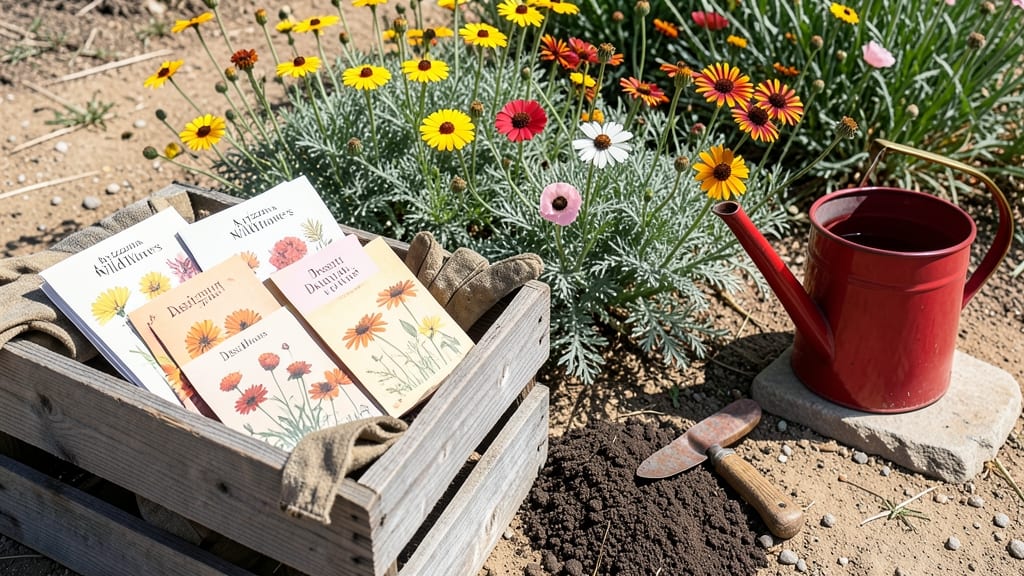
Planting flowers in Arizona between September and March avoids the brutal summer heat and sets you up for year-round blooms—if you choose the right varieties and timing.
Arizona’s scorching summers and mild winters make flower planting a delicate balancing act—but timing it right can mean vibrant blooms year-round instead of wilted disappointment.
Most desert-friendly flowers like Desert Marigold or Blanket Flower thrive when planted in fall or early spring, when temperatures are cooler and rainfall is more reliable.
Below, I’ll break down the best months by USDA zone, the top drought-resistant picks for your region, and how to avoid the three mistakes that kill Arizona gardens before they even begin.
Best flower planting times by Arizona USDA zones (7a-10a)
Arizona's diverse USDA zones 7a-10a create unique planting opportunities. Unlike many states, Arizona's mild winters and intense summers demand strategic timing. I've planted everything from desert marigolds to Russian sage—here's what works best.
The key is avoiding peak summer heat (June-August) when temperatures often exceed 100°F. Instead, focus on fall, winter, and early spring planting windows. Even high desert areas like Flagstaff (Zone 7a) benefit from this approach, just with slightly earlier timing.
Here's my month-by-month planting guide tailored to Arizona's microclimates:
For Zone 7a areas (like Flagstaff), adjust by planting 2-3 weeks earlier than low desert zones. My high desert garden thrives with September-October planting for spring blooms, while Phoenix gardens can extend planting into early November.
I always prioritize desert-adapted flowers like blanket flower and desert marigold—they handle Arizona's dry heat beautifully. These varieties can even be planted in late summer (August) with proper shade protection and deep watering.
One pro tip: Use mulch heavily (2-3 inches) to protect roots from temperature extremes. I've seen winter-blooming pansies survive 20°F nights in Tucson with proper mulching—something I never thought possible!
Remember that container gardening gives you more flexibility. You can move potted flowers to shaded areas during summer heatwaves. This works especially well for tender annuals like petunias that wouldn
Top 5 desert-friendly flowers and their ideal planting months
Arizona’s desert climate demands flowers that thrive on minimal water and intense sun—but the right timing makes all the difference. Planting too early in summer’s heat can shock roots, while waiting too long may limit blooms.
I’ve curated five heat-tolerant flowers that flourish in Arizona’s USDA Zones 9b-11, along with their perfect planting windows and care tips to keep them vibrant year-round.
These desert-adapted flowers require full sun (6+ hours daily) and well-draining soil, but their planting months vary to avoid extreme heat. For example, Desert Marigold thrives when planted in September-October, while Russian Sage can handle late winter planting in January-February.
Let’s dive into the specifics to ensure your garden blooms beautifully without the guesswork.
- 1
- 2
- 3
- 4
- 5
🌵 Planting Month: September-October
💧 Water Needs: Deep soak every 2-3 weeks (drought-tolerant)
☀️ Sun Exposure: Full sun (6+ hours)
🌵 Planting Month: October-November
💧 Water Needs: Weekly for first month, then bi-weekly
☀️ Sun Exposure: Full sun to partial shade
🌵 Planting Month: January-February
💧 Water Needs: Deep watering every 3-4 weeks
☀️ Sun Exposure: Full sun (tolerates heat well)
🌵 Planting Month: November-December
💧 Water Needs: Minimal (native to deserts)
☀️ Sun Exposure: Full sun (avoid shade)
🌵 Planting Month: March-April (after last frost risk)
💧 Water Needs: Weekly (more in summer)
☀️ Sun Exposure: Full sun (heat-loving!)
Each of these desert flowers has unique planting windows to avoid Arizona’s triple-digit heat. For instance, Lantana waits until March-April to avoid summer stress, while Russian Sage can handle cooler January-February temperatures.
Pro tip: Amend your soil with compost before planting to improve drainage and moisture retention—critical for desert conditions.
Watering is another key factor. Most of these drought-tolerant flowers need deep, infrequent watering once established. For example, Desert Marigold thrives on every 2-3 weeks, while Lantana may need weekly watering during Arizona’s monsoon season (July-August). Always water in the early morning to reduce evaporation and fungal risks.
Finally, don’t overlook mulching. A 2-3 inch layer of gravel or organic mulch helps retain moisture, regulate soil temperature, and suppress weeds—all critical in Arizona’s arid climate.
With the right planting timing, watering schedule, and sun exposure, these flowers will reward you with colorful blooms from spring through fall.