
Planting
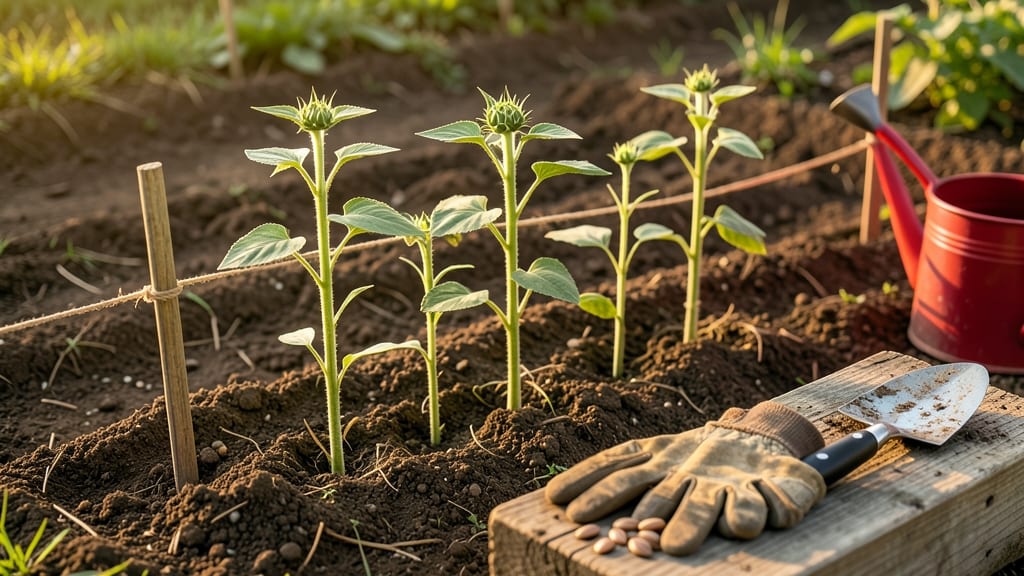
Direct sow sunflowers after your last frost when soil temperatures hit at least 50°F — the perfect window for strong, healthy starts that reach toward the sky.
Sunflowers are one of the easiest and most rewarding plants to grow, but timing your direct sowing wrong can mean wilting seeds or stunted growth. Get the perfect frost-free window and soil temperature guide to ensure your 🌻 thrive from seed to towering bloom.
In cooler regions like Zone 6a, wait until mid-April or later, when the ground warms and the danger of frost has passed. Warmer climates can start as early as late March, but the key is soil temp, not just calendar dates.
Below, I break down the exact timing by zone, soil prep tips, and how to space seeds for maximum growth — so you can plant with confidence and watch those cheerful blooms light up your garden.
Ideal soil temperature and frost-free timing for sunflower seeds
Sunflowers love warmth, and getting the soil temperature right is critical for strong germination. Seeds need consistent warmth to break dormancy and sprout—typically at least 50°F (10°C) for optimal results.
If you plant too early, your seeds may rot in cold, damp soil. Meanwhile, late frosts can kill young seedlings, so timing matters more than you might think!
The last frost date in your area is your planting compass. Sunflowers are frost-sensitive, especially as seedlings, so wait until two weeks after the average last frost to sow seeds.
Check your USDA hardiness zone for precise timing—zones 3-5 need extra caution, while zones 7-10 can start earlier. Even a light frost can damage tender sprouts, so don’t rush!
Here’s the science behind sunflower germination: seeds absorb moisture and swell when soil reaches 50°F (10°C), but true growth kicks in at 60°F (15°C). If your soil is cooler, germination slows or stops.
Use a soil thermometer to check—plant only when temps are stable. Pro tip: Black plastic mulch warms soil faster, helping you start earlier in cooler climates.
Early varieties like 'Teddy Bear' (dwarf) or 'Moulin Rouge' (standard) tolerate cooler soils slightly better, while tall varieties like 'Russian Giant' need warmer conditions. Always match your variety to your climate.
For example, in Zone 4, wait until late May, while Zone 8 gardeners can sow as early as March.
Calculating your frost-free window is simple: subtract your last frost date from your first frost date. For example, in Zone 6a (last frost: April 15, first frost: October 15), you have about 165 frost-free days.
Sunflowers need 70-120 days to mature, so plant early varieties by May 1 and late varieties by July 1 to avoid fall frosts.
If you’re unsure about your local frost dates, use the National Oceanic and Atmospheric Administration (NOAA) frost calculator or ask your local cooperative extension service. They provide hyper-local data that’s far more accurate than generic zone maps.
For example, a Zone 7 garden in Florida may have 300 frost-free days, while one in Colorado might have only 120 days—a huge difference!
Once you’ve nailed down timing, prepare your soil by loosening it to 6 inches deep and mixing in compost for nutrients. Sunflowers thrive in well-draining soil with a pH of 6.0-7.5.
Avoid heavy clay or waterlogged spots, as roots need oxygen to grow. A quick soil test kit (available at garden centers) can confirm your soil’s readiness in minutes.
For extended blooms, try <
Best months to direct sow sunflowers by US hardiness zones
Direct sowing sunflowers at the right time ensures strong germination and vibrant blooms. Since sunflowers thrive in warm soil and long daylight, your USDA hardiness zone determines the perfect window.
In cooler zones like 3-5, wait until after the last frost, while warmer zones like 8-10 can start earlier. Let’s break it down by zone for foolproof timing.
Sunflowers need soil temperatures of at least 50°F (10°C) to germinate properly. Using a soil thermometer ensures accuracy—especially in Zone 3-6, where chilly nights delay planting. For extended blooms, many gardeners also sow a second batch in late summer (July-August) to enjoy fall flowers before frost.
In Zones 3-5, where frost lingers, I always plant after Memorial Day to avoid late frosts. For Zones 8-10, early spring sowing risks bolting (premature flowering), so I opt for late winter under row covers or July-August for heat-tolerant varieties like 'ProCut'.
Pro tip: Mark your calendar for 90 days before first frost—this is your last chance for a full-grown sunflower. For example, in Zone 6 (first frost Oct 15), plant by July 15 for mature blooms.
Use this formula: 120 days to maturity - days until frost = last planting date.
For extended blooms, try succession planting: Sow every 2-3 weeks in spring and again in late summer. This ensures continuous color from June to October. Just remember, sunflowers need 6+ hours of sun daily, so avoid shaded spots.
If you’re unsure about your last frost date, check your local cooperative extension office or use a frost calendar app. I’ve had the best luck with 'Teddy Bear' sunflowers in Zone 5—they’re dwarf varieties that bloom early and handle cooler temps gracefully.