
Flowers
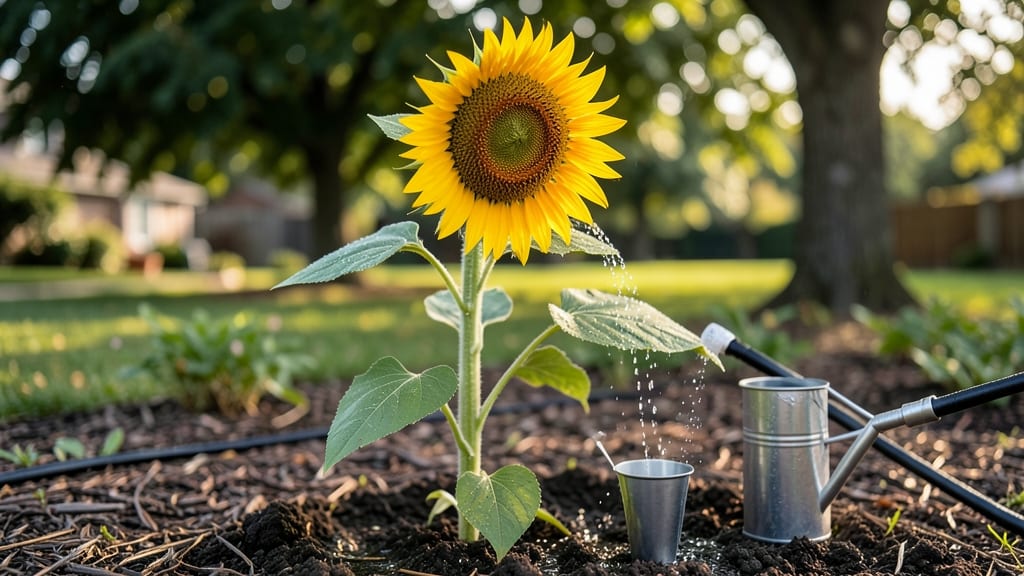
Watering sunflowers the right way means giving them deep soaks every 3–5 days—but timing and technique make all the difference between a thriving 🌻 and a floppy stalk.
Sunflowers thrive on consistency—but overwatering or neglecting them can turn your towering blooms into floppy stalks. Mastering the soil check method ensures your sunflowers drink just enough to reach their full, vibrant potential.
Seedlings need frequent moisture, while mature plants prefer deep, infrequent watering to encourage strong roots. Climate, soil type, and even the time of day you water can shift the schedule dramatically.
In this guide, I’ll break down the exact watering frequency for each growth stage, how to read your soil’s moisture levels, and the 3 signs you’re watering wrong—so your sunflowers grow tall, sturdy, and ready to bloom.
The soil check method: how often to water sunflowers by stage
Sunflowers are thirsty plants, but their water needs change dramatically as they grow. Overwatering can drown delicate roots, while underwatering stunts their towering growth. The soil check method is your secret weapon—it helps you adjust watering based on real-time moisture levels, not guesswork.
By testing soil moisture at each growth stage, you’ll keep your sunflowers hydrated but never soggy.
Sunflowers have four key growth stages, each with unique watering needs: seedling, vegetative, flowering, and seed development. A moisture meter or simple finger test (inserting your finger 1-2 inches deep) will tell you when to water.
For example, seedlings need daily checks, while mature plants can go 5-7 days between waterings—if the soil is right.
During the seedling stage, sunflowers are most vulnerable. Their roots are shallow, and soil dries out quickly. I recommend watering every 1-2 days using a spray bottle or gentle stream to avoid displacing seeds.
A moisture meter set to 30-50% dry at 1-inch depth is ideal—any drier, and you risk stunted growth.
Once sunflowers enter the vegetative stage (3-6 weeks), they develop deeper roots and can handle slightly drier soil. Here, I switch to deep watering—soaking the soil until water runs out the drainage holes.
Wait until the top 2 inches feel dry before watering again. This encourages roots to grow downward, making your plants more drought-resistant later.
The flowering stage (7-10 weeks) is where many gardeners make mistakes. Sunflowers need consistent moisture to support their heavy blooms, but too much water can cause buds to rot. I test soil moisture at 3 inches deep—if it’s dry, water deeply.
If it’s still damp, wait another day. Morning watering is best to prevent fungal diseases like powdery mildew, which thrives in wet foliage.
In the final seed development stage, sunflowers become surprisingly drought-tolerant. At this point, I let the soil dry out more between waterings—3 inches deep is the new rule.
Overwatering now can lead to seed rot, ruining your harvest. If you’re growing sunflowers for seeds, reduce watering by 50% compared to flowering stage.
Your local climate plays a huge role
Signs your sunflowers need water (or need less!)
Sunflowers communicate their hydration needs through subtle but telling signs. Wilting leaves that droop in the heat are a classic cry for water, but don't confuse this with the natural midday droop that occurs when stems conserve moisture during peak sun.
Pay attention to the texture of the leaves—crispy edges or curled foliage often signals chronic underwatering, while soft, mushy stems may indicate overwatering stress.
Another key indicator is the soil surface. If the top inch of soil feels dry to the touch or shows visible cracks, your sunflowers are thirsty.
However, muddy soil or a foul odor suggests waterlogged roots. Young seedlings are especially sensitive—check their soil daily, as their shallow root systems can't reach deep moisture sources.
🌻
⚠️ Watering Warning: How Often to Water Sunflowers
Sunflowers need 1-1.5 inches of water weekly (more in extreme heat). Seedlings require daily checks, while mature plants thrive with deep watering every 3-5 days. Overwatering causes root rot, while underwatering stunts growth. Morning watering prevents fungal risks.
Yellowing leaves can be misleading—sometimes they signal overwatering (especially if the yellow starts at the base), while other times they indicate nutrient deficiencies from poor drainage. To test, gently tug on the plant: if it pulls easily from the soil, roots are likely suffocating from excess moisture.
For container-grown sunflowers, check weight—lighter pots need watering.
Watch the growth rate too. Sunflowers should grow 1-2 inches daily during peak season. Stunted growth with small, pale leaves often means roots aren't getting enough oxygen. In contrast, sudden leaf drop during hot afternoons may just be the plant's way of conserving water—don't panic unless paired with other symptoms.
For drought-prone areas, let the soil dry slightly between waterings to encourage deep root growth. Mulch with straw to retain moisture and reduce evaporation. Remember: sunflowers are drought-tolerant once established, but they won't bloom their best without consistent care during their first 6-8 weeks.
When in doubt, perform the finger test: stick your index finger 1-2 inches into the soil. If it feels dry, water thoroughly until moisture reaches 6 inches deep.
This mimics natural rainfall and prevents shallow root systems. Adjust your schedule based on weather patterns—hot, windy days demand more frequent watering than humid, cloudy ones.