
Flowers
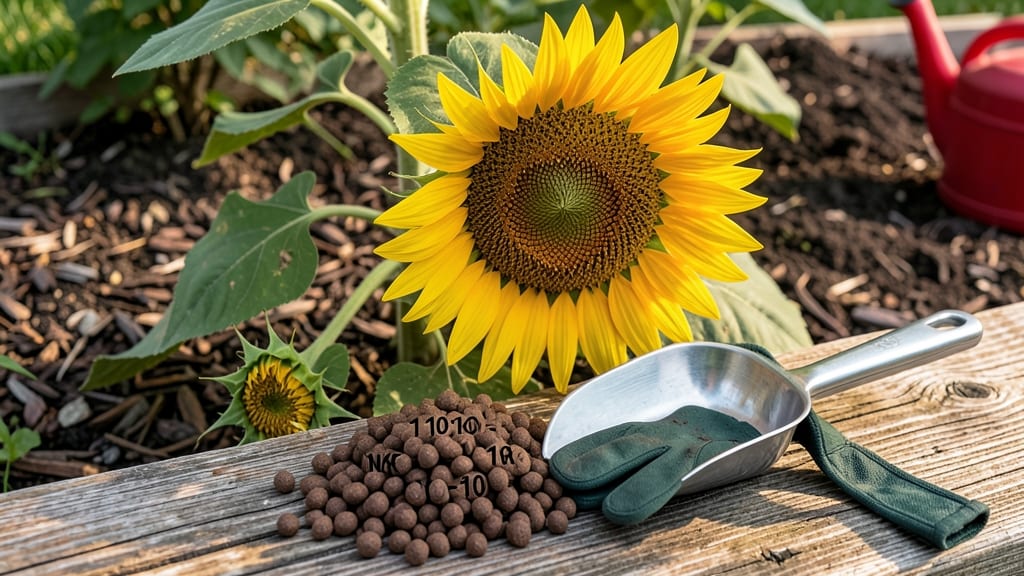
To fertilize sunflowers at the right time means catching them at the two critical growth stages—when roots need a boost and when blooms crave nutrients.
Sunflowers are nature’s golden giants—but without the right fertilization timing, their growth can stall before they even reach their towering potential. Mastering when to feed them means the difference between a sad, stunted plant and a sun-drenched masterpiece that turns heads in your garden.
Here’s the secret: a light feed at planting (around April-May in Zone 6a) kickstarts root growth, while a second dose at flowering (mid-summer) fuels those iconic blooms. Skip the fall feed—your sunflowers will thank you.
Below, I’ll walk you through the exact timing, the best fertilizers to use, and how to spot when your 🌻 sunflowers are begging for a nutrient boost (or when to hold off). No guesswork, just results.

Optimal fertilization schedule by sunflower growth stage
Sunflowers grow in dramatic stages—from tiny sprouts to towering giants—each requiring specific nutrient support to thrive. Skipping fertilization at the wrong time can leave your plants yellowing, weak, or stunted, while overdoing it risks burning roots or promoting leafy growth over blooms.
The key is feeding them at the right moments with the right nutrients.
I’ve grown sunflowers for years, and I’ve learned that timing matters more than quantity. A light feed at planting sets roots strong, while a phosphorus boost during bud formation ensures vibrant blooms.
Let’s break down the exact fertilization schedule by growth stage, so your sunflowers reach their full, golden potential.
⚠️ CRITICAL NOTE: Always water soil thoroughly before and after fertilizing to prevent root burn. Early morning applications work best, allowing nutrients to soak in before the heat of the day.
During the pre-planting phase, I always mix compost into the soil to improve drainage and provide a slow-release nutrient boost. This step is non-negotiable—sunflowers hate soggy roots but thrive in well-aerated, nutrient-rich soil.
Think of it as laying the foundation for a skyscraper; without it, even the best fertilizers later won’t save your plants.
The early vegetative stage is when your sunflowers are hungry for nitrogen to fuel rapid stem and leaf growth. This is where a light application of fish emulsion or a balanced 10-10-10 fertilizer shines. I’ve seen sunflowers grow 6 inches in just 10 days after this feed
Signs your sunflowers need fertilizer (and when to avoid it)
Sunflowers are hungry plants—especially when they're pushing toward the sky. If your sunflowers show signs of nutrient deficiency, they’ll signal it through their leaves, stems, and overall growth. The key is learning to read these visual cues before the plant becomes permanently stunted.
Yellowing leaves, for example, often mean a nitrogen deficiency, while weak stems or slow growth can indicate a lack of phosphorus or potassium. But here’s the catch: over-fertilizing can burn roots and stunt growth just as badly as under-fertilizing.
Timing matters just as much as the type of fertilizer you use.
⚠️ callout warning ⚠️
DO fertilize: When plants are 4-6 weeks old and actively growing (spring/summer). Use a balanced 5-10-10 NPK fertilizer every 4-6 weeks.
DON’T fertilize: After mid-summer (August onward) or if soil is already rich in organic matter. Over-fertilizing late in the season can delay dormancy and weaken stems.
Never fertilize: When leaves show burn marks or stems appear mushy—this means you’ve already overdone it.
One of the most common mistakes is fertilizing too early. If you apply fertilizer right after planting, the seeds may not have enough time to establish roots before the nutrients overwhelm them. Instead, wait until your sunflowers have 2-4 true leaves—this usually happens around 3-4 weeks after germination.
Another red flag is purple-tinged leaves, which often signal a phosphorus deficiency. This nutrient is crucial for root and flower development. If you notice this, switch to a phosphorus-heavy fertilizer (like bone meal) and apply it to the soil, not the leaves.
Always water the soil thoroughly after fertilizing to prevent root burn.
Slow growth in mature sunflowers (those over 6 feet tall) can mean they’re running out of nutrients. At this stage, a light feeding with a potassium-rich fertilizer can help strengthen stems and support seed development. But avoid heavy fertilizers—they’ll encourage leafy growth over flowers, reducing your harvest.
Finally, wilting or drooping despite adequate water can be a sign of nutrient imbalance. If your sunflowers look thirsty but the soil is damp, check for magnesium or calcium deficiencies. Epsom salt (for magnesium) or crushed eggshells (for calcium) can work wonders in these cases.