
Flowers
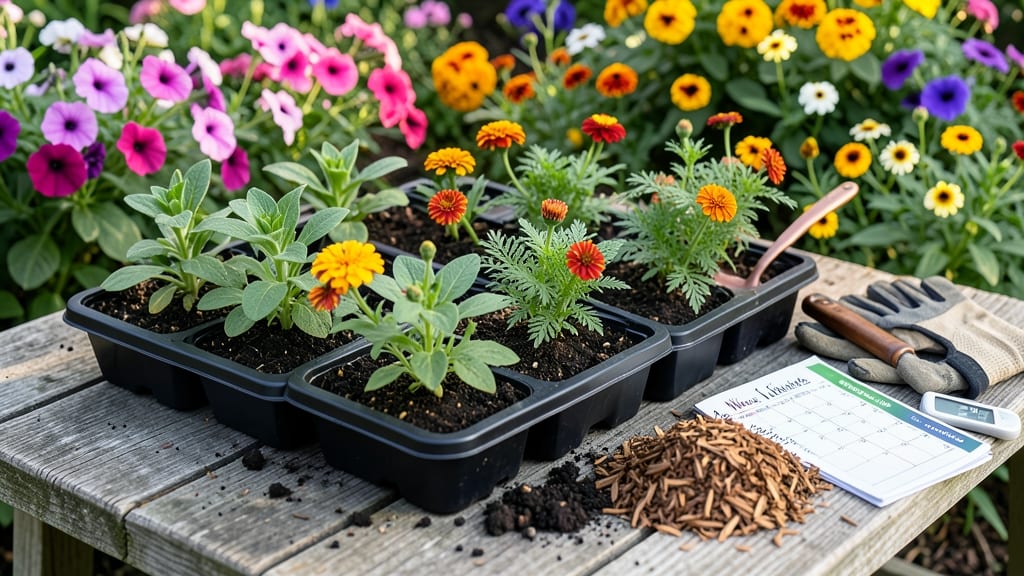
Planting flowers in Missouri safely means knowing when it is safe to plant flowers in Missouri—typically mid-April to early May—when soil temperatures hit at least 60°F.
Missouri gardeners know timing is everything—plant too early, and frost will wipe out your blooms; too late, and summer heat arrives before flowers even sprout. The USDA Zone 5b-6a guidelines ensure your 🌸 flowers thrive, whether you’re sowing annuals, perennials, or bulbs.
From St. Louis to Kansas City, microclimates shift planting windows by 1–2 weeks. Learn how to use local frost data, soil thermometers, and neighbor observations to fine-tune your schedule for maximum success.
Inside, you’ll find a month-by-month planting guide, cold-hardy vs. heat-loving flower lists, and tips to adjust for Missouri’s unpredictable spring. Let’s get those blooms growing!
Missouri flower planting timeline by USDA Zone 5-6 (with frost dates)
Missouri’s USDA Zones 5b-6a offer a 165-day frost-free season, but timing your flower planting correctly means the difference between a showstopping garden and a failed experiment. The last frost date typically falls between April 15–May 1, while the first frost arrives October 15–November 1.
Knowing these dates helps you avoid frost damage while maximizing bloom time.
For annual flowers, wait until soil temperatures hit 60°F+—usually mid-May—before planting heat-lovers like marigolds or zinnias. Cold-hardy perennials, such as coneflowers or black-eyed Susans, can go in as early as April 1 once the ground thaws. Bulbs like tulips and daffodils should be planted in fall (September–October) for spring blooms.
Here’s your month-by-month planting guide, broken down by flower type and hardiness, to keep your Missouri garden thriving all season.
Missouri’s spring planting rush kicks off in April with hardy perennials like coneflowers, which can handle light frost once established. Tulips and daffodils planted in fall will reward you with early spring blooms, while annuals like marigolds need to wait until May when soil warms to 60°F.
For summer-long color, succession plant cosmos and nasturtiums every 2 weeks in July to keep blooms coming. Shade-loving annuals like impatiens thrive when planted in early June, perfect for woodland gardens or north-facing beds.
Always check your local frost dates—urban areas like St. Louis may warm faster than rural zones.
Don’t forget fall planting! Crocuses and alliums planted in late August will pop up in early spring, while perennials like daylilies can be divided in September for healthier growth next year. Mulch lightly after planting to protect roots from
Best flowers to plant in Missouri by season (cold-hardy vs. heat-loving)
Missouri’s USDA Zones 5b-6a bring dramatic seasonal shifts—from freezing winters to humid summers. The key to a flourishing garden? Choosing cold-hardy blooms for spring and heat-tolerant varieties for summer. I’ve tested these top performers in my own Missouri garden, and they consistently deliver color without fuss.
Spring bulbs like tulips and daffodils are my go-to for early blooms, popping up as soon as the snow melts. But once temperatures climb above 75°F, these same flowers wilt faster.
That’s why I swap them out for marigolds and zinnias by June—they thrive in the heat and keep blooming until frost.
For perennials, coneflowers and black-eyed Susans are my workhorses. They handle Missouri’s humidity and soil variations like champions, while coreopsis adds delicate yellow blooms that last all summer. Avoid petunias and geraniums in peak summer—they’ll bolt or fade without constant care.
🌱 Missouri Flower Planting Cheat Sheet
- 🌷 Spring (March–April): Plant tulips, daffodils, and bleeding heart as soon as soil thaws (after last frost, typically April 15).
- ☀️ Summer (May–July): Swap to marigolds, zinnias, and lantana for heat tolerance. Coneflowers and black-eyed Susans can go in early May.
- 🍂 Fall (September–October): Add mums, aster, and sedum for late-season color. Bulbs like crocus can be planted by October 15.
- ❄️ Avoid in Heat: Petunias, impatiens, and coleus struggle in Missouri’s 90°F+ summers without extra shade and water.
Pro Tip: Mulch after planting to retain moisture and regulate soil temperature.
My cold-hardy favorites include peony and iris, which come back year after year with minimal effort. For containers, I rely on pansies in spring and portulaca in summer—they both handle Missouri’s temperature swings better than fussy annuals.
If you’re new to Missouri gardening, start with 3–5 heat-loving annuals and 2–3 perennials. Group them by water needs: zinnias and marigolds need 1 inch of water weekly, while coneflowers thrive on drought once established. Overwatering is the #1 killer of summer blooms here!
For a low-maintenance garden, stick to native Missouri flowers like purple coneflower and butterfly weed. They’re adapted to our clay-heavy soil and variable rainfall, so they’ll outperform imported varieties. Plus, they attract pollinators all season long!