
How To
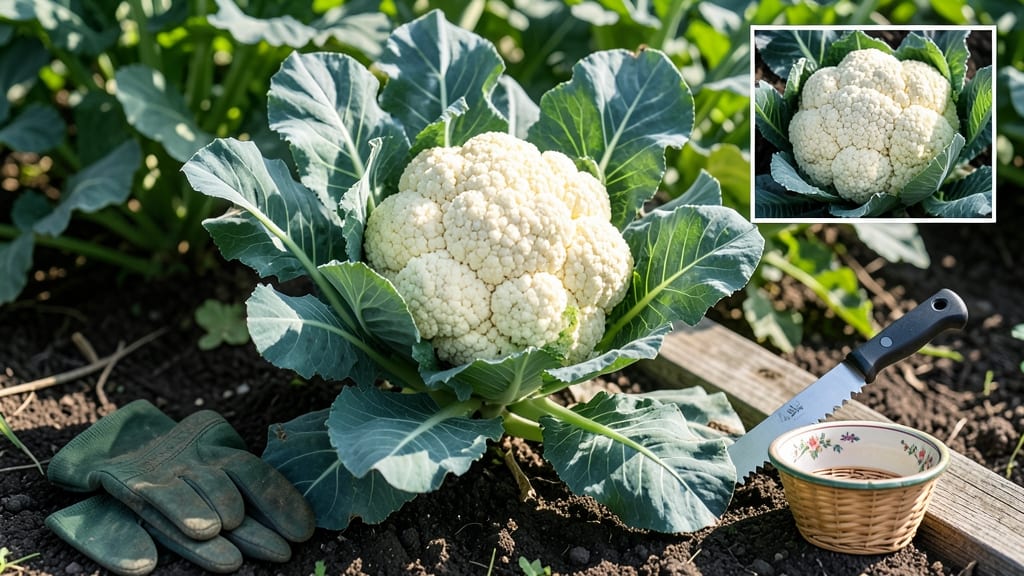
Knowing when to harvest cauliflower 🥬 saves you from tough, bitter curds—or worse, watching your plants bolt into flowers before you can enjoy them.
That perfect moment arrives when the curd is firm, compact, and fully colored, but before the outer leaves start yellowing. Miss it, and you’re left with a head that’s either too small or too woody to eat.
In this guide, I’ll walk you through the visual and tactile cues—like curd size, leaf color, and the finger-press test—to nail harvest timing every time, whether you’re growing in spring or fall.
You’ll also learn how to adjust for your climate, avoid common mistakes, and keep your cauliflower tasting as sweet as it looks.


Cauliflower harvest checklist: curd color and size guide
Timing your cauliflower harvest perfectly transforms your garden into a kitchen-ready bounty. The key lies in watching for three critical cues: curd color, size, and firmness. Miss these signs, and you risk tough, bitter heads or watching your plant bolt into flowers.
Let’s break down what to look for in each color variety—white, purple, or orange—to ensure you harvest at peak flavor and texture.
Every cauliflower variety has unique benchmarks for harvest readiness. For example, Snowball varieties typically mature faster than Romanesco, which develops its striking fractal pattern over a longer period. Understanding these differences helps you avoid common mistakes like harvesting too early (small, underdeveloped curds) or too late (woody, overmature heads).
Here’s your visual and tactile harvest checklist to determine the perfect moment to pick your cauliflower:
| Variety | Curd Size | Color | Firmness | Leaf Condition |
|---|---|---|---|---|
| Snowball (White) | 6-8 inches diameter | Pure white, no green | Firm, compact | Outer leaves yellowing |
| Romanesco (Green) | td style="padding: 10px;">4-6 inches diameterFractal lime-green | Tight, dense | Lower leaves dying back | |
| Purple Graffiti | 5-7 inches diameter | Deep purple | Solid, no soft spots | Curly leaves brown at edges |
| Orange | 5-6 inches diameter | Vibrant orange | Firm, no browning | Leaves slightly wilted |
💡 Pro Tip: Always harvest on a dry morning to prevent soil from sticking to your curds.
For white cauliflower varieties, the curd should be fully white with no green undertones. If you see even a hint of green, it’s not ready yet. The outer leaves will start to yellow and die back naturally as the curd matures—this is your signal to act quickly.
Press the curd gently with your finger; it should feel firm but not rock-hard. If it gives slightly, it’s perfect for harvesting.
Purple and orange varieties follow similar rules but with a twist: their vibrant colors are a maturity indicator.
A deep, consistent purple or orange hue means it’s ready, while patchy or dull colors suggest it needs more time. Romanesco, with its unique fractal pattern, should have fully formed cones before picking. If the cones are still tightly closed or uneven, wait a few more days.
Size matters too! Most varieties reach harvest readiness between 60-100 days after transplanting, but dwarf varieties like ‘Purple of Sicily’ mature faster (around 55 days) compared to larger types like ‘Cheddar’ (up to 90 days).
Measure your curd against a ruler or your hand—if it’s roughly the size of a softball (6-8 inches), it’s likely ready.
Watch out for overmaturity signs: yellowing or browning curds, cracked surfaces, or the head starting to open and expose the stem. These are clear indicators you’ve waited too long.
Overmature cauliflower becomes tough, bitter, and less flavorful. When in doubt, harvest a little early—you can always finish cooking underdeveloped curds, but you can’t reverse overmaturity.
Seasonal timing also plays a role. In cool climates (USDA Zones 3-6), aim for harvests in late spring or early fall when temperatures hover between 60-75°F. Heat stress above 80°F can cause bolting, while cold snaps below 50°F may stunt growth.
If you’re growing in hotter zones (7-10), opt for fall or winter harvests to avoid summer heat.
Once you’ve confirmed your cauliflower is ready, use a sharp knife or pruning shears to cut the stem about 1 inch below the curd. Avoid pulling or twisting, which can damage the plant.
After harvest, store your cauliflower in the fridge for up to 5-7 days or blanch and freeze for long-term storage. With these cues in mind, you’ll never miss the perfect harvest window again!
5 Common mistakes that ruin your cauliflower harvest (and how to avoid them)
Even with perfect growing conditions, a few critical mistakes can turn your cauliflower harvest into disappointment. Overlooking maturity signs or ignoring environmental stress can mean tough, bitter curds or wasted effort. Let’s fix these before they happen.
First, many gardeners wait too long to harvest. When cauliflower curds start cracking or turning yellowish-brown, they’ve passed their prime. This happens when the plant bolts—going to seed—leaving you with inedible florets. The key is acting at the first sign of over-maturity.
⚠️ CALLOUT WARNING ⚠️
Curds should be: 6-8 inches in diameter, firm to the touch, and fully colored (white, purple, or orange). Outer leaves should start yellowing—this signals peak ripeness. If the center is still green or the curd feels soft, wait 2-3 days. Harvest before the curd opens or flowers form!
Another mistake is harvesting too early. Underdeveloped cauliflower heads are tiny, green, and lack flavor. Check for leaf discoloration—healthy outer leaves turn yellow and die back as the curd matures. If leaves stay vibrant green, your plant needs more time.
Environmental stress also sabotages harvests. Yellowing leaves can signal nutrient deficiencies (like nitrogen) or overwatering. Adjust care immediately: feed with balanced fertilizer (10-10-10) or let soil dry slightly between waterings. Cracked curds? This often means inconsistent moisture—water consistently in the morning to prevent stress.
Finally, ignoring variety-specific timing leads to missed harvests. Romanesco matures faster (60-70 days) than Snowball (80-100 days). Always check seed packets for days to maturity and adjust your harvest window accordingly.
By watching for these harvest warning signs and acting quickly, you’ll enjoy crisp, tender cauliflower curds every time—no bitter surprises! 🥬