
Watering
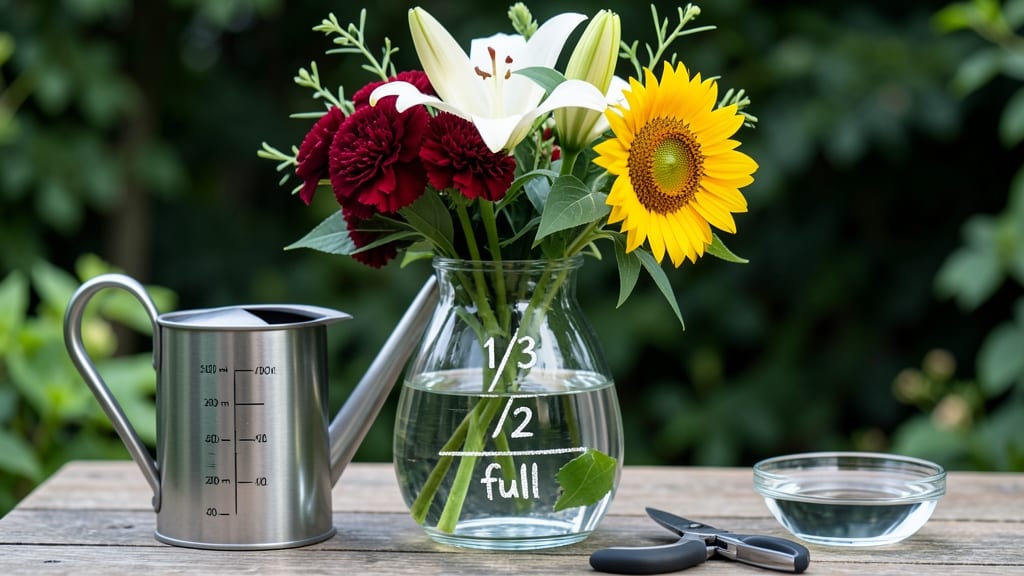
Flowers in a vase need water that matches their thirst—too little and they wilt, too much and they rot, and the difference between the two can mean days of freshness or a sad, drooping pile.
Struggling to keep your cut flowers vibrant? The secret isn’t just adding water—it’s knowing how much and when to refresh it. Roses, lilies, and sunflowers all drink differently, and ignoring those differences is how you end up with a bouquet that lasts half as long as it should.
Here’s the game-changer: most flowers need 2-3 inches of water in the vase, but that’s just the start. Stem thickness, leaf density, and even the temperature of your kitchen all tweak the recipe. A dry leaf or a moldy vase isn’t just bad luck—it’s a sign you’re watering wrong.
Discover the exact amounts for your favorite blooms, plus pro tips to stretch their life by a full week—no guesswork, just science-backed steps that actually work.


Water requirements for different flower types: a science-backed guide
Not all flowers drink the same way—just like us, they have unique hydration needs based on their stem structure, petal thickness, and natural habitat. A delicate orchid wilts in a full vase of water, while a hardy rose may need frequent top-ups.
Understanding these differences is the key to keeping your bouquets vibrant for days (or even weeks) longer.
Science shows that water absorption rates vary wildly. For example, succulents like aloe vera can go weeks without water, while tropical lilies need near-daily hydration. Even within the same family, like carnations, some varieties are thirstier than others.
The temperature and humidity in your home also play a massive role—dry air in winter can dry out flowers 3x faster than in a humid summer.
Here’s the game-changer: stem anatomy. Flowers with hollow stems (like sunflowers) act like straws, sucking up water efficiently, while thick, woody stems (like hydrangeas) absorb slowly. That’s why your roses might need a deep vase to stay hydrated, while delicate baby’s breath can drown if submerged too deeply.
Environmental factors like room temperature and light exposure also shift water needs. A vase near a sunny window will evaporate water faster than one in a cool basement.
Even the type of vase matters—glass vases slow evaporation, while porous ceramic ones dry out quicker. Let’s break down the science-backed water needs for your favorite blooms.
🌱
| Flower Type | Water Needs (Vase) | Absorption Rate | Key Notes |
|---|---|---|---|
| Roses | High (2-3 cups daily) | Fast (hollow stems) | Change water every 2 days; trim stems at 45° |
| Lilies | Moderate (1-2 cups every 3 days) | Medium (thick stems) | Avoid overcrowding; remove fallen petals |
| Succulents (e.g., Aloe) | Low (1 tsp weekly) | Very slow (thick leaves) | Use shallow water; risk of rot if overwatered |
| Carnations | Moderate (1 cup every 2 days) | Fast (varies by color) | Red/pink: thirstier; white/pink: less water |
| Orchids | Low-Moderate (1 cup weekly) | Slow (epiphytic roots) | Never let roots sit in water; mist leaves |
5 Signs your flowers are getting too much or too little waterEven the most stunning bouquet can wilt quickly if you don’t give it the perfect water balance. Too much water drowns stems, while too little causes them to dry out within hours. The key is recognizing these subtle but critical signs before irreversible damage occurs. I’ve arranged cut flowers for years, and I’ve learned that overwatering and underwatering share similar symptoms—but with one key difference: timing. Overwatered flowers show distress within 24 hours, while underwatered blooms may take days to show signs. Let’s break down what to watch for. 🌸 How Much Water Do Flowers Need in a Vase?
Pro Tip: Always re-cut stems at a 45-degree angle before placing in water to maximize absorption. If your flowers develop mushy stems or blackened leaves, they’re likely overwatered. This happens when stems sit in stagnant water for too long, leading to bacterial growth. The fix? Drain the vase completely, trim the stems again, and place them in fresh, room-temperature water. On the flip side, drooping petals or crispy edges signal underwatering. Unlike overwatered blooms, these flowers often perk up within hours after a deep drink. For stubborn cases, add a flower food packet to the water—it contains sugar and acidifiers to boost hydration. Another red flag? White, fuzzy mold on the water’s surface or yellowing leaves. This is a fungal infection from overwatering. Remove affected stems immediately and sterilize the vase with a 1:10 bleach-water mix before refilling. Always use distilled or filtered water to prevent mineral buildup. For a quick vase maintenance checklist, remember: change water every 2-3 days, trim stems weekly, and keep leaves dry to prevent rot. These small steps can double your flowers’ lifespan—sometimes from 3 days to a full week! 🌿 |