Vegetables
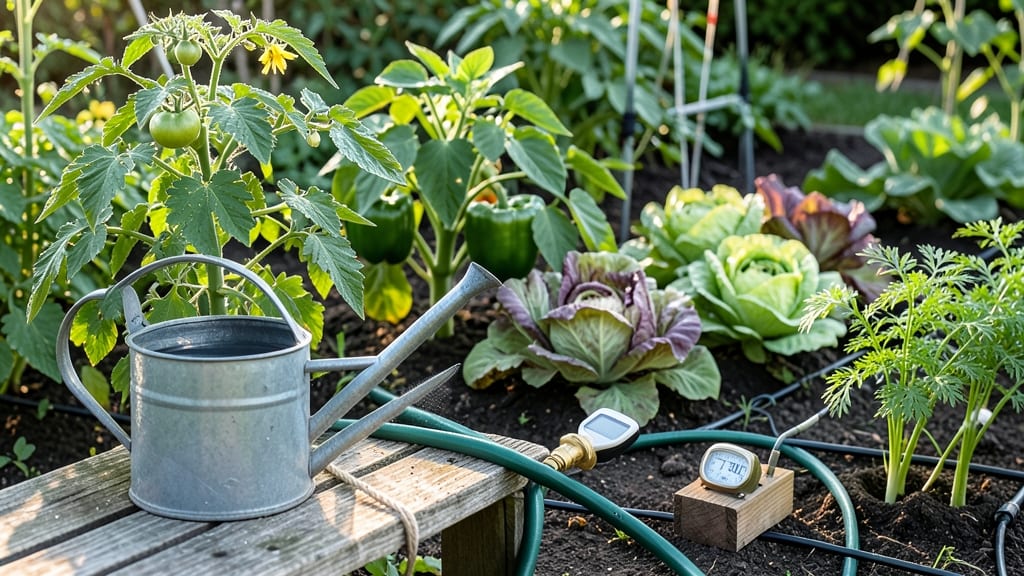
A watering guide for vegetables thrives or wilts based on one simple factor: precision scheduling turns guesswork into reliable harvests—no more sad, wilted plants or drowned roots.
I’ve learned the hard way that timing, technique, and plant needs matter more than you’d think, and these methods cut watering stress by half while boosting yields.
Morning watering is non-negotiable—it reduces evaporation and fungal risks. Most vegetables need 1-1.5 inches of water per week, but leafy greens like spinach prefer consistent moisture, while tomatoes crave deep soaks. A simple rain gauge or tuna can (buried halfway) tracks soil moisture better than eyeballing.
Overwatering is just as deadly as underwatering, so always check the top 2 inches of soil before reaching for the hose.
You’ll spot overwatering through yellowing leaves or mushy stems, while underwatered plants wilt even in cool mornings. Drip irrigation or soaker hoses deliver water right to roots, saving time and preventing leaf diseases.
For container gardens, water when the top inch feels dry—small pots dry out fast. The goal? Healthy plants that grow strong, not stressed.
Adjust for your climate: hot summers demand more frequent watering, while cool springs can stretch intervals. Mulch retains moisture and keeps roots cool—it’s the unsung hero of watering efficiency. Master this, and your garden will reward you with vibrant greens, juicy tomatoes, and zero guesswork. Let’s make it happen.
📚 In This Guide
- What you need
- Instructions
- Tips and common mistakes
- Wrapping up and next steps
What you need
- ● Watering Can or Hose: A 5-gallon can (for precision) or a soaker hose (for deep, even watering). Opt for a hose with an adjustable nozzle for flexibility.
- ○ Drip Irrigation Kit (Optional but Recommended): A 10-20 ft kit with emitters (e.g., 0.5–2 GPH) to deliver water directly to roots. Perfect for large gardens!
- ● Moisture Meter: A digital soil moisture sensor (e.g., $10–$20) to check hydration levels—no more guessing!
- ● Mulch: 2–3 inches of organic mulch (straw, wood chips) to retain moisture and suppress weeds.
- ● Timer (for Hose/Soaker Hose): A programmable garden timer (e.g., $15–$30) to automate watering schedules.
- ○ Rain Gauge (Optional): A simple 4-inch gauge to track natural rainfall and adjust your watering plan.
- ● Know Your Soil: Test your soil’s drainage (sandy vs. clay) to adjust watering frequency. Pro tip: Amend heavy clay with compost!
- ● Vegetable-Specific Needs: Research your plants’ water requirements (e.g., leafy greens need more frequent watering than root veggies).
- ● Sunlight & Shade Mapping: Note which areas get full sun (6+ hrs) vs. partial shade—this affects evaporation rates.
- ● Weather Awareness: Check daily forecasts to avoid overwatering during rain or underwatering in heatwaves.
Precision watering schedule for vegetable gardens
The secret to bountiful harvests lies in understanding your plants' thirst—not guesswork. Here's how to water with confidence, using soil moisture and plant cues as your guide.
Understand Your Vegetables' Water Needs
Vegetables fall into three watering categories: shallow-rooted crops like lettuce and spinach need frequent, light watering; medium-rooted plants such as tomatoes and peppers thrive with deep, consistent moisture; and deep-rooted vegetables like carrots and potatoes tolerate occasional drought once established. I always group plants by type to simplify scheduling.
Check soil moisture by feeling the top 2-3 inches—if it's dry, it's time to water. For most vegetables, this means watering when the soil feels like a slightly damp sponge rather than a wet cloth. Overwatering is just as damaging as underwatering, so resist the urge to water on a strict daily schedule.
Water Deeply at the Right Times
Morning is the best time to water—it allows foliage to dry before evening, reducing fungal diseases like powdery mildew. Aim for 1-1.5 inches of water per week, delivered in deep soakings rather than shallow sprinkles. Use a rain gauge or tuna can to measure; fill it with water to check your output.
For seedlings and young plants, water gently to avoid dislodging them. As plants mature, focus on watering at the base rather than overhead. You'll see stronger stems and healthier roots when you train yourself to water deeply—this encourages roots to grow downward in search of moisture, creating a more resilient plant.
Adjust for Weather and Soil Type
Hot, dry days demand more frequent watering, while cool, cloudy weather slows evaporation. Sandy soils drain quickly and need watering every 1-2 days, while clay soils hold moisture longer and may only require watering every 3-5 days. I always test my soil's moisture retention by digging a small hole—if water pools at the bottom, it's time to let the soil dry out a bit.
Mulch plays a critical role here. Apply 2-3 inches of organic mulch around plants to retain moisture and regulate soil temperature. This reduces evaporation by up to 50% and keeps roots cool during heatwaves. Watch for signs of stress like wilting or yellowing leaves—these are your cues to adjust your watering schedule.
Recognize Signs of Overwatering and Underwatering
Yellowing leaves, especially on lower stems, often signal overwatering. The soil may feel soggy, and roots could be deprived of oxygen. If you see mushrooms sprouting in your garden bed, that's a sure sign you're overwatering. On the other hand, crispy, curled leaves or wilting despite moist soil indicate underwatering or poor drainage.
Here's the thing—most gardeners err on the side of underwatering because it's harder to recover from overwatering. If you're unsure, it's always better to water less and check again in a day. Use a moisture meter for precise readings, especially in containers where soil dries out faster.
Tailor Your Approach to Different Growth Stages
Seedlings need consistent moisture to germinate and establish roots, so keep the soil evenly damp during this phase. Once plants are 2-3 inches tall, shift to deeper watering to encourage root growth. During flowering and fruiting, increase water slightly—stress during these stages can lead to blossom-end rot in tomatoes or bitter flavors in greens.
As vegetables mature, they often become more drought-tolerant. For example, mature corn only needs watering every 5-7 days during dry spells, while young plants require daily attention. Pay attention to the specific needs of each vegetable—some, like cucumbers, love consistent moisture, while others, like onions, prefer drier conditions.
Tips & tricks for perfect vegetable watering
These precision strategies will transform your garden from guesswork to garden-perfect results every time.
Soil Texture Test: The 2-3 inch soil check in Step 1 is your most reliable gauge. Press your finger into the soil—if it feels like a damp sponge (not wet or dry), that's ideal. For sandy soils, you'll need to water more frequently, while clay soils can go longer between waterings. I've learned the hard way that ignoring this test leads to either soggy roots or stressed plants.
Morning Watering Advantage: Watering in the morning as suggested in Step 2 isn't just about timing—it's about disease prevention. The foliage has all day to dry completely, which dramatically reduces fungal risks like powdery mildew. I've seen gardens go from mildew-ridden to thriving simply by shifting their watering time to early morning.
Mulch Application Technique: When applying your 2-3 inches of mulch in Step 3, create a slight depression around plant stems to prevent water pooling. This simple adjustment prevents root rot while maintaining moisture retention. I've found that mulching right up against stems can actually trap too much moisture in some soils.
Growth Stage Adjustments: The 2-3 inch height marker in Step 5 is crucial for transitioning watering methods. Before this stage, shallow watering helps establish roots, but once plants reach this height, deep watering becomes essential. I've noticed that plants often show stunted growth when this transition isn't made properly.
Pro Tips for Watering Guide For Vegetables
- These precision strategies will transform your garden from guesswork to garden-perfect results every time.
- Soil Texture Test: The 2-3 inch soil check in Step 1 is your most reliable gauge. Press your finger into the soil—if ...
- Morning Watering Advantage: Watering in the morning as suggested in Step 2 isn't just about timing—it's about disease...
Frequently asked questions
Got questions about keeping your veggies hydrated just right? You’re not alone! Here are answers to the most common watering woes—plus a few pro tips to keep your garden thriving without the guesswork.
How often should I water my vegetables?
Most vegetables need 1 to 1.5 inches of water per week, including rainfall. Check soil moisture daily—stick your finger 1 inch deep; if it’s dry, it’s time to water. Leafy greens (like lettuce) need frequent, shallow watering, while root veggies (carrots, potatoes) prefer deep, less frequent soaks to encourage growth.
What’s the best time of day to water my garden?
Water in the early morning (before 9 AM) to minimize evaporation and fungal diseases. Avoid evening watering, as damp leaves overnight can lead to mildew. If you must water later, use drip irrigation or soaker hoses to target roots directly.
Can I use rainwater or tap water for my vegetables?
Both work, but rainwater is ideal—it’s naturally soft and free of chlorine/fluoride. If using tap water, let it sit out for 24 hours to dissipate chemicals. Avoid water with high salt or pesticide runoff, which can harm plants over time. Collecting rainwater in barrels is a great eco-friendly hack!
Why are my vegetable leaves wilting even after watering?
Wilting can mean overwatering, underwatering, or root issues. Check the soil—if it’s soggy, your plants may have root rot. If dry, water deeply. Other culprits? Heat stress, pests, or poor drainage. Adjust your watering schedule and inspect roots if the problem persists.
What can I do if I forget to water my garden for a few days?
Don’t panic! Most vegetables can handle 2–3 days without water, but deep-rooted plants (like tomatoes) recover faster. Give them a long, slow drink at the base of the plant to rehydrate. Mulch helps retain moisture—add a 2-inch layer of straw or shredded leaves to lock in water for future lapses.
Does the temperature affect how much I should water?
In hot weather (above 85°F), water 20–30% more and focus on morning sessions. In cooler temps (below 60°F), reduce frequency. Always monitor soil moisture—heat speeds up evaporation, while cold slows it down. A simple soil moisture meter takes the guesswork out of it!
Wrapping up and next steps
Mastering the art of watering your vegetables isn’t just about keeping them alive—it’s about unlocking their full potential! 🌱 Whether you’re a seasoned gardener or just starting, remember that consistency, timing, and soil awareness are your best tools.
With the right schedule and techniques, you’ll watch your garden flourish like never before.
Ready to take the next step? Start by observing your plants daily and adjusting as needed—your green thumbs will thank you! 🌟 For extra inspiration, try keeping a watering journal to track what works best in your unique garden setup.