
Companion Plants
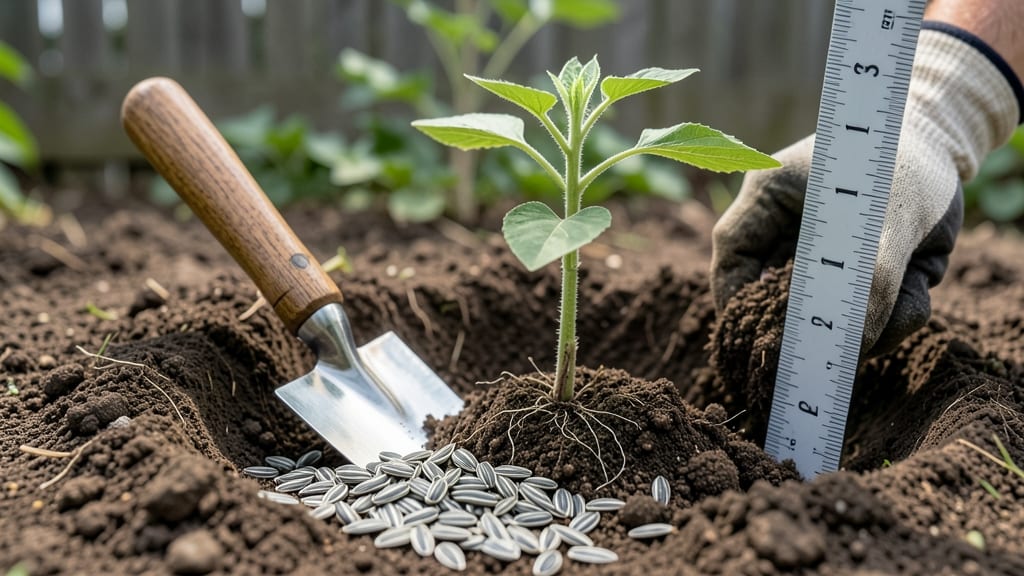
Planting sunflower seeds how deep should I plant sunflower seeds—typically ¼ to 1 inch—is the first step to unlocking fast, reliable germination and those towering 🌻 blooms you love.
Here’s the catch: too shallow, and they’ll dry out before sprouting; too deep, and they’ll struggle to break through the soil. But depth isn’t the only factor—soil warmth plays a critical role, too. Many gardeners overlook how temperature can speed up or stall germination for weeks.
In this guide, I’ll break down the exact planting depth for your sunflower variety, how to test soil warmth for fastest results, and pro tips to boost success—even in less-than-perfect conditions.
You’ll learn how to time your planting for faster sprouts, adjust for your soil type, and avoid the most common mistakes that leave seeds sitting dormant in the ground.


Optimal sunflower seed planting depth by variety and soil type
Getting your sunflower seeds at the right depth is half the battle for fast germination. Most gardeners assume "deep enough" means one size fits all—but variety size and soil type change the equation.
Giant sunflowers (like 'Mammoth' or 'Russian Giant') need more elbow room underground than dwarf varieties ('Teddy Bear' or 'Sunspot'), while clay soil holds moisture longer than sandy loam, affecting sprouting speed.
Here’s the golden rule: Plant sunflower seeds ½ to 1 inch deep in most soils, but adjust based on your sunflower’s mature height and soil drainage. Dwarf varieties can handle shallower planting (¼ to ½ inch), while giant varieties thrive when buried ¾ to 1 inch deep.
The goal? Position seeds where soil temps stay above 60°F—the magic threshold for germination.
Soil texture plays a sneaky role too. In sandy soil, seeds dry out faster, so plant them slightly deeper (¾ inch) to retain moisture. In clay soil, where water pools, a shallower depth (½ inch) prevents rot.
Loamy soil? Stick to the ½-inch sweet spot—it’s forgiving and fast-acting.
Let’s break it down with a side-by-side comparison of planting depths, sprouting times, and soil-specific tweaks. This table shows exactly how depth and soil type interact to speed up (or slow down) your sunflowers’ first peek above ground.
| Sunflower Variety | Mature Height | Optimal Planting Depth | Sandy Soil Depth | Clay Soil Depth | Avg. Sprout Time |
|---|---|---|---|---|---|
| Dwarf (e.g., 'Teddy Bear') | 1–3 ft | ¼–½ inch | ½ inch | ¼ inch | 7–10 days |
| Semi-Dwarf (e.g., 'Moulin Rouge') | 3–6 ft | ½–¾ inch | ¾ inch | ½ inch | 8–12 days |
| Standard (e.g., 'Autumn Beauty') | 6–8 ft | ¾–1 inch | 1 inch | ¾ inch | 10–14 days |
| Giant (e.g., 'Russian Giant') | 10–14 ft | 1 inch | 1–1¼ inch | ¾–1 inch | 12–16 days |
Notice how giant sunflowers take longer to sprout? That’s because their larger seeds need more stable moisture and warmth to break dormancy. If you’re planting in sandy soil, the extra depth compensates for rapid drying, while clay soil lets you plant shallower without risking rot.
Pro tip: Use a seed spacing tool or your finger to mark planting lines. Press seeds gently into the soil—don’t drop them like cannonballs. Firm the soil lightly around them to ensure good seed-to-soil contact, which is critical for moisture uptake.
Over-compacting can suffocate seeds, though, so aim for a light pat, not a bricklayer’s finish.
For container gardening, reduce depth slightly to ¼ inch for dwarf varieties, as pots dry out faster. Mix in perlite or vermiculite to improve drainage, and always plant in the largest pot possible—sunflowers hate root-binding.
A 5-gallon container is the minimum for semi-dwarf types, while giants need 15+ gallons.
One last secret: Warmth matters more than depth in cooler climates. If your soil is below 60°F, even the perfect depth won’t help—seeds won’t germinate.
Use a soil thermometer ($10 at garden centers) to check temps before planting. In chilly zones, wait until nighttime lows stay above 50°F for consistent sprouting.
Now that you’ve nailed depth, your next move? Monitor soil moisture. Keep the planting area consistently damp (not soggy) until sprouts appear. Once they’re 2 inches tall, you can ease up on watering—sunflowers are drought-tolerant once established. Happy planting! 🌻
Soil temperature triggers: when to plant for fastest germination
Sunflower seeds need the right combination of soil warmth and moisture to sprout quickly. While planting depth matters, soil temperature is often the overlooked factor that determines whether your seeds germinate in 5 days or never break through the soil.
Most sunflower varieties thrive when soil temperatures consistently reach 60°F–90°F, with ideal germination occurring between 70°F–85°F. In colder climates, waiting for this warmth can mean the difference between a thriving summer crop and wasted seeds.
Regional planting windows vary dramatically. In USDA Zones 3–5, aim for late May after the last frost when soil warms to at least 60°F. Gardeners in Zones 6–9 can plant as early as April, but always test soil temperature first.
Southern states with mild winters may even start seeds in March if nighttime temps stay above 50°F. The key is patience—rushing into cold soil can leave seeds dormant for weeks or invite rot.
🌱
⚠️ Cold Soil Kills Germination
Planting sunflower seeds in soil below 50°F can cause them to rot or remain dormant for months. Even if seeds sprout, weak seedlings struggle in chilly conditions. Always check soil temperature with a soil thermometer (or your finger—if it feels cold to you, it’s too chilly for seeds).
Testing soil warmth is simpler than you think. Use a soil thermometer (available for under $10) or the "finger test": press your finger into the soil. If it feels cold to the touch, wait a few more days.
For container gardening, place pots in a sunny spot and monitor warmth—containers heat up faster than ground soil. In cooler climates, use black plastic mulch or row covers to warm soil by 10–15°F and speed up germination.
Timing also depends on your sunflower variety. Dwarf varieties like 'Teddy Bear' germinate faster in cooler soil (55°F), while giant varieties such as 'Mammoth' need 75°F+ for best results. If you’re in a short-growing season, prioritize heat-loving varieties and plant after Memorial Day.
Pro tip: Start seeds indoors in biodegradable pots 2–3 weeks before the last frost, then transplant when soil reaches 65°F.
Common mistakes include planting too early in cold, wet soil (which causes rot) or assuming "spring" means "planting time." Always align your schedule with soil temperature, not just calendar dates.
For example, a March planting in Zone 5 might fail if nights dip below 40°F, while a June planting in Zone 9 could overheat seeds. Balance warmth with your local frost dates to maximize your growing window.
Once soil hits the ideal range, germination can happen in just 3–7 days. Keep seeds moist (not soggy) and in full sun to maintain warmth. If you’re in a hurry, try pre-soaking seeds for 4–6 hours before planting—they’ll sprout even faster in warm soil.
With the right temperature and depth, your sunflowers will shoot up like rocket ships, reaching 10+ feet in a single season! ☀️