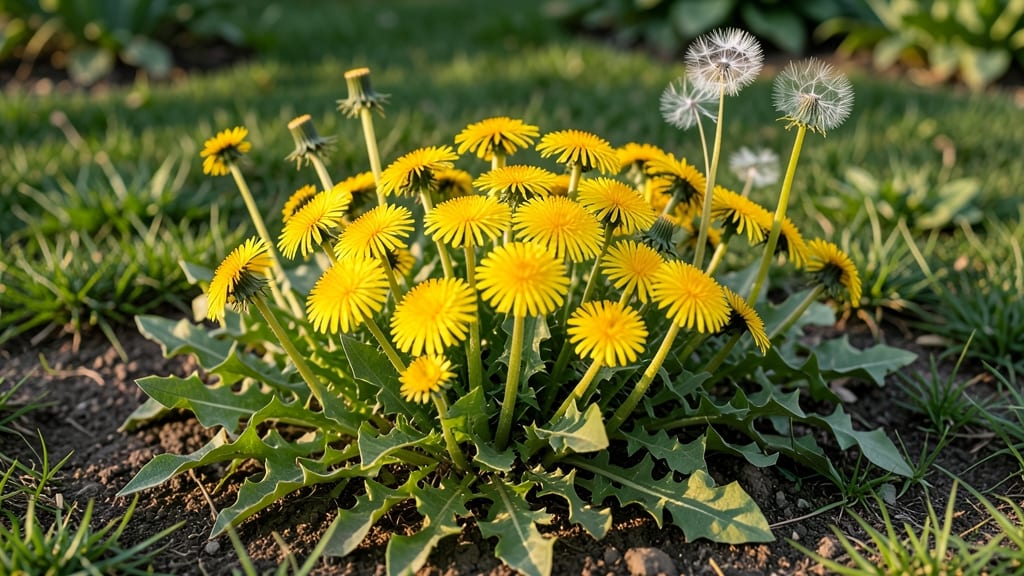
Yellow-flowered ground cover weeds like dandelions 🌼 and creeping buttercups might seem harmless, but they’re actually aggressive invaders that choke out your lawn and garden.
Those bright blooms spreading across your lawn or garden might look pretty, but they’re likely tenacious weeds stealing nutrients from your prized plants—and they’re harder to kill than you think.
In this guide, you’ll learn to identify 10 common types of these weeds by their leaf shapes, root structures, and growth patterns, so you can tackle them before they take over.
From organic removal methods like vinegar solutions to long-term prevention strategies, we’ll cover everything you need to reclaim your yard without harsh chemicals.
10 Most invasive ground cover weeds with yellow flowers (and how to spot them)
Yellow-flowered ground cover weeds might seem harmless at first glance, but they can quickly take over your garden, outcompeting desirable plants for water and nutrients. These invasive spreaders often have deep roots, rapid growth, and prolific seed production.
The key to controlling them starts with accurate identification—many look similar but require different removal strategies.
I’ve spent years battling these sneaky invaders, and I’ve learned that leaf shape, root structure, and growth patterns are the best clues. For example, a dandelion’s deeply lobed leaves and taproot are completely different from the buttercup’s smooth, heart-shaped leaves and fibrous roots.
Misidentifying them can mean wasted effort or even harming your prized plants.
Below is a detailed guide to the 10 most aggressive yellow-flowered weeds you’ll encounter. I’ve included their distinguishing features, typical habitats, and why they’re so difficult to eradicate. Once you recognize these visual red flags, you’ll be better equipped to tackle them before they become unmanageable.
🌱
| Weed Name |
Leaf Shape |
Root Type |
Growth Habit |
Key ID Feature |
| Dandelion 🌼 |
Deeply lobed, toothed edges |
Deep taproot (1-2 ft) |
Rosette basal leaves, hollow stems |
Milky sap when cut, puffball seed heads |
| Creeping Buttercup 🌻 |
Heart-shaped, smooth edges |
Shallow fibrous roots |
Creeping stems (runners), forms mats |
Orange-yellow sap when crushed, 5 petals |
| Oxalis (Wood Sorrel) 🌿 |
Clover-like, trifoliate |
Shallow, bulb-like tubers |
Forms dense colonies, folds leaves at night |
Acidic taste, yellow "clover" flowers |
| Creeping Charlie 🌿 |
Oval, slightly toothed |
Shallow, creeping stems |
Forms dense ground cover, spreads via runners |
Square stems, mint family scent when crushed |
| Hawkweed 🌼 |
Narrow, lance-shaped |
Deep taproot |
Stiff, upright stems, clustered flowers |
Orange-yellow flowers, sticky stems |
| Goldenrod 🌻 |
Narrow, lance-shaped, alternate |
Fibrous roots |
Clumping growth, tall flower spikes |
Plumes of tiny yellow flowers, fall-blooming |
| Crown Vetch 🌿 |
Compound, fern-like |
Deep, woody roots |
Vining, aggressive spreader |
Pea-like flowers, nitrogen-fixing |
| Black Medic 🌼 |
Trifoliate, clover-like |
Shallow, creeping stems |
Forms dense mats, spreads via runners |
Yellow flowers with black seeds, strong clover scent |
| Yellow Nutsedge 🌾 |
Grass-like, triangular stems |
Tuberous rhizomes |
Forms dense turf-like patches |
Looks like grass but has yellow "nuts" (tubers) |
| Selfheal (Wild Bergamot) 🌿 |
Best organic and chemical methods to eradicate yellow-flowered ground cover weeds
Yellow-flowered ground cover weeds like dandelions and creeping buttercups can dominate your garden if left unchecked. These weeds spread aggressively, competing with your desired plants for water and nutrients.
The key to eradication lies in choosing the right method based on your garden's needs—whether you prioritize organic solutions or targeted chemical treatments.
For gardens with edible plants, organic methods are often the safest choice to avoid contamination. However, stubborn weeds may require chemical herbicides for complete removal. Below, I’ll break down the most effective strategies, ranked by their effectiveness and safety for your garden ecosystem.
🌱
Pros and Cons of Eradication Methods
Manual Removal
✅ Pros: Chemical-free, immediate results, reusable for edible gardens
❌ Cons: Labor-intensive, requires frequent repetition, may miss roots
Vinegar Solution
✅ Pros: Organic, kills weeds on contact, inexpensive
❌ Cons: Non-selective, can harm nearby plants, requires sunny conditions
Targeted Herbicides
✅ Pros: Fast-acting, long-lasting, effective on deep roots
❌ Cons: Chemical residue, risk to edible plants, environmental concerns
Mulching
✅ Pros: Prevents regrowth, improves soil health, organic option
❌ Cons: Slow process, requires maintenance, may not eliminate existing weeds
For manual removal, focus on pulling weeds when the soil is moist to avoid breaking roots. Use a weed puller or fork for deep-rooted species like dandelions. Repeat weekly to prevent reseeding. This method is ideal for small gardens but can be time-consuming for larger areas.
If you prefer organic herbicides, a homemade vinegar solution (1 gallon vinegar + 1 cup dish soap + 1 cup salt) works well for non-selective control. Spray on sunny days to maximize effectiveness, but avoid spraying desirable plants.
For targeted chemical herbicides, use products like glyphosate or triclopyr, but follow label instructions carefully to protect edible crops.
Finally, mulching with straw or wood chips suppresses weed growth by blocking sunlight. Apply a 3-inch layer after removing existing weeds. This method is best for prevention but requires consistent upkeep to maintain effectiveness.
🌿
★★★★★4.8(11 reviews)
|