
Planting
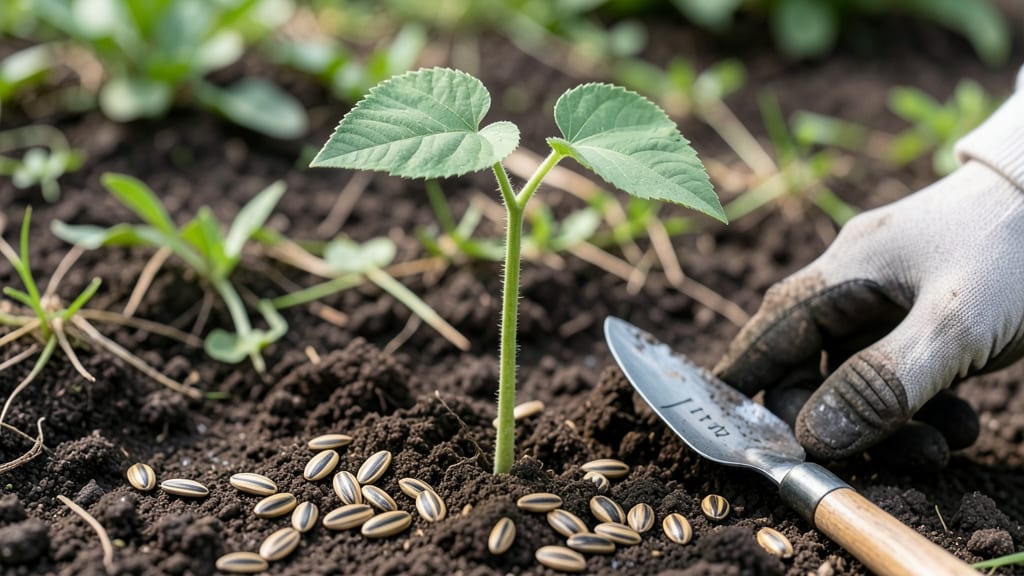
Planting sunflower seeds the right way up is the secret to strong germination—and it’s easier than you think.
Struggling to grow sunflowers because you keep planting the seeds upside down? You’re not alone—this simple mistake can kill germination before it starts. But there’s a foolproof trick to ensure your 🌻 sunflower seeds sprout fast and healthy every time.
Most seeds have a natural orientation: the pointy end should face upward, while the flat side rests on the soil. This isn’t just guesswork—it’s how nature designed them to push through the earth and reach the light.
Get it wrong, and you might end up with weak sprouts or no growth at all.
In this guide, I’ll show you the quick trick to spot the right side, how deep to bury them, and the best soil conditions for perfect germination—so you can grow towering sunflowers without the guesswork.


How to tell which way up to plant sunflower seeds (the easy trick)
Planting sunflower seeds the wrong way up is a common mistake that can prevent germination entirely. The good news? Sunflower seeds have a natural shape that makes the correct orientation obvious once you know what to look for.
This simple trick ensures your seeds sprout strong roots and grow into those towering sunflowers you love.
Sunflower seeds are flattened on one side and have a pointed tip at the opposite end. The pointy end should always face upward when planting. This isn’t just a random rule—it’s how nature designed them to break through soil efficiently. Let’s break down the exact method to avoid any guesswork.
Why orientation matters: Planting seeds upside down forces the radicle (root) to grow upward, while the shoot struggles to emerge downward. This wastes energy and often results in failed germination. The seed’s natural shape ensures the root grows downward and the shoot upward.
Here’s how to verify the correct orientation before planting: Hold the seed between your thumb and forefinger. The pointy end should naturally point toward your ceiling (or upward).
The flat side will rest against your palm. If you’re still unsure, place the seed on a flat surface—the pointy end will always tilt upward due to gravity.
For extra precision, use a seedling tray with clear dividers. Plant each seed with the pointy end facing the top of the tray. This visual cue eliminates any doubt during planting.
If you’re planting directly in soil, press the seed gently so the flat side makes contact with the earth first.
Pro tip: If you’ve already planted seeds upside down, don’t panic. Sunflower seeds are hardy and may still germinate, though the process could take longer.
Monitor the soil closely for any signs of sprouting. If nothing emerges within 2 weeks, gently dig up the seed to check its orientation.
Once you’ve mastered this trick, you’ll see faster germination and healthier seedlings. The key is consistency—every seed should follow the same rule: pointy end up, flat side down. With this method, you’ll be well on your way to growing sunflowers that reach their full potential.
Remember, sunflowers thrive in well-draining soil with full sunlight. After planting, keep the soil moist but not soggy until germination occurs. Once sprouted, reduce watering slightly to encourage root development.
🌻
What happens if you plant sunflower seeds upside down (and how to fix it)
Planting sunflower seeds upside down might seem like a small mistake, but it can have serious consequences for germination and growth. The seed’s natural orientation ensures the embryonic root (radicle) points downward, while the shoot (plumule) faces upward.
When planted incorrectly, the seed struggles to break through the soil, often resulting in failed sprouting or weak seedlings that never recover.
Even if a seed somehow sprouts upside down, the stem will grow in a twisted or crooked pattern, leading to stunted growth or even death. The energy stored in the seed is wasted trying to correct its position, leaving little strength for healthy development.
This is why correct orientation is critical for strong, straight sunflowers that reach their full 3-14 foot potential.
⚠️ callout warning ⚠️
⚠️ Upside-Down Seeds = Failed Germination
Planting sunflower seeds with the pointy end down (or flat side up) blocks the radicle from growing downward, causing:
- No sprouting – Seed rots or dries out
- Twisted stems – Weak, crooked growth
- Stunted height – Sunflower never reaches full size
Fix it: If you’ve already planted upside down, carefully dig up the seed (within 24 hours) and reorient it with the pointy end up.
If you’ve already planted seeds upside down, don’t panic—there’s still hope! The first 24 hours after planting are critical. Gently dig up the seed (if possible) and reorient it with the pointy end facing upward.
This gives the radicle a chance to grow downward naturally. If the seed has already sprouted but is growing crooked, you can try straightening the stem as it emerges, though results may vary.
Watch for these warning signs in early-stage seedlings that were planted incorrectly: slow or no sprouting, twisted stems, or yellowing leaves. These are clear indicators that the seed’s orientation was off.
Even if the seedling emerges, it may struggle to thrive without proper support, often resulting in a weak, spindly plant that’s prone to breaking in wind or storms.
To prevent this mistake in the future, always check your seeds before planting. The pointy end should face upward, while the flat side should rest against the soil. This simple step ensures your sunflowers grow straight and strong, reaching their full tall, majestic potential with vibrant blooms that attract pollinators.
Remember, sunflowers are resilient, but giving them the best start with correct planting orientation sets them up for success. With the right care, your sunflowers will reward you with bold, cheerful flowers that brighten up your garden all season long. 🌻