
Flowers
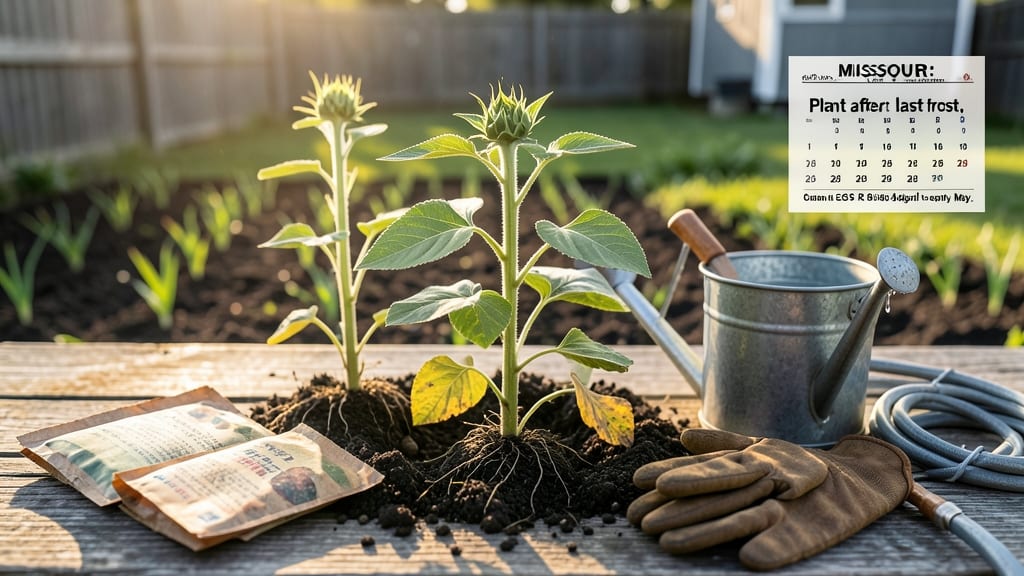
Planting sunflowers in Missouri starts around mid-April, when the frost-free window opens for 60-90 days of growth before fall’s chill.
Missouri’s sunny fields are perfect for sunflowers—but planting them at the wrong time can mean wilted dreams before they even bloom. Whether you’re growing ‘Teddy Bear’ for cut flowers or ‘Autumn Beauty’ for seeds, timing is everything.
The key is knowing your county’s last frost date, which can vary by two weeks from St. Louis to Kansas City. Too early, and a late freeze will stunt your plants; too late, and summer’s heat arrives before they mature.
In this guide, I’ll walk you through the exact planting windows by region, soil prep tips, and how to choose varieties that thrive in Missouri’s 5b-6b climate—so you can enjoy those towering 🌻 blooms by August.
Missouri sunflower planting dates by county: frost-free zone calculator
Sunflowers (Helianthus annuus) thrive in Missouri’s USDA Zones 5b-6b, but timing is everything. Plant too early, and frost will kill tender seedlings. Too late, and your plants may not mature before fall frost.
Missouri’s last average frost dates vary by county—from early April in southern regions to mid-May in northern areas. Let’s break down the perfect planting windows to ensure your sunflowers reach their full 3-14 feet glory.
Most Missouri counties have a 180-day frost-free growing season, but microclimates can shift planting dates by 2-3 weeks. For example, St. Louis County (Zone 6a) typically plants by April 15, while Clay County (Zone 5b) waits until May 1.
Soil temperature also matters—sunflower seeds need 55°F soil to sprout, which usually aligns with air temperatures of 60°F+.
Here’s a comparison of ideal planting windows for Missouri’s key regions, including last frost dates and harvest windows. Use this as your frost-free zone calculator to time your planting perfectly.
If you’re in a northern county, like Clay or Platte, consider starting seeds indoors 2-3 weeks before your last frost date. Use biodegradable pots to transplant seedlings without disturbing roots.
For southern regions, you can even plant as early as March 25—just be prepared to protect seedlings if late frosts strike.
For late-summer blooms, try a second planting in July. Choose fast-maturing varieties like ‘Teddy Bear’ (50-60 days) to ensure flowers open before frost. This works best in southern Missouri, where the growing season extends into October.
In northern counties, limit second plantings to early July to avoid early frost risks.
Missouri’s soil temperatures are critical—sunflower seeds won’t sprout below 55°F. Use a soil thermometer to check before planting. If temperatures are too cool, wait 1-2 weeks or use a black plastic mulch to warm the soil faster.
This is especially important in northern and central counties, where spring can be unpredictable.
Pro tip: Direct sow seeds after your last frost date—sunflowers hate transplanting. Drop seeds 1 inch deep and 6 inches apart in rows 2-3 feet apart. Thin seedlings to
How to Adjust sunflower planting for Missouri’s microclimates
Missouri’s diverse climate—from the humid heat of southeastern counties to the cooler northern plains—means your sunflower planting strategy should shift depending on where you live. While most gardeners aim for mid-April to late June, microclimates can push your window 2-4 weeks earlier or later.
Understanding these variations helps you extend the growing season and avoid frost damage.
For example, St. Louis and Kansas City typically enjoy longer frost-free periods (up to 200 days), while northern counties like Worth or Holt may only have 160-180 frost-free days.
This means early-maturing varieties like ‘Teddy Bear’ (50-60 days to harvest) are safer in cooler regions, while taller varieties like ‘Russian Giant’ thrive in warmer southern zones.
- 🌱 Use row covers in northern Missouri (USDA Zone 5b) to extend the season by 3-4 weeks. Lay covers over seeds after last frost and remove when plants sprout.
- ☀️ Plant late varieties (90+ days to maturity) only in southern Missouri (USDA Zone 6b+). Areas like Cape Girardeau or Springfield can support ‘Autumn Beauty’ until late July for fall blooms.
- ❄️ Adjust for microclimates: Valleys and low-lying areas frost 2-5 days earlier than hilltops. Plant 1 week later in these spots to avoid late-spring frosts.
- 🌾 Choose dwarf varieties (3-5 ft tall) for urban gardens or windy areas. ‘Moulin Rouge’ matures in 60 days and resists toppling in St. Louis’ windy zones.
- 💡 Monitor soil temperature: Sunflowers need 50°F+ soil to germinate. Use a soil thermometer—if temps are below 55°F, wait 1-2 weeks or use black plastic mulch to warm the soil faster.
If you’re in a transition zone (like Jefferson or Franklin County), consider staggered planting. Sow half your seeds in early May and the rest in late May to ensure continuous blooms through September.
This works especially well for cut flowers or seed production, giving you a longer harvest window.
For extended fall interest, try succession planting with short-season varieties like ‘Little Becka’ (60 days). Plant these in mid-July in southern Missouri—they’ll bloom just as goldenrod and asters take over, adding height and drama to your late-season garden.
Don’t forget to protect young seedlings from late-spring frosts, even in warmer counties. A lightweight row cover or cloche can save your crop if temperatures dip below 32°F after germination. In northern Missouri, this is especially critical for early April plantings.
By tailoring your sunflower variety, planting date, and season-extending tools to your local microclimate, you’ll turn Missouri’s variable growing season into an advantage—ensuring bold blooms and bountiful seeds from spring to fall. 🌻