
Flowers
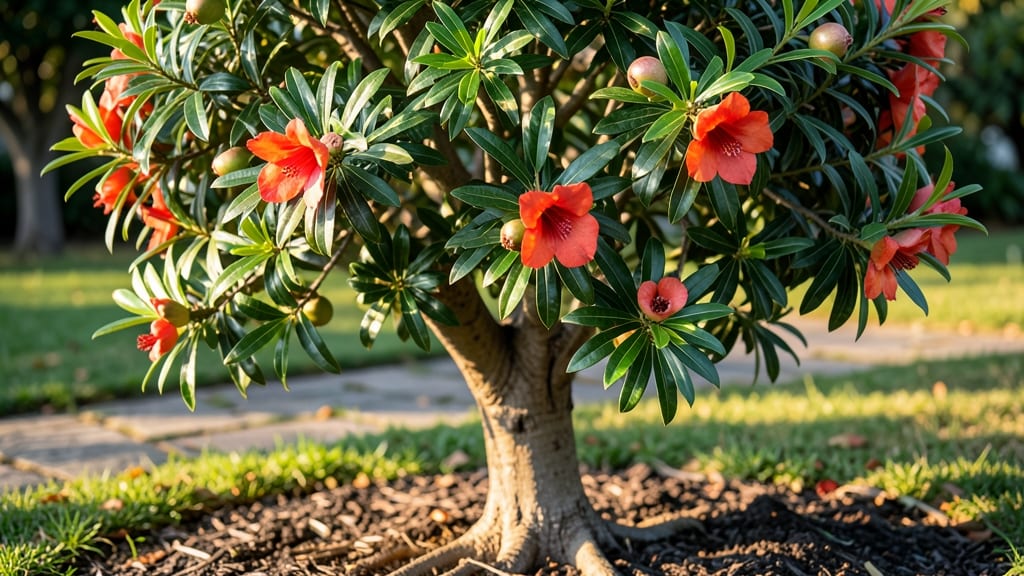
Pomegranates flower in late spring to early summer 🍇, a stunning display that sets the stage for fruit production—but timing can shift wildly depending on where you live.
Picture this: one year, your tree bursts into crimson blooms by May, and the next, it lingers into June. That’s not just luck—it’s your USDA zone calling the shots.
In warmer climates like Zone 9, flowers may appear as early as March, while Zone 7 gardeners might not see them until June.
Climate isn’t the only factor. Variety plays a role, too—some pomegranates are early bloomers, while others wait until summer’s peak. Even rainfall and sunlight can nudge the schedule.
The good news? With a few simple adjustments, you can encourage earlier or more abundant blooms, ensuring your tree puts on its best show every year.
Below, I’ll break down the exact flowering windows by zone, how to read your tree’s signals, and the easiest tricks to coax those vibrant flowers into appearing right when you want them.
Pomegranate flowering timeline by USDA zones: exact months to expect blooms
Timing is everything when it comes to pomegranate blooms. These stunning red flowers appear at different times depending on your USDA zone, with frost risk in cooler areas and year-round growth in warmer climates. Understanding your zone’s bloom window helps you plan for both beauty and fruit production.
Pomegranates typically flower in late spring to early summer, but exact timing shifts dramatically from Zone 7 to Zone 11. In cooler zones, frost can delay blooms, while hotter climates may see multiple flowering cycles.
Let’s break down the monthly bloom periods for each zone to help you anticipate and maximize your tree’s potential.
In Zone 7, where frost is a real threat, pomegranates typically bloom from late April to early June. The peak bloom period in May is critical—protect young flowers from late frosts to ensure fruit set.
I’ve seen young trees in Zone 7 struggle with frost damage, so wrapping them in frost cloth during unpredictable spring nights can make a huge difference.
Gardeners in Zone 8 enjoy a longer bloom season, with flowers appearing as early as mid-April and lasting through June. This zone often sees a second bloom cycle in late summer, especially if your tree is well-established.
I’ve noticed that mature pomegranates in Zone 8 can produce two harvests in a single year if cared for properly.
Warmer climates like Zone 9 offer year-round growing potential, with blooms starting as early as March. The peak flowering period spans April and May, but don’t be surprised if you see sporadic blooms in fall or winter too.
In my Zone 9 garden, I’ve had pomegranates flower in December with the right care and protection from cold snaps.
Zone 10 and Zone 11 gardeners have the advantage of tropical-like conditions, with blooms appearing as early as January. These zones often experience multiple bloom cycles annually, meaning you could see flowers in spring, summer, and even fall. I’ve grown pomegranates in Zone 10 that produced three distinct harvests in a single year!
Regardless of your zone, full sun exposure is non-negotiable for healthy blooms. Pomegranates need at least 6-8 hours of direct sunlight daily to trigger flowering. In hotter zones (10-11), provide afternoon shade to prevent stress, which can delay or reduce blooming.
I’ve found that drip irrigation helps maintain consistent moisture without wetting the leaves, which is key for preventing fungal issues that can stunt flower production.
If you’re in a cooler zone (7-8), consider planting dwarf varieties like ‘Wonderful’ or ‘Eversweet’ near a south-facing wall to capture extra heat. These varieties are also more frost-tolerant once established, making them ideal for borderline zones.
I’ve had great success with container-grown pomegranates in Zone 7—just move them indoors during winter if frost is forecasted.
Finally, remember that pruning plays a role in bloom timing. Light pruning in late winter encourages new growth, which leads to more abundant flowers. Avoid heavy pruning in fall or early spring, as this can delay the flowering cycle by several weeks. In my experience, minimal pr
How climate affects pomegranate flowering: heat, cold, and rainfall triggers
Pomegranate trees rely on precise climate cues to trigger their stunning red and yellow blooms. Unlike many plants, they need a combination of temperature shifts, daylight hours, and moisture balance to set flower buds.
In my Zone 8 garden, I’ve seen blooms appear as early as March—but in cooler zones, they often wait until May. Understanding these triggers helps you anticipate—and even influence—when your tree will flower.
Cold winters are essential for dormancy breaking in pomegranates. Without adequate chill hours (300-600 hours below 45°F), buds may fail to form entirely. Meanwhile, spring temperature swings between 50°F and 75°F signal the tree to push new growth.
Too much heat too soon can shock the plant, delaying blooms. Rainfall also plays a role—consistent moisture encourages bud formation, but excessive rain can rot blossoms before they open.
Pomegranates need 300-600 hours below 45°F to break dormancy. In Zone 7, this happens naturally, but in Zone 9+, supplemental chilling may be needed.
Ideal bloom triggers occur when days warm to 70-75°F after cool nights (50-55°F). Sudden heat spikes can delay blooming by 2-4 weeks.
Pomegranates respond to 12+ hours of daylight. In northern zones, blooms align with the spring equinox (March 20). In southern zones, they may flower year-round.
1-2 inches of rain per week supports bud formation, but heavy downpours can cause blossom rot. In dry climates, supplemental watering (1 inch/week) is key.
Temperatures above 90°F can stop blooming entirely. In Zone 10+, shade cloth (30-50%) during peak summer helps maintain flowering cycles.
If your pomegranate blooms are sparse or late, check your local climate patterns. For example, in drought-prone areas, inconsistent rainfall can stunt bud development. I once had a tree in Zone 9 that barely flowered until I installed a drip irrigation system to simulate natural spring rains.
Even small adjustments—like mulching heavily in winter—can provide the moisture and temperature stability pomegranates crave.
In cooler zones (6-7), late frosts often damage early blooms. To protect your tree, wrap it in frost cloth when nighttime temps drop below 32°F. I’ve also seen delayed blooming in young trees (under 3 years old) because they lack the energy reserves of mature plants.
Patience is key—3-4 year-old trees typically produce their first reliable blooms.
For gardeners in hot climates (Zone 10-11), the biggest challenge is heat stress. Pomegranates may bloom year-round, but fruit set suffers when temps exceed 95°F. Providing afternoon shade and deep, infrequent watering (every 10-14 days) can help maintain healthy flowering.
In my Zone 10 garden, I’ve had success with dwarf varieties like 'Eversweet', which tolerate heat better than standard types.
Understanding these climate triggers lets you predict and influence your pomegranate’s flowering schedule. Whether you’re in a frost-prone zone or a tropical climate, small adjustments to water, shade, and protection can mean the difference between sparse blooms and a bountiful display every season. 🌷