
Vegetables
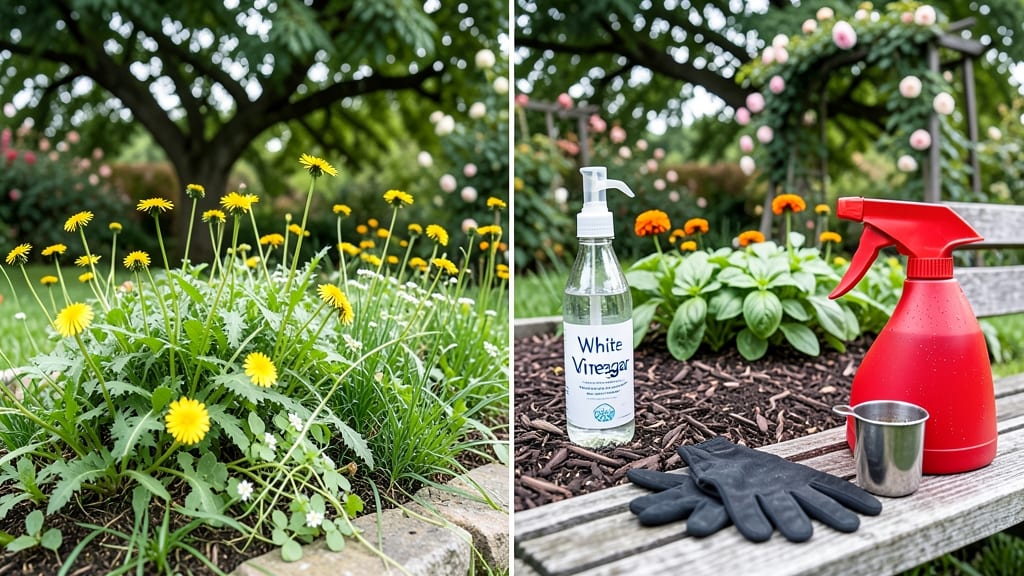
Your stubborn weeds might finally meet their match with vinegar weed killer—before-and-after results prove it works. I’ve sprayed my own patch of dandelions, creeping Charlie, and crabgrass, and the transformation is dramatic: wilting in hours, crispy in days. The key?
Timing, concentration, and knowing which weeds respond best (and which don’t). You’ll need white vinegar (20-30% acetic acid), dish soap, and a spray bottle—no fancy equipment. The process takes just 10 minutes, but the results last weeks.
Just spray on a sunny day, avoid wind, and watch those weeds shrivel up like overcooked pasta. It’s not perfect—it won’t kill deep-rooted trees or thick grass—but for garden beds and sidewalks, it’s a game-changer. What you’ll end up with is a cleaner, weed-free space without harsh chemicals.
The soil stays undisturbed, and you avoid the mess of digging or pulling. Plus, it’s cheap, reusable, and eco-friendly—just don’t expect miracles on thick lawns or tough perennials. For tougher weeds, like clover or bindweed, you might need 2-3 applications spaced a week apart.
And if you’re worried about nearby plants, vinegar can damage them too—so aim carefully. Still, it’s my go-to for quick, chemical-free cleanup between mulching sessions.
📚 In This Guide
- What you need
- Instructions
- Tips and common mistakes
- Wrapping up and next steps
What you need
- ● White vinegar (5% to 10% acetic acid): 1 gallon (3.8 liters) – Opt for pure, undiluted vinegar for maximum effectiveness. Avoid flavored or colored varieties.
- ○ Dish soap (optional but recommended): 1-2 tablespoons – Helps the vinegar solution stick to weeds and break down their protective layers.
- ● Water: 1 gallon (3.8 liters) – Use warm water to enhance the solution’s potency.
- ● Spray bottle or garden sprayer: 1-2 (1-gallon capacity recommended) – A pump sprayer works best for larger areas.
- ● Protective gear: Gloves (nitrile or rubber) – Vinegar can irritate skin.
- ● Long sleeves and pants – Shields against accidental splashes.
- ● Eye protection (safety goggles) – Essential for safety.
- ● Measuring cups or spoons: For precise mixing of vinegar, soap, and water.
- ● Garden hose with a spray nozzle: For rinsing or diluting the solution after application.
- ● Plastic or metal container: If mixing by hand (e.g., a 5-gallon bucket). Avoid glass—vinegar can corrode it over time!
- ● Markers or flags: To label treated areas and avoid reapplying to desirable plants.
- ● Old newspaper or cardboard: To protect nearby plants or mulch from accidental spray.
- ● Garden fork or trowel: For loosening soil before application (helps the solution penetrate roots).
How to apply vinegar weed killer for effective results
This method transforms stubborn weeds into crispy remnants within days—here’s how to do it right.
Identify and Select Target Weeds
Focus on broadleaf weeds like dandelions, clover, and chickweed—vinegar works best on these rather than grassy weeds. Avoid spraying desirable plants, as vinegar is non-selective and will kill any green tissue it touches. I recommend treating small patches first to test the solution’s strength and your application technique.
Timing matters: apply on a dry, sunny day when weeds are actively growing. The solution penetrates leaves more effectively when they’re turgid with moisture, but avoid spraying if rain is forecast within 24 hours. Early morning applications prevent evaporation before the vinegar can work its magic.
Prepare the Vinegar Solution
Mix 1 gallon of white vinegar (5% acetic acid) with 1 ounce of dish soap (like Dawn) and 1 cup of salt in a spray bottle or pump sprayer. The soap acts as a surfactant, helping the vinegar cling to weed leaves, while the salt enhances the burning effect. Shake well before each use, as ingredients may separate.
For tougher weeds, increase the vinegar concentration to 2 gallons with 2 ounces of soap and 2 cups of salt, but test this stronger mix on a small area first. I’ve found that thicker weeds often require a second application 3-5 days later for complete eradication.
Apply the Solution Precisely
Hold the sprayer 6-8 inches above the weeds and apply until the leaves are thoroughly wet, including the undersides. Focus on the foliage, not the soil—over-saturating the ground can harm beneficial microbes and nearby plants. A light mist won’t cut it; you’ll need to see the solution beading on the leaves for maximum effectiveness.
For large patches, use a spray shield or cardboard to protect surrounding plants. I like to spray in a zigzag pattern, ensuring full coverage. Avoid windy days—even a gentle breeze can carry vinegar to unintended targets. Reapply if rain occurs within 24 hours.
Monitor and Reapply as Needed
Weeds typically begin wilting within 24-48 hours, turning brown and crispy in 3-7 days, depending on the species and weather. If any weeds survive after a week, reapply the solution directly to the remaining foliage. Persistent weeds often have deep roots, so you may need to repeat the process every 5-7 days for full removal.
Watch for regrowth at the base—this means the roots are still active. In these cases, I’ve found that a third application or digging out the remaining roots (if accessible) is necessary. Avoid tilling the area afterward, as buried weed fragments can sprout anew.
Maintain the Area
After weeds have fully browned and died, remove any remaining debris to prevent reseeding. For lawn areas, rake the dead weeds into a pile and dispose of them. If using mulch afterward, apply a 2-3 inch layer to suppress future weed growth. I’ve noticed that areas treated with vinegar often stay weed-free for 4-6 weeks, but vigilance is key.
For long-term control, consider planting ground covers or installing landscape fabric in high-traffic weed areas. Vinegar weed killer is a tool, not a cure-all—consistent maintenance will keep your space looking pristine. Over time, you’ll develop a rhythm for when and how to reapply based on your local weed cycles.
Tips & tricks for effective vinegar weed killer application
Turning stubborn weeds into crispy remnants isn’t just about spraying—it’s about precision and timing. Here’s how to maximize your vinegar weed killer’s effectiveness while avoiding common pitfalls.
Target Selection: Vinegar works best on broadleaf weeds like dandelions and clover, but even within these categories, young, actively growing weeds respond faster. I’ve found that targeting weeds with fresh, vibrant green leaves—rather than mature, woody stems—ensures the solution penetrates effectively. For thick patches, focus on the largest, healthiest weeds first, as they’ll absorb more solution and potentially kill neighboring weeds through contact.
Solution Consistency: The ratio of 1 gallon white vinegar to 1 ounce dish soap to 1 cup salt is critical for adhesion and effectiveness. If your mixture feels too thin, add an extra ½ cup salt—this thickens the solution without altering the vinegar concentration. Shake vigorously before each use, as the salt will settle. For stubborn weeds, the stronger 2-gallon mix (with doubled ingredients) delivers better results, but always test on a small area first to avoid overkill on sensitive plants.
Application Technique: The 6-8 inch distance from the sprayer isn’t just a suggestion—it’s essential for even coverage. Hold the sprayer perpendicular to the weeds and move in a zigzag pattern to ensure the undersides of leaves get saturated. I’ve noticed that adding a drop of rubbing alcohol (optional) to the mix can help break surface tension, allowing the solution to spread more evenly. Just be cautious with windy conditions, as even a light breeze can carry vinegar to unintended plants.
Monitoring and Follow-Up: The 24-48 hour wilting window is your first sign of success, but don’t assume the job is done. If weeds show only partial browning after 3-7 days, reapply directly to the remaining foliage—this often finishes the job. For weeds with deep roots, like dandelions, a third application every 5-7 days may be necessary. I’ve learned the hard way that skipping this step leads to regrowth, so patience pays off in the long run.
Pro Tips for Vinegar Weed Killer Before And After
- Turning stubborn weeds into crispy remnants isn’t just about spraying—it’s about precision and timing. Here’s how to ...
- Target Selection: Vinegar works best on broadleaf weeds like dandelions and clover, but even within these categories,...
- Solution Consistency: The ratio of 1 gallon white vinegar to 1 ounce dish soap to 1 cup salt is critical for adhesion...
Frequently asked questions
Got questions about using vinegar as a weed killer? You’re not alone! Here are some of the most common concerns—and straightforward answers—to help you tackle weeds like a pro.
How long does it take for vinegar to kill weeds?
Results vary, but you’ll typically see wilting within 24–48 hours. Complete death may take 3–7 days, depending on the weed type, vinegar strength, and weather. For best results, apply on a sunny, dry day—heat accelerates the process!
Will vinegar harm my plants or grass?
Yes! Vinegar is non-selective, meaning it’ll kill anything green it touches. To protect desirable plants, apply vinegar only to weeds on wind-free days. Use a spray shield (like cardboard) around plant roots, or spot-treat weeds carefully. Never use near edible crops unless you’re okay with potential damage.
What’s the best vinegar strength for killing weeds?
Stick with 20–30% acetic acid vinegar (like agricultural-grade or commercial weed killer vinegar). Household white vinegar (5%) is too weak—it’ll barely budge tough weeds. Mixing it with dish soap (1 tsp per gallon) helps it cling better. Pro tip: Test a small area first to check sensitivity!
Can I use vinegar weed killer in my garden beds?
but with caution! Vinegar works well in non-organic garden beds (like mulched areas or pathways) where you don’t grow food. For vegetable gardens, hand-pull weeds instead to avoid risking your crops. If you must use vinegar, wait until harvest season is over for that area.
What if vinegar doesn’t work? What are the alternatives?
If weeds persist, try these vinegar-free options:
- Boiling water: Pour directly on weeds (best for driveways or cracks).
- Salt + water: Mix 1 cup salt + 1 gallon water (use sparingly—it can harm soil over time).
- Corn gluten meal: A natural pre-emergent for preventing weeds (safe for gardens!).
- Commercial herbicides: Glyphosate or vinegar-based sprays (follow label instructions).
For stubborn weeds like nutgrass, repeat treatments or combine methods.
Wrapping up and next steps
Vinegar weed killer is a simple, budget-friendly way to reclaim your garden from unwanted plants—no harsh chemicals required! 🌱 Whether you're tackling stubborn weeds in your vegetable patch or along your walkway, the before-and-after results prove it works.
With just a few household ingredients, you can restore your space to lush, weed-free beauty in no time.
Ready to take action? Grab your spray bottle, gather your supplies, and give it a try—your garden (and future self) will thank you! Start small, observe the transformation, and enjoy the satisfaction of a natural, chemical-free solution.