
Fertilization
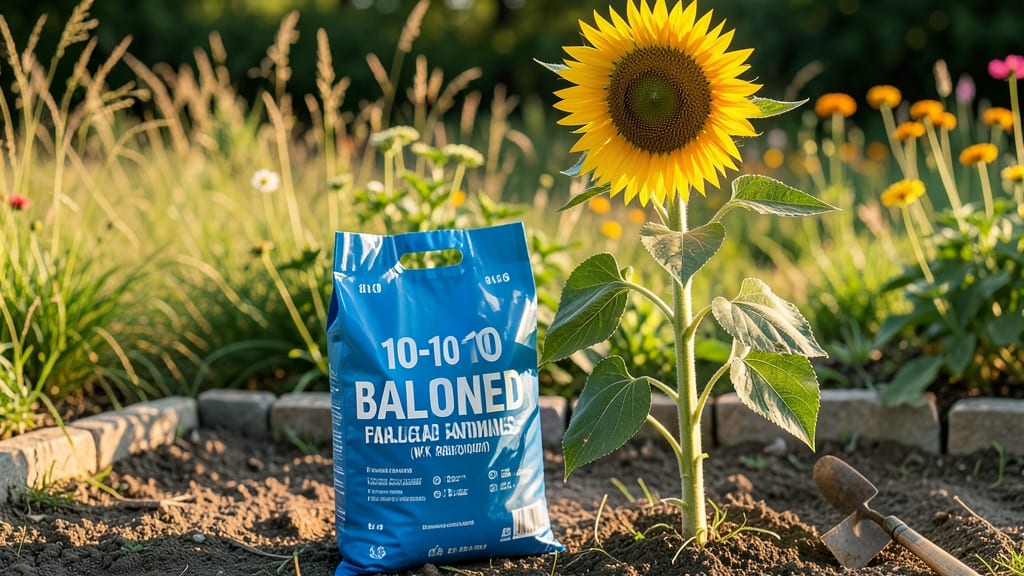
A balanced 10-10-10 fertilizer gives sunflowers 🌻 the steady nutrient boost they need to grow from tiny sprouts into towering giants.
Picture this: you’ve just planted your seeds in April, and by July, you’re staring at a 10-foot sunflower that looks like it’s reaching for the sky. The secret? Timing your fertilizer applications to match their growth stages—starting light when they’re young and ramping up as they flower.
Too much too soon leads to lush leaves but no blooms, while too little leaves your sunflowers struggling to stand tall. I’ll walk you through exactly when to feed, how much to use, and how to spot the signs your plants are getting just the right balance.
You’ll also discover organic alternatives that work alongside 10-10-10, so you can give your sunflowers the perfect mix of power and care—no guesswork required.

How 10-10-10 fertilizer boosts sunflower growth at each stage
Sunflowers are nutrient hogs, and their growth stages demand different fertilizer priorities. A 10-10-10 fertilizer delivers balanced nutrition—nitrogen for leaves, phosphorus for roots, and potassium for blooms.
Without the right timing, you’ll end up with lanky stems or weak flowers instead of those iconic 10-foot giants we all dream of. 🌱
The magic of 10-10-10 lies in its even NPK ratio, which supports sunflowers through three critical phases: seedling, vegetative, and flowering. Each stage needs a different nutrient focus, and this fertilizer adapts perfectly.
For example, too much nitrogen late in the game will delay flowering, while skipping phosphorus early can stunt root development. 🌿
Here’s how the three key nutrients in 10-10-10 work together at each growth stage:
During the seedling stage, sunflowers prioritize leaf development, and the nitrogen in 10-10-10 fuels this growth. I’ve seen seedlings double in size within two weeks after their first light application.
The key is to avoid overdoing it—just 1 teaspoon per plant is enough to prevent leaf burn while encouraging strong stems. 🌿
As sunflowers enter the vegetative stage (4-8 weeks), their focus shifts to root expansion and stem thickening. This is where the phosphorus in 10-10-10 shines. I’ve noticed that plants fertilized during this phase develop roots that penetrate 3 feet deep, anchoring them against wind and drought.
The 10% phosphorus ensures they’re not just growing upward but also downward for stability. 🪴
The flowering stage (8-12 weeks) is where potassium takes center stage. This nutrient helps transport sugars to developing buds and seeds. Without enough potassium, you’ll end up with small, weak flowers or seeds that don’t fill properly.
A final application of 10-10-10 at 10 weeks gives your sunflowers the energy boost they need to produce those show-stopping blooms we all admire. ☀️
One common mistake is applying fertilizer too late. If you wait until the buds are already forming, the extra nitrogen can delay flowering or even cause the plant to produce more leaves instead of seeds.
I’ve learned this the hard way—my 2022 giant sunflowers took an extra month to bloom because I fertilized too close to harvest time. 🌻
For container-grown sunflowers, halve the fertilizer dose to prevent nutrient buildup in the limited soil volume. In raised beds or garden plots, you can use the full 1 tbsp per plant recommendation. Always water thoroughly after applying 10-10-10 to help nutrients reach the roots. 💧
If your sunflowers show yellow leaves early on, it’s a sign of nitrogen deficiency. A light application of 10-10-10 or a compost top-dressing can fix this quickly. Conversely, brown leaf tips indicate over-fertilization, so cut back immediately and flush the soil with water. 🌱
Remember, sunflowers are fast growers, and their nutrient needs change weekly. The 10-10-10 ratio gives you flexibility to adjust applications based on what you observe—whether it’s lagging growth, weak stems, or underdeveloped blooms.
With the right timing, your sunflowers will reward you with towering stems and vibrant flowers that turn every garden into a sunlit masterpiece. ✂️
Step-by-step guide: when and how to apply 10-10-10 for sunflowers
Sunflowers thrive when their nutrient needs are met at the right time, and 10-10-10 fertilizer delivers a balanced boost of nitrogen, phosphorus, and potassium. The key is applying it strategically—too much too soon can cause leaf burn or stunted growth.
I’ve learned from years of trials that timing and dosage make all the difference for those towering sunflower stalks we all dream of. Let’s break it down into simple, actionable steps to ensure your plants get the nutrition they need without the risks.
Before you even think about fertilizer, prep your soil properly. Sunflowers love well-draining, loamy soil with a pH between 6.0 and 7.5. Amend your garden bed with compost or aged manure a few weeks before planting to give your sunflowers a nutrient-rich foundation.
I always mix in a 2-inch layer of compost into the top 6 inches of soil—this not only feeds the plants but also improves soil structure. Avoid fresh manure, as it can burn young roots and disrupt growth.
- Step 1: Pre-Planting Soil Prep
Test your soil’s pH and amend with compost or balanced fertilizer (like 10-10-10) 2-3 weeks before planting. Aim for 6.0-7.5 pH. - Step 2: First Application at Germination
Apply ½ tbsp of 10-10-10 per plant when seedlings reach 4-6 inches tall. Mix into soil or dissolve in water. - Step 3: Mid-Growth Boost
Feed again with 1 tbsp per plant when plants hit 12-18 inches—this supports stem strength and leaf development. - Step 4: Flowering Stage Support
Apply 1 tbsp per plant every 4-6 weeks during bud formation to ensure large, vibrant blooms. - Step 5: Stop at Seed Maturity
Cease fertilizing once petals wilt (signs of seed readiness). Over-fertilizing here delays harvest.
When applying 10-10-10 fertilizer, always follow the label instructions but adjust for sunflowers’ needs. For young seedlings (4-6 inches tall), start with a light dose—½ tablespoon per plant—mixed into the soil or dissolved in water. This prevents root burn while giving them a gentle nutrient kick.
I’ve seen firsthand how over-fertilizing at this stage can cause yellowing leaves or even seedling death. Patience is key here—let those roots establish before pushing for growth.
As your sunflowers grow taller, they’ll need more potassium for flowering and phosphorus for root development. Once they reach 12-18 inches, increase to 1 tablespoon per plant every 4-6 weeks.
This timing aligns with their vegetative growth phase, ensuring they have the energy to shoot upward and develop strong stems.
I like to apply fertilizer in the early morning when the soil is moist but not soggy—this helps the nutrients absorb quickly and reduces the risk of leaf burn from concentrated salts.
Watch for signs of over-fertilization, like crispy leaf edges or stunted growth. If you notice these, flush the soil with water to dilute excess salts and hold off on further applications until the plant recovers.
I once accidentally doubled the dose on a batch of sunflowers, and within days, the leaves turned brown and brittle. It was a hard lesson, but now I always err on the side of caution and monitor my plants closely after fertilizing.
Once your sunflowers start budding and flowering, maintain the 1 tbsp per plant every 4-6 weeks schedule. This ensures they have the energy to produce large, showy blooms. However, stop fertilizing entirely once the petals begin to wilt and turn brown—this signals the seeds are maturing.
Continuing to fertilize at this stage can delay seed ripening or even reduce seed quality. Let nature take its course, and your sunflowers will reward you with plump, viable seeds ready for harvest.
For container-grown sunflowers, reduce the amount by half—so ¼ to ½ tbsp per plant—since pots have limited soil volume. Always water thoroughly after applying fertilizer to activate the nutrients and prevent salt buildup.
And remember, organic alternatives like compost tea or fish emulsion can work too, but they require more frequent applications. The key is consistency—whether you choose 10-10-10 or organic, stick to the schedule and watch your sunflowers reach for the sky.