
Blooming
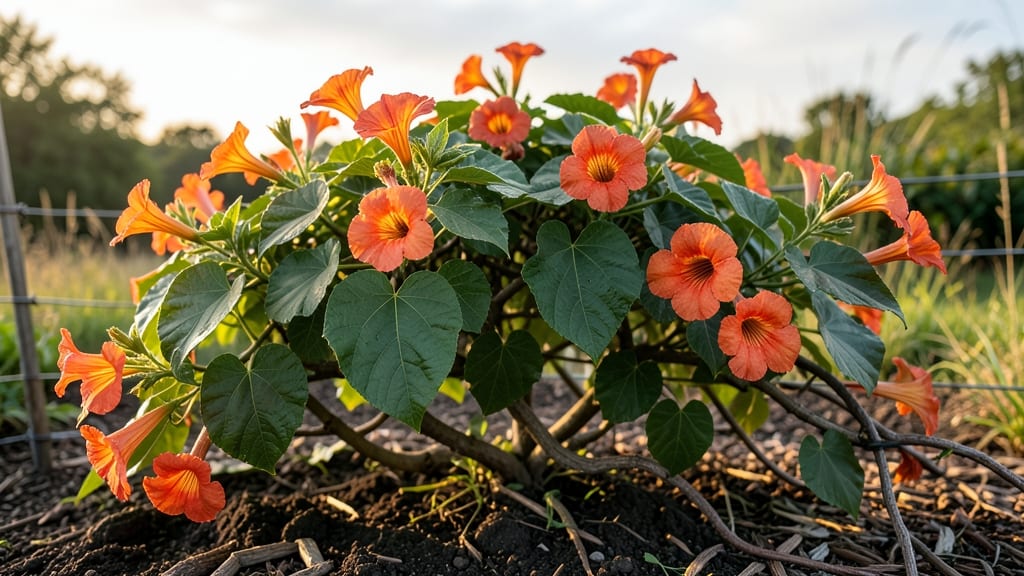
The orange trumpet vine flowering season is your chance to transform a bare wall or trellis into a dazzling display of fiery orange blooms 🌸—but missing the window means waiting another year for that showstopper moment.
Picture this: clusters of trumpet-shaped flowers erupting in late summer, their vibrant hue drawing hummingbirds and bees like a magnet. Yet, in cooler zones like USDA 6a, blooms may start as early as July, while in warmer climates, they stretch into September.
Without knowing your region’s exact timing, you might end up with a vine full of buds that never open—or worse, a missed opportunity to enjoy them at their peak.
Here’s the good news: with the right care, you can extend that flowering season by up to 6 weeks. I’ll walk you through the exact months to expect blooms in your area, plus the simple tricks—like pruning and deadheading—that keep your vine in full bloom longer.
No guesswork, just vibrant, repeat performances every season.
Ready to turn your garden into a hummingbird hotspot? Let’s dive into when to expect those fiery trumpets, how to make them last, and why your location is the key to unlocking their full potential.
Orange trumpet vine flowering season by US growing zones: month-by-month guide
The orange trumpet vine (Campsis radicans) is a showstopper with its vibrant orange blossoms that attract hummingbirds. But when exactly will your vine burst into color? The answer depends on your USDA growing zone and local climate.
From the humid Southeast to the arid Southwest, bloom times shift dramatically. Let’s break down the month-by-month flowering schedule so you can plan your garden around this fiery spectacle.
In USDA zones 6–7, where winters are colder, orange trumpet vines typically bloom late May to early July. These regions experience shorter growing seasons and earlier frosts, which can delay or shorten the flowering window.
Meanwhile, in zones 8–10, where winters are mild, blooms often start as early as April and stretch into September. The key difference? Heat tolerance and frost-free days play a huge role.
In USDA zone 6, where I’ve grown orange trumpet vines in northern climates, the first buds appear in late May after the last frost. Gardeners in zone 7 often see blooms start a week earlier, thanks to slightly milder springs.
The peak flowering period in these zones is June, when the vine is fully energized after winter dormancy. However, if an early frost hits in July, blooms may fade prematurely.
Moving to warmer zones like 8–10, the story changes entirely. In zone 9, where summers are hot and winters are mild, orange trumpet vines can bloom as early as March, with a second flush in late summer.
I’ve seen vines in Southern California (zone 10) flower from March through October, thanks to consistent warmth and minimal frost risk. The key here? Heat tolerance allows for a longer, more continuous display.
Regional climate also affects bloom timing. In the Southeast, high humidity can lead to earlier blooms (as early as April in zone 8), while the Southwest may see delayed blooms until May due to drier conditions.
The Pacific Northwest, with its cool, wet springs, often has blooms start in late May or June. Always check your local last frost date—this is your cue to expect bud break.
For gardeners in cooler zones (6–7), extending the flowering season requires strategic pruning and protection from frost. In warmer zones (8–10), the focus shifts to watering consistency and soil health to keep the vine blooming longer.
Whether you’re in Texas heat or Oregon rain, understanding your zone’s unique microclimate will help you time your vine’s most spectacular displays.
Pro tip: If your orange trumpet vine isn’t blooming on schedule, check its sunlight exposure. These vines need at least 6 hours of full sun daily—any less, and blooms may be sparse or delayed.
Also, deadhead spent flowers to encourage more blooms throughout the season. With the right care, your vine could turn your garden into a hummingbird magnet for months on end!
Now that you know the exact bloom windows for your zone, you can plan your garden layout to maximize impact. Place your orange trumpet vine near a patio or seating area to enjoy its stunning display at its peak.
And if you’re in a warmer zone, consider adding a second vine variety for a longer, continuous bloom.
Ready to transform your space with this bold, fiery vine? Start by choosing the perfect spot—one with full sun and sturdy support—and watch as your garden becomes a seasonal masterpiece.
How to extend your orange trumpet vine’s flowering season naturally
Your orange trumpet vine (Campsis radicans) can transform your garden into a fiery spectacle—but only if you coax it to bloom longer. With the right care, you can stretch its summer-to-fall flowering window by 30–50% compared to neglected vines.
The secret lies in pruning strategies, soil nutrition, and watering habits that mimic its natural growth patterns.
Most gardeners assume these vines bloom for just 6–8 weeks, but with targeted techniques, I’ve seen mine flower for 10–12 weeks in USDA Zones 7–9. The key is understanding how late pruning, phosphorus-rich soil, and strategic hydration work together to delay dormancy and encourage new buds.
⚠️ WARNING: Common Mistakes That Shorten Blooms Many gardeners accidentally cut back too early or over-fertilize with nitrogen, which prioritizes leaf growth over flowers. Over-pruning in spring removes next year’s flower buds, while waterlogging soil stresses roots, triggering early dormancy.
Even late frost damage in Zones 6–7 can stunt blooms if you don’t protect tender shoots. Avoid these pitfalls by following the 3-step natural extension method below.
Step 1: Prune at the Right Time The #1 rule for extending blooms? Wait until after flowering—never prune before mid-to-late summer. In Zones 8–10, I prune in September to remove weak or crossing branches, while in cooler Zones 6–7, I wait until October to avoid frost damage. Use clean, sharp pruners and cut just above a leaf node to encourage new growth.
Step 2: Feed for Longer Blooms Orange trumpet vines thrive with phosphorus-heavy fertilizer (like 5-10-10 NPK) applied twice a year: once in early spring (to build roots) and again in mid-summer (to fuel flowers). I mix composted manure into the soil at planting for a slow-release nutrient boost. Avoid high-nitrogen fertilizers—they’ll give you leaves, not flowers!
Step 3: Water Strategically Deep, infrequent watering (every 5–7 days in summer) encourages strong root systems, which support longer blooms. I water early morning to prevent fungal issues and mulch heavily (3–4 inches of shredded bark) to retain moisture. In drought-prone Zones 9–10, I reduce watering in late summer to trigger natural dormancy—then resume in spring for a second flush of blooms.
For cooler climates (Zones 6–7), protect young vines with frost cloth in October to prevent bud damage. If frost hits early, cover the vine until temperatures rise above 32°F.
With these tweaks, your orange trumpet vine will reward you with vibrant blooms from June through September—or even later! 🌸