
Planting
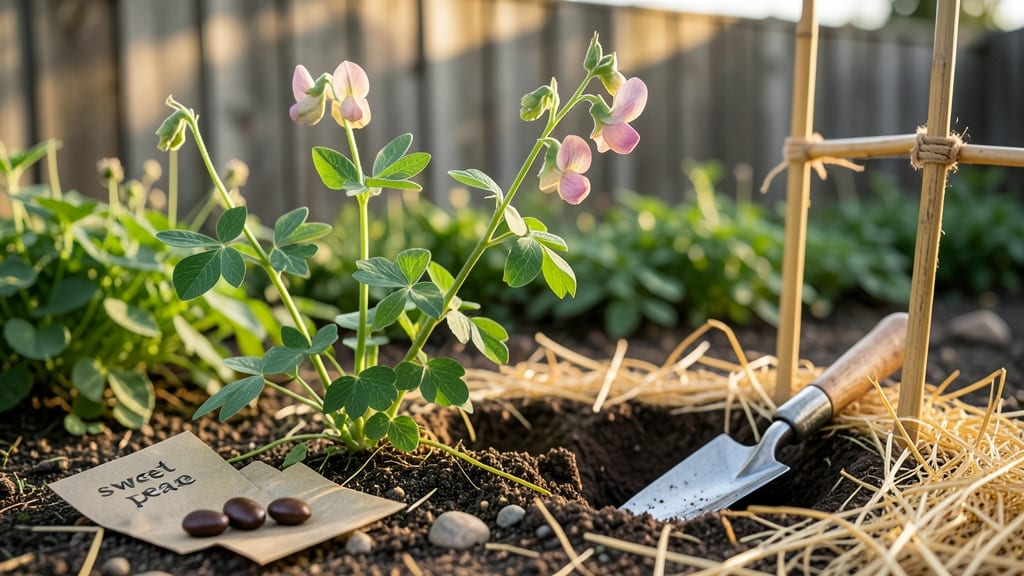
To plant sweet pea flowers 🌸 successfully, start by soaking seeds overnight for faster germination and sow them 1 inch deep in well-drained soil.
Sweet peas aren’t just beautiful—they’re fragrant, fast-growing climbers that can transform any garden into a romantic retreat. But planting them at the wrong time or in the wrong way can leave you with sparse blooms and floppy vines.
In USDA Zone 6, aim for March or April, about 4-6 weeks before your last frost—this timing ensures strong roots before the heat of summer. The key? Rich, slightly acidic soil and a sturdy trellis to support their climbing habit.
Below, I’ll walk you through every step—from soil prep to stake setup—so you can grow a perfect display of fragrant blooms all summer long.


Sweet pea planting timeline: when to sow for maximum blooms
Timing is everything when planting sweet peas. These fragrant climbers thrive when sown at the perfect moment—too early, and frost will damage tender seedlings; too late, and you’ll miss their 60-90 day flowering window.
The key is understanding your USDA zone and soil temperatures, which vary dramatically across regions from Zone 3 to Zone 10. For most gardeners, the sweet spot is 4-6 weeks before your last frost date, but there’s also a clever trick for extending your bloom season.
In USDA Zones 3-5, where winters are harsh, I recommend starting seeds indoors in February or early March. This gives you a head start before transplanting outdoors after the last frost.
Meanwhile, gardeners in Zones 6-10 can often sow directly in the garden as early as late February or March, depending on soil temperatures. The magic number is 45°F (7°C)—sweet peas won’t germinate well in colder soils.
Here’s the secret to maximizing blooms: succession planting. By sowing new seeds every 2-3 weeks from spring through early summer, you’ll enjoy continuous flowers from June through September.
This works especially well for climbing varieties, which can grow up to 8 feet tall and produce blooms for months if given proper care. For bush varieties, a single planting in early spring is usually sufficient.
Now, let’s break down the best planting windows by region with this comparison table to help you visualize the ideal timing for your garden.
For gardeners in Zones 8-10, fall planting is a game-changer. Sweet peas are cool-season plants, meaning they’ll thrive in fall temperatures and even bloom through winter in mild climates.
I’ve had stunning displays in my Zone 9 garden by sowing seeds in September, which produces fragrant blooms by November. This strategy gives you a head start on spring planting and extends your flowering season dramatically.
One common mistake I see is planting sweet peas too late in spring. If you miss the early spring window, your plants may not have enough time to establish roots before summer heat sets in. To avoid this, always check your local frost dates and adjust accordingly.
For example, in Zone 5, where last frosts can occur as late as May 15, I wait until April 15 to sow outdoors to give seedlings a buffer.
Pro tip: Soak your seeds overnight before planting to speed up germination. Sweet peas have hard seed coats, and this simple step can cut your waiting time from 10-14 days to just 7-10 days.
Pair this with a light mulch to retain moisture, and your seedlings will emerge strong and ready to climb. Remember, sweet peas need 6+ hours of sunlight daily, so choose a spot where they’ll get plenty of morning sun to kickstart their growth.
If you’re new to growing sweet peas, don’t overlook the importance of trellis support. These vines grow aggressively, and without proper support, they’ll sprawl and produce fewer blooms. Install your trellis at the same time you plant, or your vines will struggle to reach it later.
For climbing varieties, aim for a trellis that’s at least 6 feet tall—they’ll reward you with a stunning vertical display of color and fragrance.
Finally, keep an eye on your plants for signs of powdery mildew, a common issue in humid climates. To prevent this, water at the base of the plant in the morning and avoid overhead watering.
If you notice white powder on leaves, prune affected areas immediately and consider spraying with a neem oil solution. With the right timing and care, your sweet peas will thrive and fill your garden with intoxicating fragrance all season long.
🌸
Step-by-step sweet pea planting guide: seeds to stakes
Sweet peas thrive with the right start, but their delicate seeds and fast-growing vines require precise care. Whether you’re direct sowing outdoors or starting indoor seedlings, proper soil prep and spacing are key to avoiding floppy vines and sparse blooms.
I’ll walk you through every step—from seed to trellis—so your sweet peas climb confidently and perfume your garden all season.
First, decide whether to sow directly in the garden or start seeds indoors. Direct sowing works best in mild climates (USDA zones 7-10), while indoor starts give you an earlier head start in colder zones.
Both methods need well-draining soil with a pH of 6.0–7.0. Amend heavy clay with compost or sand to prevent waterlogged roots, which can rot tender sweet pea seedlings.
Avoid the common mistake of overcrowding seedlings—thin to 4–6 inches apart once true leaves appear. Crowded plants compete for nutrients, leading to leggy, weak vines. Also, never let the soil dry out completely; sweet peas wilts quickly under stress, and recovery is slow.
If you notice yellowing leaves, check for powdery mildew (a fungal risk in humid climates) and space plants wider for airflow.
After planting, monitor for pests like slugs or aphids, which love tender sweet pea foliage. Handpick slugs at night or use row covers for young seedlings. For aphids, spray with soapy water (1 tsp mild soap per quart of water) or introduce ladybugs as natural predators.
With proper care, your sweet peas will reward you with fragrant blooms in just 8–10 weeks!
🌱