
Flowers
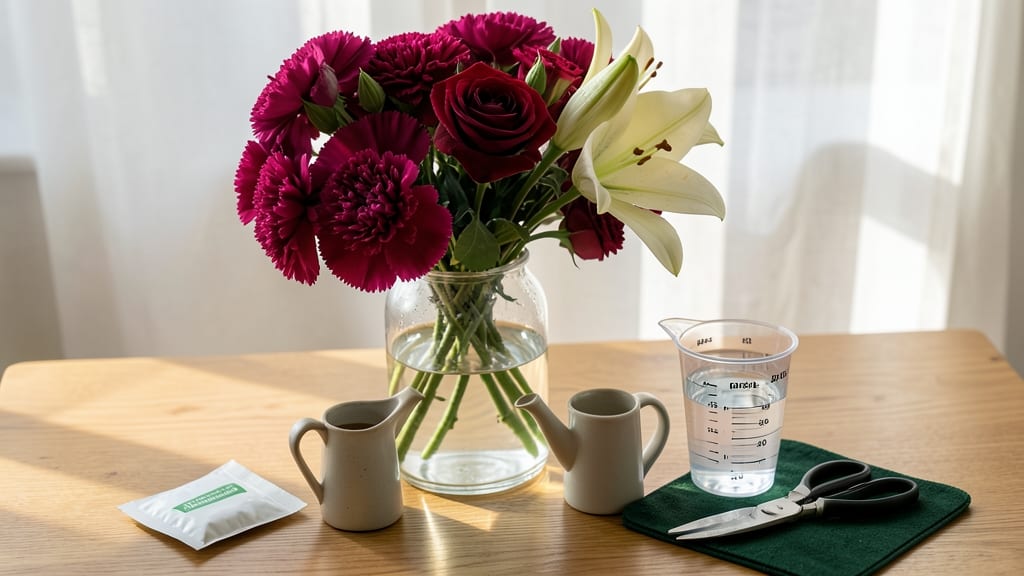
The right amount of water in a vase for flowers is the game-changer between arrangements that last days and bouquets that wilt by morning.
Struggling to keep your cut flowers fresh longer? The secret isn’t just adding water—it’s using the exact ratios for your stem count and flower type. Too much drowns the stems; too little starves them, and neither helps your 🌸 blooms thrive.
Most people guess or follow vague advice, but science shows that roses need 8 ounces for every 5 stems, while lightweight flowers like tulips do best with just 4 ounces per 10 stems.
I’ll break down the precise measurements by flower type, plus how to adjust for vase size and room temperature.
You’ll also learn the 3-step routine to refresh water every 2-3 days, spot signs of over- or under-watering, and even use household items to extend vase life by a full week.


Exact water-to-stem ratios for different flower types by stem count
Getting the water-to-stem ratio right is the difference between flowers that last a week and those that thrive for two weeks or more. Every bouquet has unique needs based on stem count, flower type, and water absorption rates.
Heavy blooms like roses and lilies need more water than delicate stems like tulips or baby's breath—and the vase size matters too. Let’s break down the science-backed measurements you need to keep your cut flowers vibrant.
Most people guess when filling their vases, but precise ratios prevent premature wilting and bacterial buildup. For example, a 5-stem arrangement of lightweight flowers needs far less water than a 20-stem bouquet of roses.
Below, you’ll find the exact ounce measurements for each scenario, tailored to flower weight and stem density. Pro tip: Always use room-temperature water—cold water can shock stems, while warm water speeds up bacterial growth.
| Stem Count | Lightweight Flowers (Tulips, Daisies, Baby's Breath) | Medium Flowers (Carnations, Alstroemeria, Snapdragons) | Heavy Blooms (Roses, Lilies, Hydrangeas) |
|---|---|---|---|
| 5 Stems | 4–6 oz | 6–8 oz | 8–10 oz |
| 10 Stems | 8–10 oz | 12–14 oz | 16–18 oz |
| 15 Stems | 12–14 oz | 18–20 oz | 24–26 oz |
| 20+ Stems | 16–18 oz | 24–26 oz | 32–36 oz |
*Measurements assume a standard 8–12" tall vase. Adjust for wider vases by adding 2–4 oz.
Notice how roses and lilies require nearly double the water of tulips for the same stem count? That’s because their thicker stems and larger blooms pull more moisture. For 20+ stems of heavy blooms, you might need a 32-ounce vase—that’s roughly a quart!
Lightweight flowers like baby’s breath or daisies can actually rot if overwatered, so stick to the lower end of the range for those.
Here’s another pro trick: Recalculate water every 2–3 days. As flowers absorb water, the vase level drops, and bacteria multiply in the remaining liquid. Always refill to the original ratio—never let stems sit in stale water.
For long-stemmed flowers like delphiniums, add a 1-inch platform (like pebbles) to keep stems submerged without overfilling the vase.
What about vase size? A narrow vase (like a skinny mason jar) holds less water than a wide, shallow bowl, even if the stem count is identical.
For example, a 10-stem arrangement of carnations in a 6-inch tall vase needs 12 oz, but the same stems in a 10-inch tall vase would need 16 oz to ensure full submersion.
Always check that at least 1–2 inches of stem are underwater—this is critical for hydrangeas and peonies, which wilt quickly if starved for water.
Don’t forget to trim stems at an angle (about 1 inch off) every 2–3 days. This creates fresh water uptake points and prevents clogging. For woody stems like roses, use sharp sc
Why too much or too little water kills flowers (and how to fix it)
Your cut flowers might look stunning at first, but water imbalances are silently sabotaging their vase life. Too much water causes root rot and bacterial growth, while too little leads to premature wilting.
Both extremes block the stems' ability to absorb moisture, cutting their lifespan short. The key? Finding that sweet spot where hydration supports—not drowns—them.
Most people assume "more water = better," but overfilling vases creates stagnant conditions that trap harmful bacteria. Meanwhile, underfilling forces stems to compete for limited moisture, causing droopy petals within 24 hours.
Even the right water level can fail if you ignore water quality—minerals, bacteria, and algae build up quickly, clogging stems like a blocked artery.
⚠️ WARNING: The Silent Killers of Cut Flowers
Start with 1-2 inches of water in your vase—enough to cover stems but not submerge foliage. For heavy blooms like roses, add 1 extra inch to support their weight.
The 3-step refresh routine I swear by: Day 1 fill with clean water, Day 2 recut stems and add 1 tsp sugar + 2 drops bleach (natural preservative), and Day 4 repeat. This resets water quality and extends life by 3-5 days.
Watch for these red flags: Yellowing leaves mean overwatering, while drooping petals by noon signals thirst. Algae growth (green slime) is a bacterial warning—scrub the vase with vinegar before refilling.
Even tap water can harm flowers—let it sit out overnight to off-gas chlorine or use filtered water for best results.
Pro tip: Use glass vases instead of opaque containers—you’ll spot bacterial slime early. Place arrangements in indirect light (no sun) to prevent heat stress, which accelerates water evaporation. For long-stemmed flowers like lilies, add a pebble layer at the vase bottom to stabilize stems without reducing water volume.
Remember, flowers drink through their stems, not their leaves. Keep foliage dry to prevent mold, and always trim stems diagonally—this creates a larger surface area for water absorption. With these fixes, your vase life can double from 5 days to 10+ days. Happy arranging! 🌸