
Trees
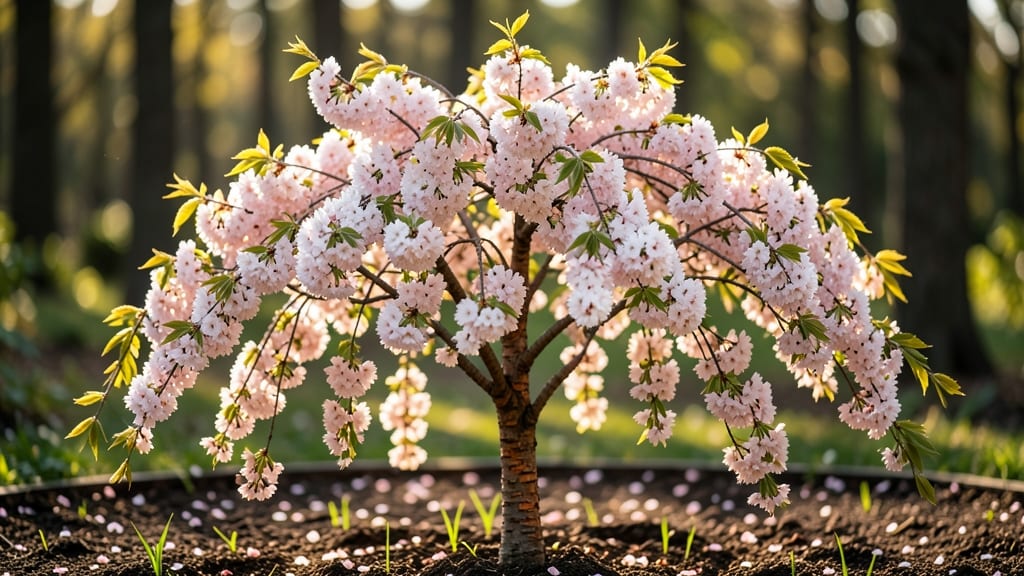
A flowering cherry’s growth rate depends on the variety, climate, and care you provide—expect 2 to 4 feet in its first year and 10 to 20 feet by maturity, with some reaching 40 feet.
If you're dreaming of a stunning springtime display but impatient for your flowering cherry 🌸 to reach its full glory, understanding its growth rate can help you plan—and appreciate—the journey.
Some varieties, like Prunus serrulata 'Kwanzan,' grow faster in warmer zones, while others, such as Prunus subhirtella 'Autumnalis,' take their time but reward you with extended blooming seasons.
Below, I’ll break down yearly height jumps by variety, how climate zones speed up or slow down growth, and the 5 key adjustments you can make to maximize your tree’s potential.


Flowering cherry growth rate by variety: fastest and slowest growers
Choosing a flowering cherry (Prunus spp.) means committing to years of patience—but some varieties grow faster than others. If you want quick color in your landscape, Kwanzan and Autumnalis top the list, while dwarf varieties like 'Shirotae' take their time.
Let’s break down expected yearly growth and maturity timelines so you can plan accordingly.
Most flowering cherries reach mature height between 15-25 years, but their first decade is where the real action happens. Fast growers like 'Fugenzo' can add 2-3 feet annually, while slower varieties like 'Taihaku' average just 1-2 feet per year.
Understanding these rates helps you set realistic expectations for pruning, blooms, and landscape integration.
Here’s a quick look at top performers and slower growers—plus how their growth habits affect your garden timeline.
If you’re planning a small-space garden, dwarf varieties like 'Shirotae' or 'Amanogawa' are ideal—they take longer to mature but stay under 20 feet tall. For quick impact, 'Kwanzan' or 'Fugenzo' deliver 2-3 feet of growth annually, making them perfect for focal points.
Remember, soil quality and sunlight exposure can accelerate growth by 20-30%. Amending clay soil with compost or ensuring 6+ hours of sun daily helps these trees hit their height milestones faster.
I’ve seen 'Autumnalis' in full sun add 3 feet in a single season—proof that optimal conditions make all the difference!
For container growers, dwarf varieties are your best bet, but even they need 5-gallon pots at planting and annual repotting to keep up with root growth. If you’re using containers, expect slower growth rates—typically 50% of field-grown speeds
How climate zones affect flowering cherry growth speed
Your flowering cherry's growth speed isn't just about genetics—it's heavily influenced by your USDA climate zone. Trees in warmer zones like Zone 7-9 often grow 1.5-2x faster than those in colder zones like Zone 3-5 due to longer growing seasons and milder winters.
Understanding these differences helps you set realistic expectations and adjust care accordingly.
In colder zones (Zone 3-5), flowering cherries enter seasonal dormancy earlier, slowing growth during winter months. Meanwhile, trees in Zone 6-9 enjoy extended growing periods, allowing them to push new growth well into fall.
This zone-based growth variation explains why a Zone 7 tree might reach 15 feet in 5 years while a Zone 5 counterpart takes 7-8 years to reach the same height.
Here's how climate zones impact flowering cherry growth rates, including cold-hardiness and seasonal dormancy effects:
In Zone 3-4, flowering cherries like 'Shirofugen' grow slowly due to harsh winters, often needing 5-7 years to reach 10 feet. Meanwhile, in Zone 7-9, varieties such as 'Autumnalis' can add 3 feet annually thanks to milder winters and longer growing seasons.
The key difference lies in dormancy periods—trees in colder zones spend more time resting, while those in warmer zones focus energy on growth year-round.
Regional variations also play a role. For example, a Zone 6 flowering cherry in Chicago may grow 10% slower than one in Atlanta (Zone 7) due to colder winters and shorter summers.
To compensate, gardeners in cooler zones should focus on early spring fertilization and mulching to extend the growing season and protect roots from freeze-thaw cycles.
If you're planting in Zone 5 or below, choose cold-hardy varieties like 'Tokyo Hills' or 'Mount Fuji', which tolerate -25°F temperatures. In warmer zones, opt for heat-tolerant types like 'Kwanzan' to prevent leaf scorch during summer heatwaves.
Understanding these zone-specific traits ensures your flowering cherry thrives at its optimal growth rate.