
Watering
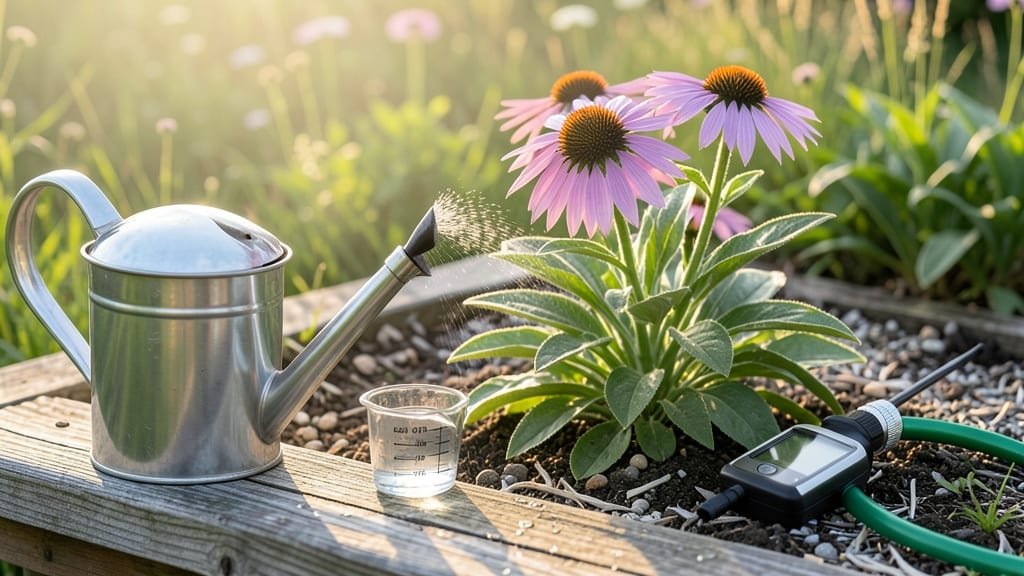
Understanding the coneflower water requirements is the key to those bold, long-lasting blooms you’ve been dreaming of—without drowning their roots or wasting time on guesswork.
Struggling to keep your 🌼 thriving without overwatering? The secret is in their natural drought tolerance, but even hardy plants need the right approach. Too much water, and you’ll smother their roots; too little, and those vibrant blooms won’t last.
I’ll show you exactly how to balance it—whether you’re in a dry climate or a humid one.
Most gardeners water coneflowers once a week in spring and summer, but that’s just the starting point. Soil type, rainfall, and even mulch play a huge role.
By the end of this guide, you’ll know when to water, how deep to go, and what signs to watch for to keep your plants happy and blooming all season.
Ready to master the drought-tolerant watering schedule that turns good blooms into showstopping ones? Let’s dive in.


How often to water coneflowers for optimal growth and blooming
Coneflowers (Echinacea) are prized for their drought-tolerant nature and vibrant blooms, but even these hardy plants need the right watering schedule to thrive. Unlike thirsty annuals, coneflowers store moisture in their deep roots, so overwatering is a bigger risk than underwatering.
My 10-year experience growing coneflowers in Zone 6a has taught me that seasonal adjustments are key to keeping them healthy without wasting water.
Newly planted coneflowers need consistent moisture to establish roots, but mature plants can go weeks without water in ideal conditions. The trick is monitoring soil moisture and adjusting based on temperature, rainfall, and humidity.
For example, my purple coneflowers in full sun need twice as much water in July as they do in May. Let’s break down the exact watering frequency for each season to keep your coneflowers blooming beautifully.
| Season | Established Plants (Watering Frequency) | Newly Planted (First Year) | Soil Moisture Test | Key Factors |
|---|---|---|---|---|
| Spring | Every 7-10 days | Weekly (1-1.5 gallons) | Top 1-2 inches dry | Moderate temps, root establishment |
| Summer | Every 5-7 days (dry climates) | Every 4-5 days | Top 2-3 inches dry | Heat waves, low humidity |
| Fall | Every 2-3 weeks | Every 10-14 days | Top 3 inches dry | Cooling temps, pre-winter prep |
| Winter | Monthly (if no snow) | None (dormant) | Frozen soil | Dormancy period, protect roots |
In spring, coneflowers need regular watering to encourage root growth, especially if you planted them last fall. I water mine deeply once a week until I see new foliage emerge.
Use your finger to check soil moisture—if the top 1-2 inches feel dry, it’s time to water. Mulching with 2-3 inches of organic matter (like shredded leaves) helps retain moisture and regulates soil temperature.
Summer is when coneflowers really shine, but they also need the most attention. In hot, dry climates, I water mine every 5-7 days in the early morning to prevent fungal issues. If you’re in a humid area, reduce to every 7-10 days.
Pro tip: Water at the base instead of overhead to avoid wetting the leaves, which can lead to powdery mildew. My green coneflowers in containers dry out faster, so I check them daily in peak heat.
As fall arrives, coneflowers start preparing for dormancy, so you can cut back on watering. I switch to a bi-weekly schedule and monitor rainfall closely. If we’ve had consistent rain, I might skip watering entirely.
The goal is to let the roots harden off naturally. Avoid watering in the last 4-6 weeks before winter to prevent rot during freeze-thaw cycles.
Winter care is minimal—established coneflowers don’t need water unless we have a dry, snowless winter. I check mine monthly and only water if the soil is bone-dry. Newly planted coneflowers in their first winter should have protective mulch (4-6 inches) to insulate roots.
If you’re in a cold, windy climate, consider adding a light burlap wrap around the base for extra protection.
Rainfall plays a huge role in adjusting your watering schedule. If you get 1 inch of rain in a week, skip your watering session. I use a rain gauge to track precipitation and adjust accordingly. In drought-prone areas, group coneflowers with other
Signs of overwatering vs underwatering coneflowers (and how to Fix it)
Coneflowers are famously drought-tolerant, but even hardy plants like Echinacea struggle when watering goes wrong. Yellowing leaves or mushy stems often signal overwatering, while dry, crispy foliage means underwatering. Let's decode these visual red flags and restore your plants to peak health.
Start by checking the soil moisture 2-3 inches below the surface. Sticky soil with a sour smell? That's overwatering. Dry soil that crumbles easily? Time to hydrate. Your coneflowers' roots need well-draining soil—amend heavy clay with compost or sand if needed.
Coneflower Watering: Pros & Cons
✅ Correct Watering (1-1.5 gallons weekly)
- Deep roots develop properly
- Vibrant blooms all season
- Fungal resistance improves
- Soil stays aerated
🌱 Best for: Established plants in full sun
❌ Overwatering (Daily/Excessive)
- Root rot develops quickly
- Yellow leaves with brown edges
- Mushy stems at base
- White mold on soil surface
💧 Fix: Reduce to bi-weekly, improve drainage
⚠️ Underwatering (Irregular/Sparse)
- Wilting even with moist soil
- Dry, crispy leaf edges
- Stunted growth in new shoots
- Soil pulls away from pot edges
☀️ Fix: Water deeply 1-2x/week
For overwatered coneflowers, stop watering immediately and let the top 3 inches of soil dry completely. Repot if roots are mushy, using a cactus/succulent mix with perlite. Fungal infections? Treat with neem oil (1 tsp per gallon of water) every 7 days until symptoms fade.
Underwatered plants need deep watering—aim for 1-1.5 gallons per plant until water runs out the drainage holes. Mulch with 2-3 inches of straw or shredded bark to retain moisture. In extreme heat (90°F+), water early morning and late evening to reduce evaporation.
Seasonal adjustments matter: Spring and fall need consistent moisture, while summer may require daily checks during droughts. Winter watering drops to monthly—only if soil feels bone-dry. Always water at the base, not the leaves, to prevent fungal spores from spreading.
Pro tip: Test your soil with a finger—if it's dry 1 inch down, it's time to water. Healthy coneflowers should have deep green leaves and firm stems. Adjust your schedule based on these visual cues rather than sticking to rigid timelines.