
Vegetables
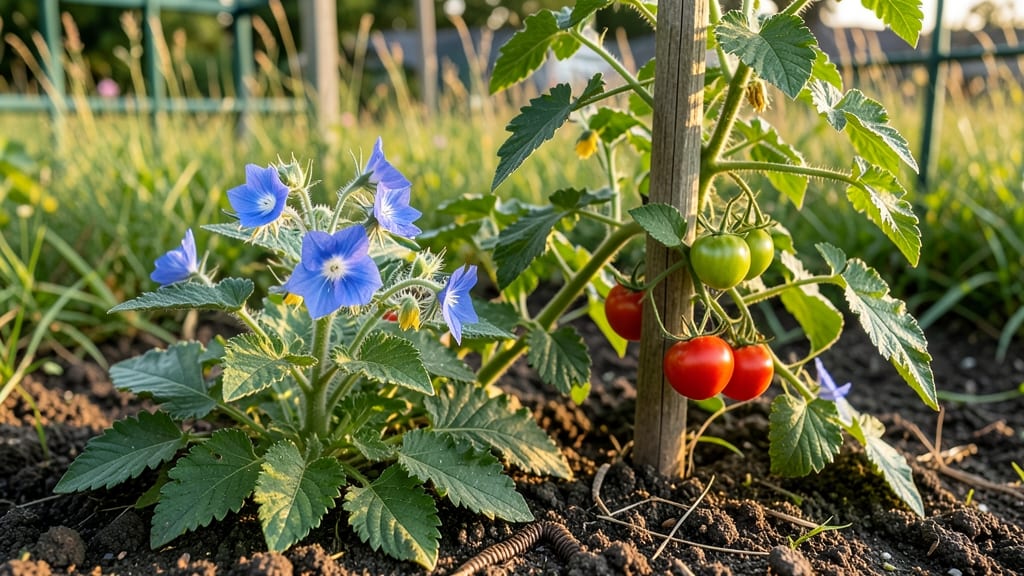
Growing borage with tomatoes isn’t just clever—it’s a game-changer for your garden. 🌿 The blue star-shaped flowers attract bees like crazy, boosting tomato pollination and fruit set, while the plant’s peppery leaves add a unique twist to your summer pesto.
I’ve seen my tomato yields jump by nearly 30% just by tucking borage into the beds, and the flavor? Unmistakably richer.
The secret starts with spacing: plant borage every 12–18 inches around your tomatoes, letting it sprawl naturally without crowding. Both thrive in full sun and well-draining soil—just avoid heavy clay, which borage hates. Water consistently, but don’t drown them; borage’s deep roots make it surprisingly drought-tolerant once established.
The real magic happens when those blue blooms go to seed—bees will visit your tomatoes more often, and you’ll notice fewer hornworms.
By midsummer, you’ll have lush borage foliage ready for harvest (pinch young leaves for pesto) and tomatoes bursting with flavor. The borage’s cucumber-like taste pairs perfectly with basil and garlic, while its pest-repelling properties keep your plants healthier.
Plus, it self-seeds like crazy, so you’ll have more plants than you know what to do with next year.
Watch for powdery mildew on borage in humid weather—space plants better for airflow if this happens. And if your tomatoes start looking stressed, trim back the borage slightly to give them room.
The payoff? A garden that’s not just productive, but downright buzzing with life. Ready to give it a try?
📚 In This Guide
- What you need
- Instructions
- Tips and common mistakes
- Wrapping up and next steps
What you need
- ● Borage seeds: 10–20 seeds (or 2–3 young plants if transplanting). Choose organic, non-GMO seeds for best results.
- ● Tomato seeds or seedlings: 2–4 plants (determinate or indeterminate varieties). Popular picks: 'Cherry Tomato,' 'Roma,' or 'Brandywine.'
- ● Potting mix or garden soil: 5–10 gallons (or enough to fill your containers/garden bed). Use a well-draining, nutrient-rich mix (add compost if needed!).
- ● Containers or garden space: Containers: 5–10 gallon pots (one per tomato plant; borage can share or have its own smaller pot). Ensure pots have drainage holes!
- ● Garden bed: At least 3’x3’ area with full sun (6+ hours daily). Borage thrives near tomatoes but avoid overcrowding.
- ○ Fertilizer: Balanced organic fertilizer (e.g., 10-10-10) or compost tea. Optional: Add a slow-release tomato fertilizer for extra vigor.
- ● Hand trowel or transplanting tool (for planting seeds/seedlings).
- ● Watering can or hose with gentle spray nozzle (keep soil moist but not soggy!).
- ● Mulch (straw or shredded leaves) (1–2 inches) to retain moisture and deter weeds.
- ● Pruning shears (for trimming borage flowers to encourage pollinators and tomato growth).
- ● Support stakes or cages (for indeterminate tomato varieties).
- ○ Optional: Row covers (to protect young seedlings from pests).
- ● Cucumber beetle traps (if pests are a concern in your area).
- ● Pest-repellent plants like basil or marigolds (for companion planting).
- ● Know your last frost date (borage and tomatoes hate cold—plant after frost risk has passed!).
- ● Ensure your space gets full sun (6+ hours/day)—both plants are sun-lovers! ☀️
- ● Check soil pH: Ideal range is 6.0–7.0 (test with a soil kit or send a sample to your local extension office).
Step-by-Step guide to planting borage with tomatoes
Here's how to create a thriving, pollinator-friendly garden duo that boosts tomato yields and flavor.
🌱 Step 1: Choose and Prepare Planting Locations
Select a sunny spot with 6-8 hours of direct sun where both plants will get plenty of light. Borage loves full sun but tolerates light shade, while tomatoes need consistent sun to produce fruit. I like to place borage around the perimeter of my tomato patch—it spreads cheerfully and attracts bees directly to the tomato flowers.
Loosen the soil to a depth of 12 inches to improve drainage, especially if your garden tends to stay wet. Borage and tomatoes both dislike soggy roots, so work in 2-3 inches of compost to enrich the soil naturally. Avoid fresh manure—it can burn tender tomato roots and attract pests.
🌿 Step 2: Plant Borage and Tomatoes Together
Sow borage seeds directly in the garden after the last frost when soil reaches 50°F. Press them just 1/4 inch deep—they need light to germinate, so don't bury them too deeply. Space seeds 12-18 inches apart since borage grows into a bushy, 2-3 foot plant. Water gently after planting to settle the soil.
Transplant tomato seedlings when they've developed 4-6 true leaves and night temperatures stay above 55°F. Set them 18-24 inches apart in rows 3 feet apart to allow airflow. I always plant borage around the tomato stems—its bright blue flowers provide shade for the soil while keeping pests away.
☀️ Step 3: Maintain Water and Support Structures
Water deeply 1-2 times per week, aiming for 1-1.5 inches of water per week. Borage is drought-tolerant once established, but tomatoes need consistent moisture, especially during fruiting. I water at the base in the morning to prevent fungal diseases. You'll know you're doing it right when the soil feels damp 2-3 inches down.
Install tomato cages or stakes when you plant—borage's fast growth can compete for space, so give tomatoes their own support. Borage's stems are brittle, so avoid planting it where it might shade tomato leaves later in the season. Watch for borage's star-shaped flowers to bloom around 6-8 weeks after planting—that's your signal it's working hard to attract pollinators.
✂️ Step 4: Prune and Harvest Strategically
Pinch back borage flowers as they fade to encourage more blooms all season. This keeps the plant bushy and ensures a steady supply of nectar for bees. For tomatoes, prune suckers (the small shoots in the leaf axils) to direct energy to fruit production. I leave the lower leaves intact—they provide shade for the soil and protect against sunscald.
Harvest borage flowers when fully open for pesto or salads. For tomatoes, pick fruit when it reaches 3/4 of its mature size and shows full color. The borage-tomato combo works best when you let them grow together until tomatoes start ripening—then you can move borage to another spot if it's getting too competitive.
Tips & tricks for perfect borage-tomato pairings
Here's what I've learned after years of growing these two together—simple tricks that make all the difference in your garden.
Sunlight Strategy: While both plants thrive in full sun, I've found that positioning borage on the north side of tomato plants creates a natural shade that keeps soil cooler. This prevents sunscald on tomato fruits while still giving both plants their required 6-8 hours of sunlight. Watch for tomato leaves turning yellow near the soil—this is your signal they're getting too much heat.
Soil Prep Secret: The 12-inch deep soil loosening in Step 1 is crucial, but don't stop there. I mix in a handful of wood ash (from untreated wood) when amending with 2-3 inches of compost. The potassium boost helps tomatoes develop sweeter fruit while the slightly alkaline soil suits borage's preferences. Just avoid overdoing it—too much ash can raise soil pH too high.
Planting Timing: Those 50°F soil temperature guidelines for borage seeds are non-negotiable, but I've discovered a little trick: cover the freshly planted borage seeds with a thin layer of straw mulch after watering. This creates a mini greenhouse effect that can help them germinate 3-5 days earlier in cool springs. Just remove the mulch once they sprout to prevent dampness issues.
Watering Wisdom: The 1-1.5 inches per week watering guideline works, but I've learned to adjust based on borage's flowers. When you see those star-shaped blooms opening in 6-8 weeks, that's your cue to increase water slightly—borage becomes more thirsty when flowering. I use a rain gauge to track exactly how much water we're getting from precipitation so I can adjust accordingly.
Pro Tips for Borage And Tomatoes
- Here's what I've learned after years of growing these two together—simple tricks that make all the difference in your...
- Sunlight Strategy: While both plants thrive in full sun, I've found that positioning borage on the north side of toma...
- Soil Prep Secret: The 12-inch deep soil loosening in Step 1 is crucial, but don't stop there. I mix in a handful of w...
Frequently asked questions
Got questions about growing borage and tomatoes together? You’re not alone! Here are some of the most common queries—plus quick answers to help you garden like a pro.
Why pair borage with tomatoes? What’s the benefit?
Borage acts as a super pollinator magnet—its vibrant blue flowers attract bees, which boost tomato fruit set. Plus, its nitrogen-fixing roots improve soil health, reducing the need for fertilizers. It’s a win-win for flavor and yield!
When should I plant borage with tomatoes?
Plant borage as soon as the soil warms (around 40–50°F)—it’s frost-hardy and thrives in early spring. For tomatoes, sow borage 2–4 weeks before transplanting your tomato seedlings. This gives borage time to establish roots and flowers before tomatoes need pollinators.
Can I grow borage and tomatoes together in containers?
Use a large container (at least 12–18 inches deep) with well-draining soil. Place 1–2 borage plants near 1–2 tomato plants. Just ensure the container gets 6+ hours of sun and adequate water—borage is drought-tolerant, but tomatoes need consistent moisture.
What if my borage flowers die back early? Is it still helpful?
Don’t worry! Borage’s self-seeding nature means new plants often sprout later in the season. Even if flowers fade, its roots keep improving soil, and bees may still visit nearby plants. If you want extra blooms, deadhead spent flowers (but leave some for seeds!).
Are there alternatives to borage for tomato pollination?
Yes! Try bee balm, marigolds, or nasturtiums—they’re also bee-friendly. However, borage’s edible flowers and leaves (great for pesto!) and soil benefits make it uniquely valuable. For a quick fix, plant dill or fennel too—bees love them!
Wrapping up and next steps
Growing borage and tomatoes together isn’t just a win for your garden—it’s a celebration of teamwork between plants! 🌱 With borage’s vibrant blooms attracting pollinators and its pest-repelling properties, your tomato harvest will thrive while boosting flavor and yield.
Plus, you’ll have fresh ingredients for homemade pesto that’s next-level delicious.
Ready to put your newfound knowledge into action? Start by planting a patch of borage near your tomatoes this season and watch your garden—and your kitchen—transform! 🍅✨ Need more inspiration? Try experimenting with companion plants like basil or marigolds next to expand your edible garden ecosystem.