
Vegetables
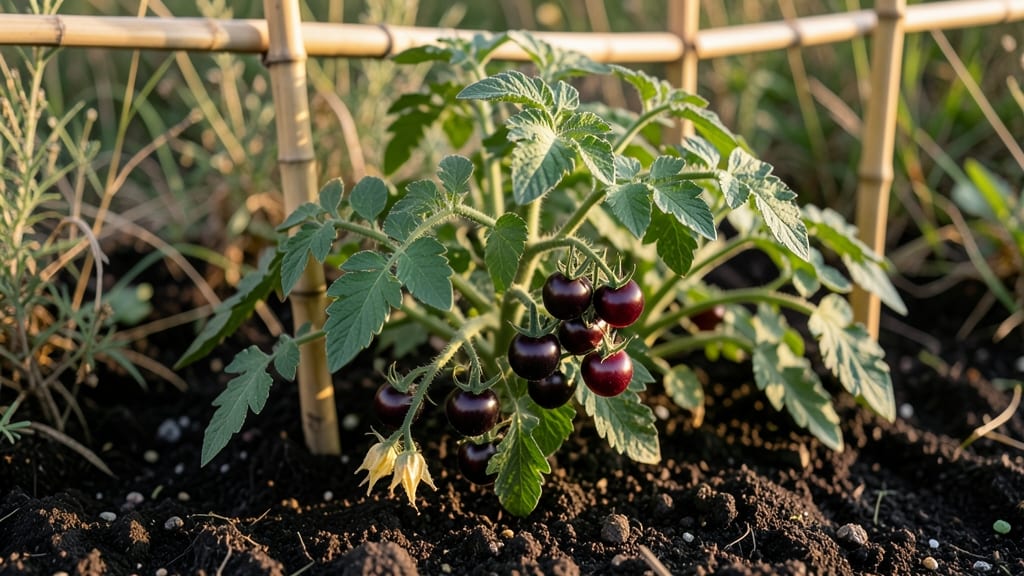
Growing the Midnight Snack cherry tomato means biting into deep purple, explosively sweet fruit that tastes like candy—even when picked at midnight! 🌱 This isn’t your typical annual; it’s a perennial in warm climates, meaning it comes back year after year with less work from you.
The secret? Planting it right the first time so it thrives through winters and blooms prolifically in spring.
Start with well-draining soil (amend with compost if yours is heavy) and a spot that gets 6-8 hours of sunlight daily. Since these plants spread, give them 3-4 feet between bushes or containers—crowding leads to disease.
In colder zones, treat it as an annual but mulch heavily to protect roots. The first flush of dark purple blooms arrives in late spring, followed by 1-inch tomatoes that burst with flavor when fully ripe.
Water deeply once a week (more in heatwaves) but avoid wetting leaves to prevent blight. A balanced fertilizer in early summer keeps production strong, and pruning suckers (those little shoots between stems) redirects energy to fruit.
By July, you’ll be harvesting pint-sized tomatoes that taste like sunshine—juicier than store-bought and packed with that midnight-sweet surprise.
For small spaces, grow in 5-gallon containers with trellises to save room. Pair with basil or marigolds to deter pests, and harvest daily to encourage more blooms. The biggest mistake? Letting tomatoes stay on the vine too long—they’ll split or lose flavor.
With the right care, your Midnight Snack plants will reward you with months of snacking, and in warm zones, they’ll even regrow next year with minimal effort.
📚 In This Guide
- What you need
- Instructions
- Tips and common mistakes
- Wrapping up and next steps
What you need
- ● Cherry tomato seeds: Choose Midnight Snack variety (or compatible heirloom seeds). Aim for 2-3 seeds per pot or 1 seed every 18-24 inches in the garden.
- ● Seed-starting mix: 2-3 quarts of sterile, well-draining potting soil (avoid garden soil—it’s too dense!).
- ● Containers or garden space: For seedlings: 4-6-inch pots or biodegradable peat pots (2-3 per seed).
- ● For transplanting: 5-gallon containers or a sunny garden bed with at least 6-8 hours of sunlight daily.
- ● Fertilizer: Balanced starter fertilizer (e.g., 5-10-5 or 10-10-10) for seedlings.
- ● Tomato-specific fertilizer (high in phosphorus/potassium, like 5-10-10 or 7-9-5) for mature plants.
- ● Watering can or hose with a gentle spray nozzle.
- ○ Grow lights (optional but helpful): LED or fluorescent lights for indoor seedlings (12-16 hours/day).
- ● Hand trowel or small shovel for planting.
- ● Pruning shears to trim suckers and encourage bushier growth.
- ○ Cage or stakes (optional): 3-4 foot tall to support vines as they grow.
- ● Mulch (straw or shredded leaves) to retain moisture and suppress weeds.
- ○ pH test kit (optional): Ideal soil pH for tomatoes is 6.0-6.8.
- ● Timing: Start seeds 6-8 weeks before your last frost date (or buy transplants).
- ● Warmth: Seedlings thrive in 70-80°F soil temps; use a heat mat if needed.
- ● Patience: Cherry tomatoes take 60-70 days to fruit from transplanting!
How to grow juicy Midnight Snack cherry tomatoes year after year
Here's the method I've perfected for growing these sweet, prolific tomatoes that keep producing for seasons.
🌱 Step 1: Select and Prepare the Perfect Site
Choose a location with full sun exposure (6-8 hours daily) and well-draining soil. Midnight Snack tomatoes thrive in slightly acidic soil with a pH between 6.0-6.8. I always test my soil first—amending with compost or peat moss if needed. These plants are perennials in zones 10-11, but even in colder climates, they'll return if protected properly.
For containers, use at least a 5-gallon pot with drainage holes. Fill with a mix of 50% potting soil and 50% perlite to prevent root rot. The key here is warmth—these tomatoes love heat, so black plastic mulch around the base helps retain soil temperature. I've found that even in cooler climates, a well-warmed spot can extend the growing season by weeks.
☀️ Step 2: Plant at the Right Time and Support Growth
Plant after the last frost date when soil temperatures reach at least 60°F. If starting from seed indoors, begin 8-10 weeks before transplanting. These tomatoes grow vigorously, so install a strong trellis or cage at planting time—waiting until they're established leads to broken stems. I use 6-foot bamboo stakes tied with soft twine to support their sprawling vines without damaging the fruit.
Space plants 18-24 inches apart to allow airflow, which prevents fungal diseases. The first true leaves will appear in 7-10 days if planted directly, or 2-3 weeks if started indoors. Watch for deep green, slightly waxy leaves—that's your sign they're thriving. If leaves appear pale or yellow, they need more nitrogen; if they're small and dark, they might be struggling with heat stress.
💧 Step 3: Water and Feed for Maximum Juiciness
Water deeply 2-3 times per week, ensuring the top 6 inches of soil stay consistently moist but not soggy. These tomatoes are juicy by nature, but underwatering leads to tough, mealy fruit. I water at the base in the morning to prevent fungal issues, and I always check the soil by sticking my finger in—if it's dry past 1 inch, it's time to water.
Feed every 2-3 weeks with a balanced 10-10-10 fertilizer or a tomato-specific formula. The secret to their sweetness? Reduce nitrogen slightly as fruiting begins—switch to a 5-10-10 ratio to encourage sugar production. You'll know you're on track when the fruit turns a deep, glossy red and bursts with juice when squeezed gently.
✂️ Step 4: Prune and Protect for Continuous Harvests
Prune suckers (the small shoots that form in the joint between the stem and branches) to direct energy into fruit production. Remove any leaves touching the ground or mulch to prevent disease. I also trim back any leggy growth that's shading the lower fruit—this ensures even ripening. The goal is to keep the plant open and airy, which maximizes both yield and sweetness.
In cooler climates, protect plants with frost cloth in late fall. Even if the plant dies back, the roots often survive, and new growth emerges in spring. I've had Midnight Snack tomatoes return for three consecutive years in my zone 8 garden—just mulch heavily before winter and remove any dead foliage to prevent pests from overwintering.
🍅 Step 5: Harvest and Encourage Next Year's Growth
Harvest when tomatoes are fully colored and slightly soft to the touch. They won't ripen further off the vine, so pick them at peak sweetness. I harvest every 2-3 days in peak season to prevent overcrowding and keep production going. Store in a cool, dark place for up to 2 weeks, or eat fresh—they're at their juiciest straight from the vine.
After the first frost, cut back the plant to 6 inches tall and cover with 4-6 inches of mulch. This protects the roots and encourages regrowth in spring. In warmer zones, you can leave them in the ground year-round—they'll keep producing with minimal care. The real magic? These tomatoes taste sweeter each year as the plant matures, making the effort totally worth it.
Tips & tricks for perfect Midnight Snack cherry tomatoes
These little-known secrets will help you coax maximum sweetness and productivity from your Midnight Snack plants.
Soil Temperature Secret: While the instructions mention planting when soil reaches 60°F, I've found these tomatoes actually thrive when soil temperatures stay consistently above 65°F. In cooler climates, use black plastic mulch or heat mats to warm the soil—this jumpstarts growth and extends the season. The warmer the soil, the faster the roots establish, which means earlier fruiting and more vigorous plants.
Support System Upgrade: The 6-foot bamboo stakes mentioned work well, but I've had even better success with a combination of a sturdy 5-foot cage and additional horizontal supports. This creates a "tomato trellis" that prevents fruit from touching the ground, reducing rot risk while allowing better air circulation. The key is to install supports at planting time—waiting until the plant is established often leads to broken stems when you try to add them later.
Pruning Precision: When pruning suckers in Step 4, focus on removing only those that appear in the leaf axils (the joint between the stem and leaf). These suckers compete with fruit production, while other growth can be left alone. I also make my cuts just above the leaf axil rather than tearing the sucker off—this prevents damage to the main stem. The goal is to create an open, airy plant that directs all its energy into producing those sweet, juicy tomatoes.
Winter Protection Hack: For overwintering in colder zones, I've found that adding a 2-inch layer of straw mulch on top of the 4-6 inches of regular mulch provides extra insulation. This helps protect the roots from temperature fluctuations that can stress the plant. In my zone 8 garden, this technique has allowed Midnight Snack tomatoes to return for four consecutive years with minimal care—just remove the mulch in early spring and watch for new growth.
Pro Tips for Midnight Snack Cherry Tomato
- These little-known secrets will help you coax maximum sweetness and productivity from your Midnight Snack plants.
- Soil Temperature Secret: While the instructions mention planting when soil reaches 60°F, I've found these tomatoes ac...
- Support System Upgrade: The 6-foot bamboo stakes mentioned work well, but I've had even better success with a combina...
Frequently asked questions
Got questions about your midnight snack cherry tomato? You’re not alone!
Here are the most common queries—plus quick, easy answers to keep your plants thriving.
Can I grow midnight snack cherry tomatoes indoors?
Yes, but with a few tweaks! Midnight snack thrives outdoors, but you can grow them indoors near a south-facing window or under grow lights (14–16 hours/day). Use 5-gallon containers with well-draining soil, and prune aggressively to encourage bushier growth. Just expect smaller yields than outdoor plants.
How late in the season can I plant midnight snack?
These cold-hardy tomatoes can handle light frosts (down to 28°F), so you can plant them 4–6 weeks before your first frost date in spring or 6–8 weeks before the last frost in fall. For extended harvests, use row covers to protect them from late-season chills. Just avoid planting too close to winter—soil temps below 50°F slow germination.
Why aren’t my midnight snack tomatoes ripening?
Common culprits include insufficient sunlight (they need 6–8+ hours/day), overcrowding (space plants 18–24 inches apart), or poor pollination (hand-pollinate with a brush if bees are scarce). Check for pests like hornworms or aphids, and ensure consistent watering—drought stress halts ripening. If temps hit <60°F at night, move plants to a warmer spot.
Are midnight snack tomatoes self-pollinating?
Yes! These cherry tomatoes are self-pollinating, meaning they don’t rely on bees or wind to set fruit. However, gentle shaking of the plants or a light brush with a paintbrush can boost pollination in containers or greenhouses. If you notice unopened flowers dropping off, it’s often due to extreme heat or humidity—provide afternoon shade if temps exceed 90°F.
What’s the best way to store harvested midnight snack tomatoes?
Store them at room temperature (55–68°F) in a paper bag or on the counter—never in the fridge! Cold temps destroy their flavor and texture. For longer storage (up to 2 weeks), place them in a single layer with a dry paper towel to absorb excess moisture. If you must refrigerate, do so only after they’ve fully ripened and use within 3–5 days.
Wrapping up and next steps
Growing midnight snack cherry tomatoes is a rewarding journey—whether you're a seasoned gardener or a curious beginner. These sweet, juicy perennials bring vibrant color and flavor back year after year, making them a must-have for any garden.
With the right care, you’ll enjoy a bountiful harvest that’s perfect for fresh eating or sharing with loved ones.
Ready to dive in? Start small—plant a few seeds or seedlings this season and watch your garden transform! 🌱 For even more tips, explore our guide on companion planting or check out local gardening forums for inspiration. Happy growing!