
Vegetables
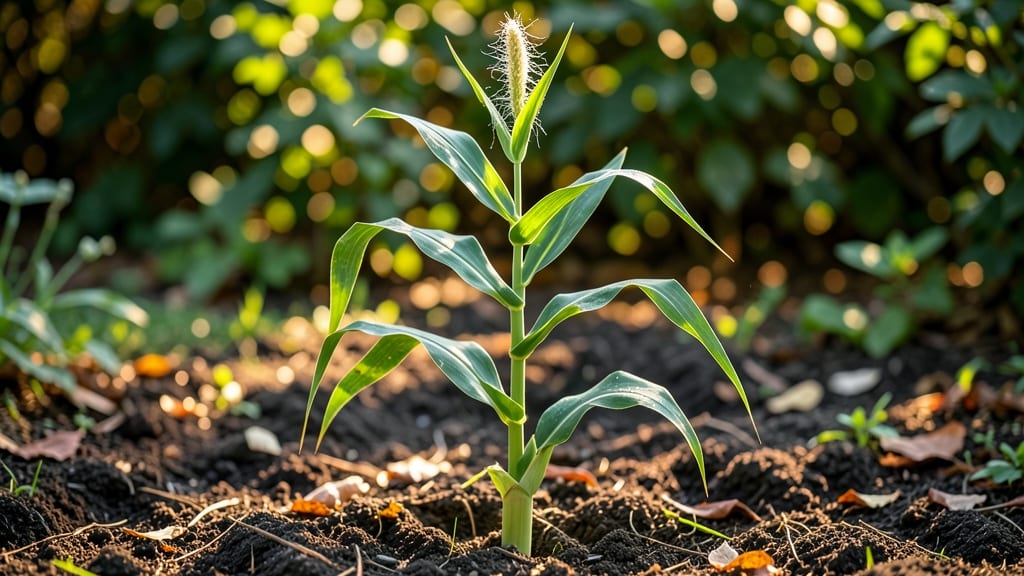
Nurturing young corn stalks starts with 1-inch-deep planting—the secret to strong roots that support those towering ears later. 🌱 I learned the hard way that shallow planting leads to weak stalks that flop in summer storms.
The first few weeks are all about moisture and warmth, not fertilizer, because tender roots need to establish before they can handle heavy feeding. Your soil should feel like a damp sponge, not a mud puddle, and keep it consistently moist until those first true leaves appear.
Too much water drowns roots; too little stunts growth. I use a simple trick: poke a finger an inch deep—if it comes out dry, water again. Corn loves warmth, so wait until soil temperatures hit 60°F before planting, or use black plastic mulch to warm the ground faster.
By the time those stalks reach 6 inches tall, you’ll notice healthy, vibrant leaves and a sturdy stem. That’s when you can start side-dressing with compost or a balanced fertilizer, but go light—corn burns easily when young.
Watch for pests like cutworms hiding at the base; a collar of diatomaceous earth works wonders without chemicals. This method works for sweet corn, field corn, or even heirloom varieties. The key is patience—those early weeks set the stage for 12-foot stalks loaded with ears by summer’s end.
Let’s get those seeds in the ground!
📚 In This Guide
- What you need
- Instructions
- Tips and common mistakes
- Wrapping up and next steps
What you need
- ● Young corn seeds: Choose heirloom or hybrid varieties suited for your climate (e.g., Sweet Corn ‘Silver Queen’ or ‘Country Gentleman’). Aim for 1–2 lbs of seed (enough for 100–200 plants).
- ● Well-draining soil: Test your soil’s pH (ideal range: 6.0–6.8). Amend with compost (5–10 lbs per 100 sq ft) for fertility.
- ● Organic fertilizer: Use a balanced 10-10-10 or compost tea (1–2 gallons per 100 sq ft) at planting and mid-season.
- ● Mulch: Straw or grass clippings (2–3 inches thick) to retain moisture and suppress weeds.
- ● Watering system: Drip irrigation or soaker hoses (corn needs 1–2 inches of water per week).
- ● Garden trowel or transplanter (for perennial beds).
- ● Rake or hoe (to prep soil and remove weeds).
- ● Measuring tape or stakes (corn needs 12–18 inches of spacing between plants).
- ● Pruners or scissors (for harvesting young stalks or trimming dead foliage).
- ○ Garden twine or trellis (optional)—if growing tall varieties for support.
- ● Cold-hardy corn varieties: Some tropical types struggle in temperate climates. Opt for short-season or perennial-friendly hybrids if extending the growing season.
- ● Winter protection: Row covers or mulch (6+ inches) in colder zones to insulate roots.
- ● Succession planting plan: Schedule replanting every 2–3 weeks for continuous harvests.
Step-by-step instructions for cultivating young corn stalks
Here's how I transform tender corn stalks into sturdy, productive perennials—with secrets to boost yields.
🌱 Step 1: Select and Prepare Your Planting Site
Corn thrives in well-draining soil with full sun exposure (6+ hours daily). Choose a spot where mature plants can reach 6-8 feet tall without crowding. I always test soil pH first—corn prefers 6.0-6.8. If your soil is heavy clay, mix in 2-3 inches of compost to improve drainage and fertility.
Real talk: Corn roots need room to spread. Space rows 3 feet apart for perennial varieties, which develop extensive root systems. Mark planting lines with stakes to maintain straight rows—corn grows in clumps, and uneven spacing leads to competition later.
💧 Step 2: Plant Seeds or Transplants at the Right Time
Wait until soil temperature reaches 60°F at least 1 inch deep—corn won't germinate below 50°F. For perennial corn, I plant 2-3 seeds per hole, 1 inch deep, in early spring. Thin to the strongest stalk once seedlings reach 6 inches tall.
Here's the thing—perennial corn needs consistent moisture. Water deeply 1-2 inches per week, keeping soil evenly damp but never soggy. You'll see first true leaves appear in 7-14 days. If germination takes longer, check soil moisture—dry soil delays sprouting.
☀️ Step 3: Provide Support and Fertilize for Strong Stalks
As stalks grow, they need support to prevent lodging (falling over). I install 6-foot bamboo stakes every 3 feet along rows and tie plants loosely with soft twine. This keeps them upright without restricting growth.
Fertilize when stalks reach 12 inches tall with a balanced 10-10-10 formula. Side-dress with 1 cup of compost around each plant monthly. Watch for deep green leaves—that's your sign the plant is thriving. Yellowing leaves mean it's time to fertilize again.
✂️ Step 4: Prune and Maintain Through the Growing Season
Remove any side shoots that form below the main ear—these drain energy from the primary stalk. I also trim lower leaves that touch the soil to prevent disease. For perennial corn, cut back stalks to 1 foot tall in late fall to encourage new growth from the base next season.
Don't skip this: Mulch with 2-3 inches of straw to retain moisture and suppress weeds. Check soil moisture weekly—corn wilts quickly when stressed. You'll know your plants are happy when they produce silk strands by mid-summer, signaling pollination is about to begin.
🌿 Step 5: Harvest and Prepare for Perennial Growth
Harvest ears when silks turn brown and kernels are milky when pierced. Cut stalks at the base and hang them in a dry, shaded area to dry completely. For perennial corn, save the strongest stalks—these will regrow from the base next spring.
I always save seeds from the best ears to replant. Store dried stalks in a cool, dark place until planting season. With proper care, perennial corn can produce for 3-5 years, making it a game-changer for small gardens.
Tips & tricks for cultivating young corn stalks
A few strategic moves can transform your young corn stalks from fragile seedlings into hardy perennials that reward you for years. Here's what I've learned after watching my own plants thrive—and fail.
Soil Prep Secret: Before planting, work in 2-3 inches of compost as instructed, but don't stop there. Mix in a handful of wood ash (from untreated wood) to raise pH slightly if your test shows 6.0 or below. Corn loves slightly alkaline soil, and this extra boost helps prevent nutrient deficiencies that show up as yellowing leaves later. I've seen plants grow twice as tall when I do this simple step.
Planting Precision: When planting your 2-3 seeds per hole at 1 inch deep, use a dibble or pencil to make perfectly straight holes—this prevents uneven germination. After covering with soil, gently pat down with your hand rather than pressing firmly. Too much compaction can smother emerging roots, delaying those first true leaves by 3-5 days. Trust me on this.
Support System Hack: For the 6-foot bamboo stakes you'll install every 3 feet, cut them at a slight angle (about 10 degrees) before planting. This creates a natural guide for the corn to grow along, reducing the need for tying later. I also recommend using soft garden twine instead of wire—it's gentler on the stalks and won't cut into them as they grow thicker.
Fertilizer Timing: When you fertilize at the 12-inch mark, split that 10-10-10 formula into two applications: half when you first see the fertilizer color change, and the rest 3 weeks later. This two-step approach prevents over-fertilization that can burn young roots. I've seen plants wilt dramatically when given too much nitrogen too soon—this method keeps them growing steadily.
Pro Tips for Young Corn Stalk
- A few strategic moves can transform your young corn stalks from fragile seedlings into hardy perennials that reward you for years.
- Soil Prep Secret: Before planting, work in 2-3 inches of compost as instructed, but don't stop there.
- Planting Precision: When planting your 2-3 seeds per hole at 1 inch deep, use a dibble or pencil to make perfectly straight holes—this prevents uneven germination.
Frequently asked questions
Got questions about growing young corn stalks? You’re not alone! Here are answers to the most common queries—from planting to troubleshooting—to help you grow a thriving perennial corn patch.
How do I know when young corn stalks are ready for harvest?
Harvest young corn stalks when they’re tender and sweetest—typically 6–12 inches tall, with silky threads just beginning to emerge from the tassels. For baby corn, pull stalks when they’re pencil-thin (about ½ inch in diameter). Check for plump, juicy kernels and a crisp stalk for the best flavor!
Can I grow young corn stalks year-round, or is it seasonal?
Young corn stalks thrive in warm seasons (spring to early fall) but aren’t truly perennial in cold climates. In USDA Zones 9–11, they may regrow yearly if protected from frost. In cooler zones, treat them as annuals or use row covers. Start seeds indoors 4–6 weeks before the last frost for a head start!
What’s the best alternative if my young corn stalks aren’t thriving?
If your stalks struggle, try these low-maintenance swaps:
- Sugar snap peas – Fast-growing, nitrogen-fixing, and great for early harvests.
- Green beans – Drought-tolerant and produce well in containers.
- Sweet potatoes – Perennial-friendly (in warm climates) and nutrient-dense.
For a corn-like texture, bok choy or malabar spinach are leafy but easy substitutes!
Why are my young corn stalks wilting or turning yellow?
Wilted or yellowing stalks often signal overwatering, poor drainage, or pests. Check for:
- Root rot: Ensure soil drains well (corn hates soggy feet!).
- Corn earworms: Use row covers or handpick eggs from silks.
- Heat stress: Mulch to retain moisture and provide afternoon shade in extreme heat.
Fertilize with nitrogen-rich compost if leaves are pale—corn is a heavy feeder!
Can I replant young corn stalks from store-bought corn?
Nope! Store-bought corn is hybridized for sweetness, not regrowth. Save seeds from heirloom or open-pollinated varieties (like ‘Country Gentleman’) instead. For young stalks, focus on fast-maturing varieties (50–60 days) to maximize harvests before stalks toughen.
Wrapping up and next steps
Growing young corn stalks perennially is a rewarding journey that blends patience with hands-on care—and you’ve got all the secrets now! 🌱 From selecting the right varieties to mastering soil prep and troubleshooting common challenges, every step brings you closer to a thriving, sustainable harvest.
Start small, stay consistent, and watch your garden transform into a lush, productive oasis.
Ready to take the next step? Plant your first stalk this season! Grab your supplies, mark your calendar for planting dates, and dive in. Who knows? You might just become the neighborhood expert on perennial corn magic—one stalk at a time. Happy growing! 🌽✨