
Flowers
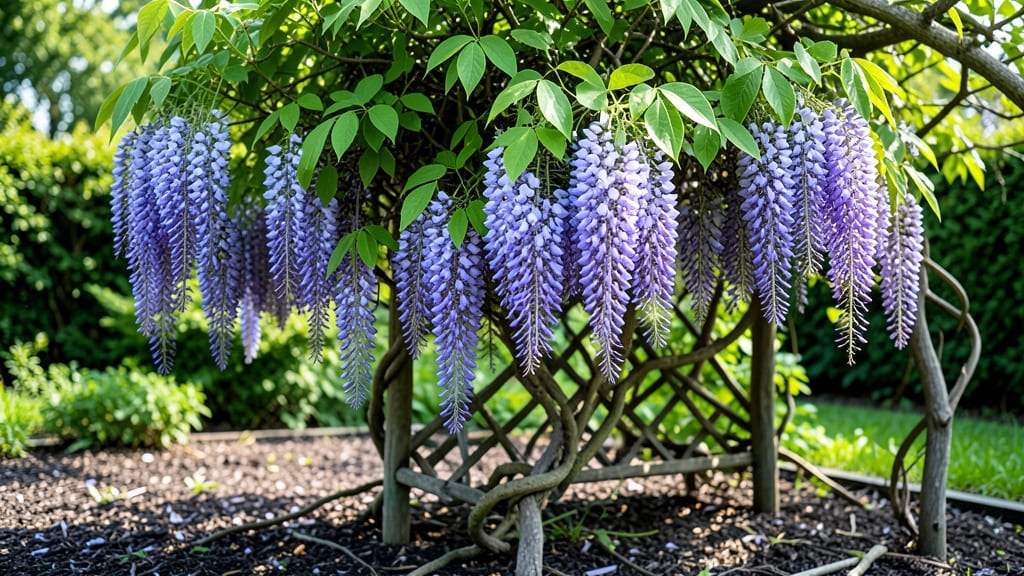
Wisteria flowers bloom in spring, typically between April and May 🌸, with exact timing depending on your hardiness zone and variety.
Picture this: a 15-foot vine draped in cascading purple blooms, filling your garden with intoxicating fragrance. But if your wisteria is playing hard to get, you might be missing the key details about climate, pruning, or even the right variety for your region.
Below, I break down the month-by-zone blooming schedule for USDA Zones 4-9, plus the three biggest mistakes that delay or prevent flowering—so you can finally enjoy that dreamy spring display.
You’ll also discover how to choose the best wisteria varieties for early or late blooms, and the simple pruning tricks that guarantee year-round success.
Wisteria bloom times by month and USDA hardiness Zones
Timing your wisteria blooms is all about understanding your USDA hardiness zone and the specific variety you’re growing. Wisteria sinensis and Wisteria floribunda typically bloom earlier than Wisteria frutescens, but climate plays a huge role.
In colder zones (4-6), expect blooms to push later into spring, while warmer zones (7-9) often see earlier displays. Let’s break down the exact months for each zone to help you anticipate—and optimize—your wisteria’s stunning floral displays.
Southern gardeners in Zones 7-9 often enjoy wisteria blooms as early as March or April, while northern growers in Zones 4-6 may not see flowers until May or June. The key difference? Warmer climates trigger earlier bud break, while colder regions require more time to thaw.
Even within a zone, microclimates—like urban heat islands or sheltered spots—can shift bloom times by 1-2 weeks. For example, a wisteria in Zone 6 near a south-facing wall might bloom in late April, while one in a windy, open area could wait until mid-May.
🌸
If you’re in Zone 6 and notice your Wisteria floribunda buds swelling in late March but flowers don’t appear until June, don’t panic—this is normal! The plant often takes 4-6 weeks from bud swell to peak bloom.
However, if buds swell but then blacken and drop, your wisteria may be suffering from late frost damage or nutrient deficiencies. In Zones 8-9, some varieties like Amethyst Falls may even produce a second bloom in fall, though this is less common in cooler zones.
For gardeners in Zones 4-5, wisteria blooms often coincide with late spring frosts, which can damage delicate flowers. To protect your investment, choose hardier varieties like Wisteria frutescens (American wisteria), which tolerates colder temperatures better than its Asian cousins.
Planting near a south-facing wall can also add 2-3 weeks of warmth to extend the bloom season.
Why your wisteria might not bloom on schedule (and how to fix it)
Wisteria is famous for its stunning, fragrant blooms—but if yours aren’t appearing on time (or at all), don’t panic. Delayed or absent flowers usually stem from a few common issues like improper pruning, insufficient sunlight, or nutrient deficiencies.
Understanding these problems is the first step to restoring your wisteria’s blooming glory. Let’s break down the most frequent culprits and how to fix them.
One of the biggest mistakes gardeners make is pruning at the wrong time. Wisteria blooms on old wood, meaning last year’s growth.
If you prune too late in the season, you risk cutting off next year’s flower buds. Timing is everything—prune immediately after flowering (late spring to early summer) to avoid this issue. This ensures the plant retains its flower buds for the following year.
Another common issue is insufficient sunlight. Wisteria thrives in full sun, requiring at least 6-8 hours of direct sunlight daily. If your plant isn’t getting enough light, it may produce fewer or no flowers.
Check your wisteria’s location—if it’s shaded by trees or buildings, consider relocating it to a sunnier spot or trimming nearby obstacles to improve light exposure.
⚠️ WARNING: Common Mistakes That Kill Wisteria Blooms
⚠️ Over-Fertilizing with Nitrogen: Too much nitrogen promotes leafy growth over flowers. Use a balanced 10-10-10 fertilizer in early spring instead.
⚠️ Ignoring Support Structures: Wisteria needs a trellis or strong arbor to climb. Without support, energy goes into vines instead of blooms.
Age-related dormancy can also delay blooms, especially in young plants. Wisteria often takes 3-5 years to mature and produce flowers. If your plant is still young, be patient—provide optimal care, and blooms will come.
For established plants, nutrient deficiencies (like low phosphorus) can stunt flowering. Test your soil and amend it with bone meal or compost to boost phosphorus levels.
Support structures play a crucial role in encouraging blooms. Wisteria is a vigorous climber, and without proper support, it may struggle to produce flowers. Install a trellis, arbor, or pergola to guide its growth upward.
This not only improves airflow but also directs the plant’s energy toward flowering rather than sprawling vines. Train the vines gently to avoid damaging the plant.
Finally, watering habits can impact blooming. While wisteria is drought-tolerant once established, consistent moisture is key during the growing season. Deep watering once or twice a week (depending on your climate) ensures the roots stay healthy and the plant has the energy to produce flowers.
Avoid overwatering, as soggy soil can lead to root rot and stress the plant.
With these fixes in place, your wisteria should rebound and produce stunning blooms on schedule. Keep an eye out for bud swell in late winter—a sure sign that next year’s flowers are forming! 🌸