
Companion Plants
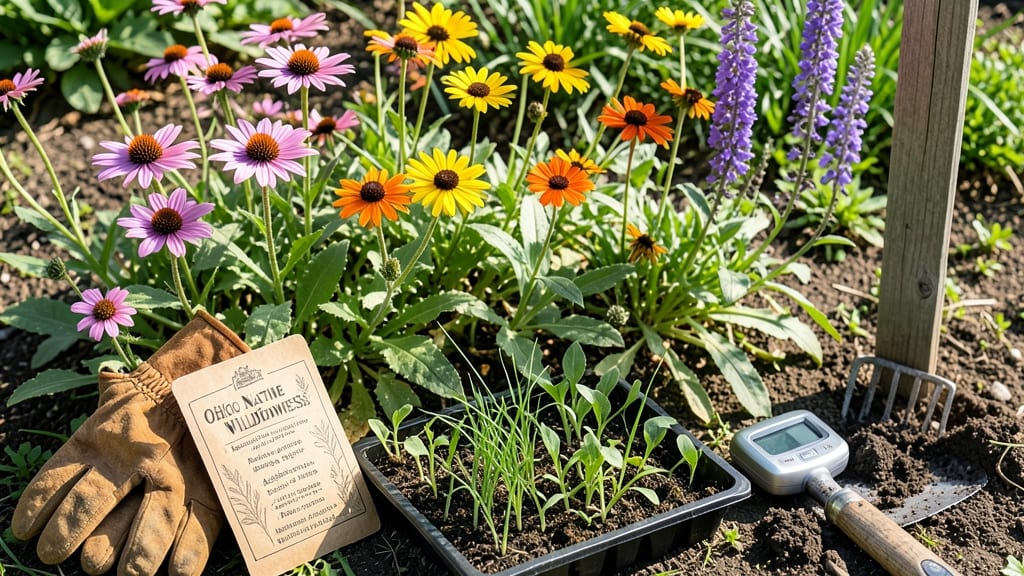
You can plant wildflower seeds in Ohio between late March and early May for spring blooms or August and September for fall establishment, timing that aligns with the state’s USDA Zone 6a frost dates.
Ohio’s diverse climate—from the humid Appalachians to the Great Lakes shoreline—means wildflower planting timing varies dramatically by zone. Plant too early, and frost will kill your delicate blooms; too late, and invasive weeds steal the show.
Spring planting gives you vibrant summer blooms like cosmos and zinnias, while fall planting ensures hardy perennials like black-eyed Susans thrive. Both seasons offer unique advantages, but getting the timing right is the key to a thriving meadow.
Below, I break down the exact planting schedule for Ohio’s microclimates, soil prep tips, and the best wildflower varieties for each season—so you can skip the guesswork and enjoy a pollinator-friendly garden all year.
Ohio wildflower planting calendar by USDA hardiness zones 5-6
Ohio’s USDA Zones 5-6 create distinct planting windows for wildflowers, where timing can mean the difference between a vibrant meadow and a failed experiment.
In Zone 5 (northern Ohio, like Cleveland), last frosts typically hit April 15–May 1, while Zone 6 (southern Ohio, like Cincinnati) enjoys a 2-week earlier window.
Microclimates—like urban heat islands in Columbus or lake-effect cooling near Toledo—can shift these dates by 10–14 days, so always check your local frost-free date.
Spring planting (March–May) is ideal for annual wildflowers like cosmos and zinnias, which bloom quickly and attract pollinators early. Fall planting (August–September), however, gives perennial varieties like coneflowers and black-eyed Susans a head start on root growth before winter.
The key? Plant when soil temps reach 60°F—use a soil thermometer to avoid guesswork. In Ohio, this usually aligns with late April for Zone 5 and mid-April for Zone 6.
Here’s your zone-specific planting calendar, including frost risks, soil prep tips, and the best wildflower varieties for each season:
For spring planting, aim to sow seeds 4–6 weeks before your last frost date. In Zone 5, this means early April for hardy annuals like cosmos, while perennials (e.g., coneflowers) can wait until soil warms to 60°F.
In Zone 6, you can push it to mid-April for most varieties. Always stratify seeds (cold-moist treatment) for perennials to mimic natural conditions and improve germination rates.
Fall planting is my top recommendation for Ohio gardeners, as it reduces weed competition and gives roots time to establish before winter. Plant 6–8 weeks before your first frost (typically September 15–October 1 in Zone 5 and October 1–15 in Zone 6).
Choose drought-tolerant perennials like black-eyed Susans or butterfly weed, which thrive with minimal spring care. Avoid planting annuals in fall—they won’t survive Ohio’s winters.
Ohio’s microclimates can drastically alter planting success. For example, Cincinnati’s urban heat island effect may allow 2-week earlier planting than rural areas, while Toledo’s lake breezes can delay soil warming by 10–14 days.
To adapt, monitor soil temps with a probe (available for $15–$20) or use a planting calendar app like Gardenate, which factors in your ZIP code. Pro tip: Test your soil’s pH (ideal: 6.0–7.0 for most wildflowers) and amend with compost or lime if needed.
After sowing, water lightly but frequently—aim for 1 inch per week—until seeds germinate (usually 7–21 days). Once established, wildflowers are drought-tolerant, but deep watering once a week in dry spells keeps them thriving.
Mulch with straw or leaves to retain moisture and suppress weeds, especially in spring plantings when competition is fierce. In fall-planted perennials, mulch 3–4 inches thick to protect roots from freeze-thaw cycles.
Timing isn’t just about frost—it’s also about bloom cycles. Plant spring annuals (e.g., zinnias) in late April
Best wildflower seed types for Ohio’s spring vs. fall planting
Ohio’s spring and fall planting seasons offer distinct advantages for wildflowers. Spring planting (March–May) gives annuals like cosmos and zinnias a head start, while fall planting (August–September) lets perennials like black-eyed Susans establish roots before winter. Each season caters to different blooming cycles and pollinator needs.
Annual wildflowers thrive in spring planting because they complete their life cycle in one season. Zinnias and cosmos burst into color by summer, attracting bees and butterflies.
Perennials, however, benefit from fall planting—they spend winter developing strong roots, then bloom reliably for years. Ohio’s native mixes often combine both types for year-round interest.
For Ohio-specific pollinator benefits, prioritize native species like purple coneflowers and milkweed. These plants support monarch butterflies and native bees, which struggle with non-native commercial blends. A mix of annuals and perennials ensures continuous nectar sources from spring through fall.
Spring Planting (March–May)
- Fast summer blooms from annuals
- Ideal for bees and butterflies early
- Less weed competition in spring
- Risk of late frosts damaging seedlings
- Requires consistent watering during dry springs
- Shorter establishment window before summer heat
Fall Planting (August–September)
- Perennials overwinter successfully
- Less water competition from weeds
- Early spring blooms next year
- Slower germination in cooler temps
- May need protection from early frosts
- Limited summer blooms in first year
Commercial wildflower blends often include non-native species that may not support local ecosystems. Instead, opt for Ohio-native mixes like those from Prairie Moon Nursery or American Meadows.
These blends feature goldenrod, bee balm, and wild bergamot, which thrive in Ohio’s USDA Zones 5-6 and require minimal maintenance once established.
For maximum pollinator impact, plant spring annuals like sunflowers alongside fall-sown perennials such as coneflowers. This creates a continuous bloom cycle from May through October. Always prepare your soil with a light compost mix and avoid heavy fertilizers, which can harm delicate wildflower roots.
Whether you choose spring or fall planting, timing is key. Spring favors quick color, while fall ensures long-term garden success. Test a small patch of each season to see what works best for your Ohio microclimate—whether it’s the humid Appalachians or the drier Great Lakes region. 🌼