Vegetables
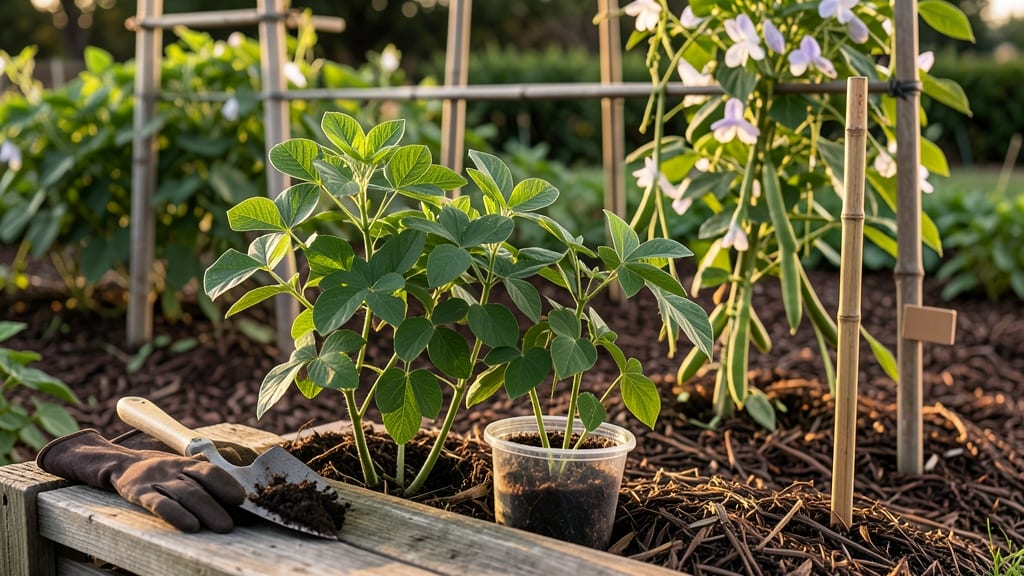
Planting edamame beans starts with soil that's warm enough to make them race toward sunlight—wait until your soil hits 65°F or higher, usually after the last frost when the air stays reliably above 70°F. 🌱 I learned the hard way that cool soil means slow starts, and my first batch took three weeks just to crack through the dirt.
The secret isn't just patience—it's prepping the bed right, with loose, well-draining soil rich in organic matter, because edamame roots need room to stretch and breathe. These beans thrive in sunny spots where humidity lingers, like near ponds or in afternoon shade if you're in a hotter zone.
Plant them 1 inch deep, spacing seeds 2-3 inches apart in rows 18 inches apart—crowding them too close means fewer pods and more competition. Water gently after planting to settle the soil, then keep it consistently moist but never soggy, because edamame hates wet feet.
By mid-summer, you'll see those first purple flowers appear, signaling pods are on the way. The plants will fix nitrogen into the soil as they grow, giving next year's garden a head start.
Just watch for slugs in damp weather and keep an eye out for yellowing leaves—usually a sign of overwatering or poor drainage. Works best in zones 5-10, but with a little shade cloth in peak heat, you can grow them almost anywhere.
Here's how to get those first sprouts popping within 7-10 days—no waiting, no guesswork.
📚 In This Guide
- What you need
- Instructions
- Tips and common mistakes
- Wrapping up and next steps
What you need
- ● Edamame seeds: Choose a variety suited to your climate (e.g., Enrei or Black Turtle Soya). Buy 1–2 lbs (450–900g) for a small garden or 3–5 lbs (1.4–2.3 kg) for a larger harvest.
- ● Soil: Well-draining, fertile loam with a pH of 6.0–7.0. Mix in 2–3 inches (5–7.5 cm) of compost per square foot.
- ● Fertilizer: A balanced 10-10-10 NPK fertilizer (apply ½ lb per 100 sq ft) or organic options like alfalfa meal.
- ● Water: Consistent moisture is key—aim for 1–1.5 inches (2.5–4 cm) per week (adjust for rain).
- ● Garden bed or containers: At least 12–18 inches (30–45 cm) deep for root growth. Containers need drainage holes.
- ● Trowel or transplanting tool for sowing seeds 1–2 inches (2.5–5 cm) deep.
- ● Row marker or stakes to space seeds 2–4 inches (5–10 cm) apart in rows 18–24 inches (45–60 cm) apart.
- ○ Mulch (optional but recommended): Straw or grass clippings to retain moisture and suppress weeds.
- ○ Trellis or stakes (optional): For climbing varieties, use 4–5 ft (1.2–1.5 m) tall supports.
- ● Warm soil: Edamame thrives in 70–85°F (21–29°C) soil temps. Use a soil thermometer to check before planting.
- ● Planting window: Start seeds 1–2 weeks after last frost when soil is consistently warm. In hot climates, plant in late summer for a fall harvest.
- ● Sunlight: Full sun (6–8+ hours daily) is a must for optimal growth.
Step-by-step guide for planting edamame beans
Here's how I grow plump, sweet edamame pods every summer using simple soil-warmth tricks.
🌱 Step 1: Choose the Right Location and Warm Up the Soil
Edamame thrives in full sun and warm soil—aim for 70-80°F before planting. I test soil temperature with a thermometer; if it's below 60°F, cover the bed with black plastic for 2-3 weeks to raise it naturally. This prevents the classic edamame problem of slow germination or stunted growth.
Pick a spot with loose, well-draining soil. Edamame roots need room to spread, so avoid heavy clay. If your garden soil is compacted, mix in 2-3 inches of compost a few weeks before planting to improve texture and fertility. The ideal planting time is 2-3 weeks after your last frost date when nighttime temperatures stay above 55°F.
🌱 Step 2: Plant Seeds at the Correct Depth and Spacing
Sow seeds 1 inch deep and 4-6 inches apart in rows 18-24 inches apart. I use a small trowel to make holes just deep enough to cover the seeds lightly—burying them too deep delays sprouting. Plant 4-5 seeds per hill if you're unsure about germination rates; you can thin later to the strongest plants.
Here's the thing—edamame seeds need consistent moisture to germinate. Water the soil thoroughly right after planting, then keep it evenly moist until sprouts appear. A soaker hose works best because it delivers water directly to the roots without disturbing the seeds. You'll see tiny green shoots in 7-14 days if conditions are right.
💧 Step 3: Maintain Moisture and Fertility for Bushy Growth
Edamame plants love moisture but hate soggy roots. Water 1-2 inches per week, adjusting for rain—let the top 1-2 inches of soil dry out between waterings. I mulch around plants with 2 inches of straw or grass clippings to retain moisture and suppress weeds. This is especially important during flowering, when consistent watering encourages pod development.
Feed plants with a balanced 10-10-10 fertilizer when they're 4-6 inches tall, then switch to a low-nitrogen, high-phosphorus fertilizer (like 5-10-10) when flowers appear. Too much nitrogen makes plants focus on leaves instead of pods. You'll know you're on track when plants develop 3-5 sets of leaves before flowering.
✂️ Step 4: Monitor for Pests and Harvest at Peak Ripeness
Watch for common pests like aphids or bean beetles. I spray plants with neem oil at the first sign of trouble—it's organic and effective. Edamame pods mature in 3-4 months after planting. Harvest when pods are 2-3 inches long and turn a deep green color, usually 45-60 days after flowering. Twist pods gently to remove them; don't pull the stems.
Real talk: Harvesting regularly encourages more production. If you wait too long, pods turn brown and tough. I pick every 2-3 days during peak season to keep plants producing. Store fresh pods in the fridge for 3-5 days or freeze them for later use. You'll know you've succeeded when you're harvesting pints of pods weekly from each plant.
Tips & tricks for perfect edamame growth
Between us, these small details make all the difference between a handful of pods and a garden full of them.
Soil Temperature Secret: That 70-80°F soil temperature range isn't just a suggestion—it's the sweet spot for germination. I've planted in 65°F soil before and seen germination drop by half. If your soil thermometer shows anything below 60°F, don't rush planting. That black plastic trick works wonders, but give it the full 2-3 weeks to raise the temperature naturally. The extra patience pays off when you see those first green shoots.
Planting Precision: When you're making those 1-inch deep holes for seeds, think of them like tiny tents. Too shallow and seeds dry out; too deep and they struggle to push through. I like to use a pencil to mark planting spots first—it gives me a visual guide for spacing those seeds 4-6 inches apart. And here's what nobody tells you: plant those 4-5 seeds per hill even if you're confident about germination. You'll thank yourself later when you can thin to the strongest plants without replanting.
Watering Wisdom: The 1-2 inches per week watering guideline is your baseline, but timing matters more than quantity. Water deeply in the morning so plants have all day to absorb moisture before evening evaporation. I've seen edamame plants wilt dramatically when watered at night—it's like trying to drink through a straw when someone keeps blowing on it. And that mulch? It's not just for looks. The 2 inches of straw keeps soil temperature stable and reduces watering by 30% during hot spells.
Harvesting Hack: Those 45-60 days after flowering for harvest? Start checking at 42 days if your climate is warm. I mark my calendar with the first flowering date and set reminders every 3 days during peak season. The key is catching pods when they're 2-3 inches long—they'll be bright green with a slight give when you squeeze them gently. If you wait until they're fully mature, you'll get tough, stringy pods that taste nothing like the sweet ones you're after.
Pro Tips for Planting Edamame Beans
- Between us, these small details make all the difference between a handful of pods and a garden full of them.
- Soil Temperature Secret: That 70-80°F soil temperature range isn't just a suggestion—it's the sweet spot for germinat...
- Planting Precision: When you're making those 1-inch deep holes for seeds, think of them like tiny tents. Too shallow ...
Frequently asked questions
Got questions about growing edamame beans? You’re not alone! Here are answers to the most common concerns—from timing to troubleshooting—so you can confidently plant your own crispy, protein-packed pods.
When is the best time to plant edamame beans?
Edamame thrives in warm soil—wait until the ground reaches at least 65°F (18°C) and nighttime temps stay above 60°F (15°C). In most regions, this means late spring to early summer. If you’re in a hot climate, opt for fall planting (6–8 weeks before frost) to avoid summer heat stress.
How long does it take for edamame beans to grow?
From seed to harvest, edamame takes 70–100 days, depending on the variety. Shelling types (for drying) mature slower (90–100 days), while fresh-eating varieties (like ‘Envy’) are ready in 60–80 days. Watch for pods to plump and turn green/yellow—then harvest before they dry on the vine!
Can I grow edamame in containers or small spaces?
Edamame’s bush varieties (like ‘Black Turtle Soya’) thrive in 5-gallon containers with 12+ inches of depth. Use a well-draining potting mix and place pots in full sun (6+ hours/day). Just ensure your container has sturdy supports—vines can reach 3–4 feet tall!
Why aren’t my edamame pods forming?
Likely culprits:
- Cool soil/temps: Edamame needs warmth to flower. Use black plastic mulch or a row cover to boost heat.
- Poor pollination: Hand-pollinate by gently shaking plants on warm, sunny days.
- Nutrient deficiency: Feed with low-nitrogen fertilizer (high in phosphorus/potassium) when flowers appear.
Are there any edamame alternatives if my climate isn’t ideal?
If your growing season is too short, try:
- Lima beans: Similar protein, tolerates cooler temps.
- Green beans: Faster-growing (50–60 days) and versatile.
- Peas: Cool-season lovers that fix nitrogen in soil.
Wrapping up and next steps
Planting edamame beans is a rewarding journey that blends patience with the joy of nurturing life—especially when you harness the power of soil warmth for a thriving harvest! 🌱 With the right soil prep, timing, and care, you’ll soon be savoring fresh, protein-packed pods straight from your garden.
Start small, experiment with varieties, and let your green thumb grow with each season.
Ready to take the next step? Grab your seeds, warm up that soil, and plant your first batch today! 🌡️ Whether you’re a beginner or a seasoned gardener, every edamame plant is a step closer to a healthier, homegrown harvest.