
Flowers
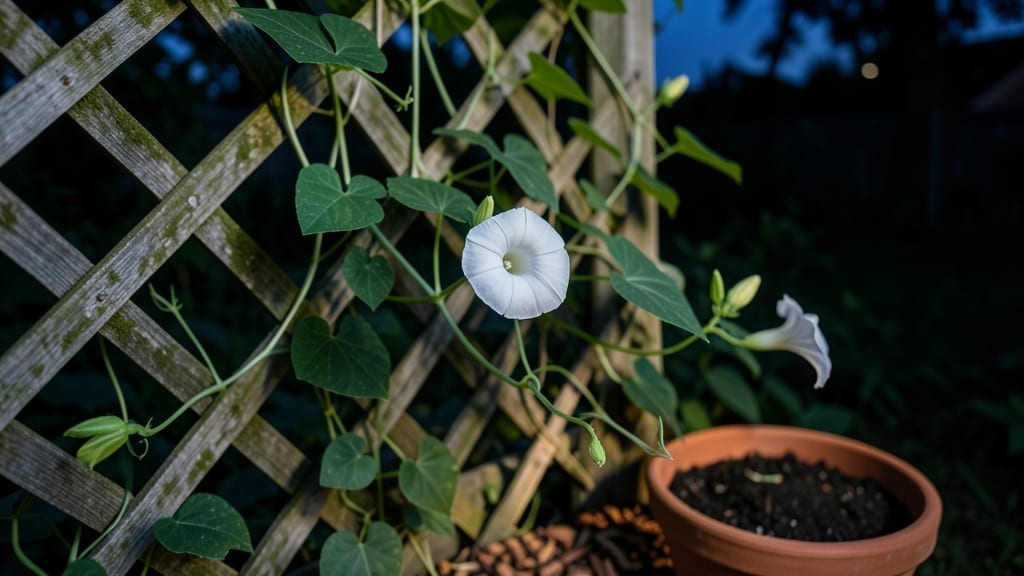
Moonflowers thrive in sun or shade with the right balance—6 hours of morning sun or dappled shade keeps their vines strong and blooms abundant, but too much heat or deep shade can stunt their growth.
Picture this: you’ve planted your 🌙 Moon Flower seeds in spring, only to watch them wilt by summer or produce sparse, weak blooms. The issue? Light. These night-blooming beauties need a sweet spot between basking in sun and escaping its harshest rays.
Here’s the secret: morning sun builds their energy, while afternoon shade protects them from scorching—especially in USDA Zone 6a or hotter climates. Too little light, and they’ll stretch thin; too much, and their leaves burn.
I’ll show you how to get it just right for lush vines and fragrant evening flowers.
From trellis placement to seasonal tweaks, you’ll learn the exact light conditions these vines crave—and how to adjust as the seasons shift. Ready to unlock those dreamy nighttime blooms?
 Best Window Placement
Ideal sunlight requirements for moonflowers: sun vs shade breakdown
Moonflowers (Ipomoea alba) thrive with 4-6 hours of morning sunlight followed by afternoon shade, especially in hotter climates (USDA zones 9-11). Their delicate leaves burn under intense afternoon sun, while too little light leads to leggy growth and sparse blooms.
Understanding this balance is crucial for healthy vines and fragrant nighttime flowers.
In cooler regions (USDA zones 6-8), moonflowers tolerate full sun exposure (6+ hours) without afternoon shade. The key difference lies in heat tolerance—hotter climates need afternoon shade to prevent leaf scorch and wilting, while cooler areas can handle more direct light.
Here’s how to match moonflower light needs to your climate and garden setup:
Moonflowers show clear signs of light stress when their needs aren’t met. Too much sun causes yellowing leaves and brown edges, while insufficient light leads to stretched, weak stems and minimal blooms.
If you notice these issues, adjust their placement immediately—morning sun is non-negotiable, but afternoon shade is a lifesaver in hot zones.
For hot climates (USDA 9-11), use trellises near east-facing walls or plant them under lightweight shade cloth (30-50%) during peak afternoon heat. In cooler zones (USDA 6-8), a south-facing trellis with no afternoon shade works perfectly, giving them 6+ hours of direct light without overheating.
Container gardeners face unique challenges because pots overheat quickly. Move containers to shadier spots by midday or place them on reflective surfaces (light-colored gravel, white saucers) to bounce extra light onto the plants. This mimics the natural shade of larger gardens while still providing enough light for growth.
Seasonal adjustments are key—summer heat demands more shade, while spring and fall benefit from full sun. If your moonflowers are struggling mid-summer, provide temporary shade with lightweight fabric or a nearby tree branch. This flexibility ensures consistent blooms year-round, even in extreme climates.
Pro tip: Prune leggy vines to encourage bushier growth when light is limited. Cut back overly stretched stems by 1/3 to redirect energy into healthier foliage and more blooms. This works especially well for container-grown moonflowers that can’t be moved easily.
Remember, moonflowers are fast growers—they’ll tell you what they need through their leaves and blooms. Watch for vibrant green leaves and abundant nighttime flowers as signs of perfect light balance. With the right sun-shade mix, your moonflowers will reward you with months of fragrant, magical evenings.
How to position moonflowers for maximum blooms: sun/shade hacks by garden type
Moonflowers (Ipomoea alba) thrive when placed strategically to balance their love for sunlight with protection from harsh afternoon rays. In containers, position them near reflective surfaces like light-colored walls or patios to maximize light exposure without direct baking.
For trellises, orient the structure to capture morning sun while providing afternoon shade with nearby shrubs or lattice screens.
In-ground plantings benefit from seasonal adjustments—move young plants to slightly shadier spots during summer's peak heat, then shift them back toward full sun as temperatures cool. This flexibility ensures your moonflowers get the 4-6 hours of sunlight they crave without risking leaf scorch.
For urban gardens with limited space, use vertical gardening—train moonflowers up a trellis near a balcony railing. If your space gets intense afternoon sun, install a removable shade cloth (like a lightweight screen) to protect delicate foliage while still allowing light through.
This hack works wonders in arid climates like Arizona or Southern California.
In cooler regions (USDA Zones 6-8), moonflowers can handle more direct sunlight year-round, but watch for winter shade—if snow covers nearby plants, temporarily move containers to a south-facing wall to prevent etiolated (stretched) growth.
A simple garden marker with your moonflower's light needs (e.g., "Morning Sun Only") helps avoid confusion when rearranging plants.
Pro tip: Mulch heavily around in-ground moonflowers to regulate soil temperature. A 3-inch layer of straw or wood chips keeps roots cool in summer and retains moisture, reducing the risk of light stress during heatwaves. Pair this with evening watering (after 6 PM) to mimic their natural nocturnal blooming cycle.
Remember, moonflowers are fast growers—adjust their position every 2-3 weeks until you find the sweet spot. With the right balance of morning sun and afternoon shade, you’ll reward yourself with abundant, fragrant blooms that light up your garden after dark. 🌙