
Vegetables
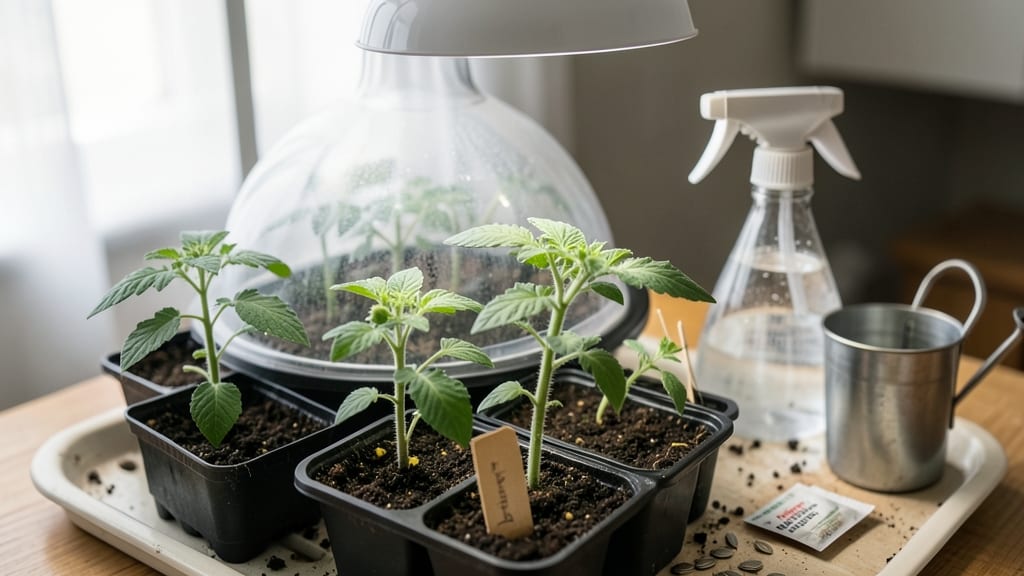
Starting tomato seeds inside doesn’t have to be a gamble—just 7 days of warmth and patience can turn tiny seeds into sturdy sprouts. 🌱 I’ve seen firsthand how a few simple supplies and consistent care turn nervous beginners into confident gardeners by early spring.
The key is timing: begin 6-8 weeks before your last frost, and you’ll have robust seedlings ready to transplant when the soil warms. You’ll need just four things: seeds, seed-starting mix, containers (even recycled egg cartons work), and a heat mat or sunny windowsill.
Skip the fancy setups—tomatoes are forgiving as long as you keep the soil moist (not soggy) and the air circulating. The first true leaves appear in days, and that’s when you’ll know you’re on the right track.
By week 7, your seedlings will be stocky and dark green, ready to handle outdoor conditions. No more weak, leggy plants—just vigorous starters that outperform store-bought transplants. The secret? Light from day one and a little extra warmth to speed germination.
This method works for any tomato variety, from cherry to heirloom. Once you’ve mastered it, you’ll never buy seedlings again—and your harvest will thank you for it.
📚 In This Guide
- What you need
- Instructions
- Tips and common mistakes
- Wrapping up and next steps
What you need
- ● Tomato seeds: 1 packet (choose heirloom or hybrid varieties like 'Cherry Tom' or 'Beefsteak' for best results).
- ● Seed-starting trays or pots: 2–4 (biodegradable or plastic, 2–3 inches deep).
- ● Seed-starting mix: 1–2 bags (sterile, seed-specific blend—no garden soil!).
- ● Spray bottle: 1 (with water or a seedling solution like diluted liquid seaweed).
- ● Grow lights or sunny windowsill: 1 (LED grow lights are ideal; south-facing windows work too).
- ● Plastic wrap or humidity dome: 1 (to retain moisture while seeds germinate).
- ○ Heat mat (optional but helpful): 1 (70–75°F range speeds up germination).
- ● Labels & markers: 1 set (to track seed varieties and planting dates).
- ● Fertilizer: 1 bottle (balanced, water-soluble, like 5-5-5 or fish emulsion—use sparingly after sprouts appear).
- ● Thermometer: 1 (to monitor soil temp, ideal range: 70–85°F).
- ● Fan: 1 (small, for gentle airflow to strengthen seedlings).
- ● Tweezers: 1 pair (for delicate seed placement).
- ● Bottom watering tray: 1 (keeps roots moist without overwatering).
Step-by-Step instructions for starting tomato seeds indoors
Here's how I get sturdy tomato seedlings ready for transplanting in just seven days—no fancy equipment needed.
🌱 Step 1: Prepare Your Containers and Seed Starting Mix
Fill clean 2-3 inch deep containers with a high-quality seed-starting mix—avoid garden soil, which can harbor diseases. I like to use biodegradable pots because they eliminate transplant shock when moving seedlings outdoors. Moisten the mix until it holds together when squeezed but doesn't drip.
Press the soil down gently so it's firm but not compacted. Tap the container lightly on the table to settle everything evenly. The goal is a fine, airy texture that encourages quick root development. If your mix feels too dense, add a handful of perlite to improve drainage.
🌱 Step 2: Plant Seeds at the Right Depth and Spacing
Plant 1-2 seeds per cell at a depth of about ¼ inch—this is roughly the diameter of a tomato seed. Sowing too deep slows germination because the seedling must push through more soil. Cover lightly with additional mix, then mist the surface gently with water until evenly moist.
I tap the seed packet gently to release one seed at a time—planting too many in one hole leads to weak, crowded seedlings. Label each pot with the variety and date, because after a week of identical green sprouts, you'll forget which is which.
💧 Step 3: Provide Warmth and Moisture for Fast Germination
Cover the trays with a clear humidity dome or plastic wrap to retain warmth and moisture. Tomatoes germinate fastest at 75-85°F. A seedling heat mat keeps the soil 10°F warmer than room temperature and cuts germination time by nearly half. Expect sprouts in 5-7 days—that's where the "fast" promise comes in.
Check daily but resist watering. The dome traps enough moisture that the soil stays evenly damp without intervention. Once 50% of seeds have sprouted, remove the dome immediately—trapped humidity invites damping-off disease, which collapses stems overnight.
☀️ Step 4: Move to Bright Light Immediately After Sprouting
The instant seedlings break through the soil, they need 14-16 hours of light daily. A south-facing window rarely provides enough intensity, so I use a full-spectrum LED grow light positioned 2-4 inches above the plants. Raise it as they grow to maintain that gap.
Without sufficient light, seedlings stretch desperately upward (called "leggy") and never recover proper strength. You'll see strong seedlings have thick stems, deep green color, and compact spacing between leaves. If stems grow pale and spindly, your light is too far away—move it closer immediately.
⏰ Step 5: Harden Off Before Transplanting Outdoors
Two weeks before your last frost date, start hardening off the seedlings by placing them outside in a sheltered, shaded spot for 1-2 hours the first day. Gradually increase outdoor time by 1 hour daily over 10-14 days, slowly introducing more sun and wind.
Skipping this step burns leaves, breaks stems, and shocks plants severely. Once seedlings tolerate a full day outside without wilting, they're ready for the garden. Transplant on an overcast afternoon to reduce transplant shock and water deeply at the base to settle the soil.
Tips & tricks for starting tomato seeds indoors
Avoid these common pitfalls—and how to give your tomato seedlings the best possible start.
Soil Texture Matters: In Step 1, when pressing down your seed-starting mix, aim for a texture that crumbles easily when squeezed—like damp sand. If it feels too dense, mix in perlite or vermiculite (about 10% by volume) to improve aeration. I've seen seedlings rot when soil compacts too tightly, cutting off oxygen to developing roots. A loose, airy mix prevents this while still holding moisture.
Germination Temperature Secret: The 75-85°F range in Step 3 is crucial, but here's what nobody tells you—consistency matters more than exact degrees. If your home runs cooler, place trays on a seedling heat mat (which adds that extra 10°F) or nestle them against a sunny window during the day. I've had seeds sprout in just 4 days using this method, beating the 5-7 day promise by a full week!
Light Position Technique: For Step 4, position your grow light so it's just 2-3 inches above the tallest seedlings. As they grow, raise it gradually to maintain this gap—this prevents "leggy" seedlings that stretch toward light. I use a small ruler to measure the distance daily; this small effort makes a huge difference in stem strength. Watch for leaves touching the light—this burns foliage instantly.
Harden Off Gradually: When you begin the 1-2 hour outdoor sessions in Step 5, choose a sheltered spot like under a porch or patio cover. Direct sun during this phase causes sunburn on tender leaves. I start with just 30 minutes on day one, then add 30 minutes each subsequent day—this slow progression builds resilience without shocking the plants.
Pro Tips for Start Tomato Seeds Inside
- Avoid these common pitfalls—and how to give your tomato seedlings the best possible start.
- Soil Texture Matters: In Step 1, when pressing down your seed-starting mix, aim for a texture that crumbles easily wh...
- Germination Temperature Secret: The 75-85°F range in Step 3 is crucial, but here's what nobody tells you—consistency ...
Frequently asked questions
Got questions?
Starting tomato seeds indoors can feel tricky at first, but you’ve got this! Here are answers to the most common questions to help you grow confident, fast sprouts—no stress.
What’s the best time to start tomato seeds indoors?
For most climates, start seeds 6–8 weeks before your last frost date. This gives seedlings enough time to grow strong before transplanting. Check your local frost date (or use a frost calculator) and count backward. Pro tip: Early starts (8+ weeks) work for cold regions—just keep lights closer if seedlings get leggy.
Do tomato seeds need light to germinate?
Nope! Seeds sprout underground—just keep soil warm (70–85°F) and moist. Once they’ve sprouted (in 5–10 days), move them under grow lights or a sunny window (12–16 hours/day). No light = no photosynthesis, but they’ll still germinate in the dark.
What if my seeds rot or mold instead of sprouting?
This usually means too much moisture or poor drainage. Try these fixes:
- Use sterile, well-draining soil (or a 50/50 mix of seed-starting soil + perlite).
- Water from the bottom (place trays in ¼-inch water, then drain).
- Avoid overcrowding—seeds need air circulation.
- Move seedlings closer to grow lights (1–2 inches from leaves).
- Rotate trays daily for even growth.
- Use a heat mat (70–75°F soil temp) if nights are chilly.
- Pinch leggy stems at the soil line to encourage bushiness (if needed).
- Day 1–3: Place in shade for 1–2 hours, then bring inside.
- Day 4–6: Increase time to 4–6 hours, add morning sun.
- Day 7+: Leave out all day, then overnight (if temps stay above 50°F).
Fungus issue? Spritz with a hydrogen peroxide solution (1 part 3% H₂O₂ to 4 parts water).
Prevention is key!Can I reuse containers or soil from last year?
Not ideal! Old soil may harbor disease or pests, and containers can trap pathogens. Fresh, sterile soil is a must—buy new seed-starting mix or pasteurize old soil (bake at 200°F for 30 mins). As for containers, clean them with soap and bleach (1:10 ratio) to kill germs. Reuse only if sanitized!
What if my seedlings look weak or stretched out?
This is called “leggy” growth, usually from too little light or heat. Fix it by:
How do I harden off seedlings before transplanting?
Hardening off (acclimating seedlings to outdoor conditions) takes 7–10 days. Gradually expose them to outdoor temps:
Wrapping up and next steps
Starting tomato seeds indoors is simpler than you think—and the reward? Bursting, healthy plants ready for your garden in just seven days! 🌱 With the right setup, patience, and a little love, you’ll soon be harvesting juicy, homegrown tomatoes.
Now that you’ve got the know-how, grab those seeds and get planting! Your future meals (and bragging rights) will thank you.
👉 Next step: Mark your calendar for transplanting—typically after the last frost—so you’re ready to give your seedlings the big outdoor adventure they deserve! 🌿