
Flowers
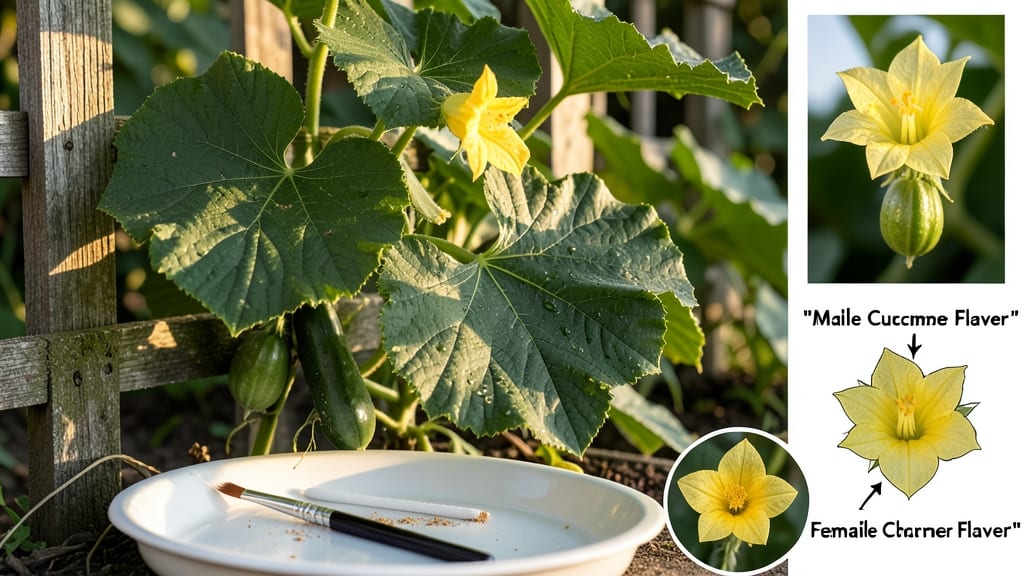
To pollinate cucumbers without male flowers, you’ll need a small brush and a few minutes each morning — a simple trick that transforms tiny blooms into plump, productive fruit.
Struggling with small, misshapen cucumbers? The issue might be pollination—and you don’t need male flowers to fix it. Hand-pollinating cucumbers guarantees bigger, healthier fruit without relying on bees or male plants. This method works for female-only varieties and even stressed plants where natural pollination fails.
Cucumbers 🥒 rely on pollen transfer to set fruit, but when male flowers are missing or bees aren’t visiting, your harvest suffers. By mimicking nature with a gentle brush stroke, you skip the guesswork and ensure every flower has what it needs to develop into a full-sized cucumber.
Below, I’ll walk you through the exact steps to hand-pollinate, including the best times of day, tools to use, and how to troubleshoot if your cucumbers still stay small. No fancy equipment—just your hands and a little patience.
Step-by-step guide to hand-pollinating cucumber flowers for maximum yield
If your cucumber plants are blooming but producing tiny, deformed fruit—or no fruit at all—you’re likely dealing with a pollination problem. Even female-only varieties need help when bees or wind aren’t enough.
The good news? Hand-pollination is simple, takes just 2 minutes per flower, and guarantees bigger, straighter cucumbers. Let’s break it down step by step.
First, understand why this works: female cucumber flowers have a tiny swollen base (future fruit), while male flowers have long stems and no ovary. Without pollen transfer, those female flowers simply drop off.
But by mimicking nature, you can trick your plants into setting fruit—even without male flowers nearby. Grab your tools, and let’s get started!
- 1 Identify female flowers: Look for blooms with a small bump at the base (this becomes your cucumber). Male flowers have long, thin stems and no bump.
- 2 Collect pollen: Use a soft paintbrush or cotton swab. Gently brush the center of male flowers (or any open cucumber flower) to gather golden pollen. Avoid crushing petals.
- 3 Transfer pollen: Dip the brush into the pollen, then stroke the stigma (the fuzzy tip) of a female flower. Do this for 3-5 flowers per plant daily for best results.
- 4 Tag pollinated flowers: Use a toothpick or ribbon to mark stems of pollinated flowers. This helps track which ones will produce fruit and avoid overloading the plant.
- 5 Repeat daily: Pollinate every morning for 3-5 days after a flower opens. Female flowers only stay receptive for 24-48 hours, so timing matters!
Pro tip: If you’re growing parthenocarpic varieties (like ‘Diva’ or ‘Sweet Success’), they produce fruit without pollination—but hand-pollination still boosts size and quality. For traditional varieties, this method is a game-changer for consistent yields. Just remember: patience is key—pollinated flowers take 7-10 days to develop into cucumbers.
Now, let’s talk timing. The best time to pollinate is early morning (before 9 AM) when flowers are fully open and dew-free. Avoid pollinating after rain or in extreme heat, as these conditions can damage delicate stigmas.
If you miss a day, don’t worry—just pick up where you left off. Female flowers will wilt and drop if unpollinated, so act fast!
One common mistake is over-pollinating a single plant. Too many cucumbers at once can drain the plant’s energy, leading to smaller fruit or stress. Aim to pollinate no more than 5-7 flowers per plant per week.
Also, avoid touching the ovary (bump) too much—this can cause fruit to abort or deform. Gentle strokes to the stigma are all you need.
For extra efficiency, keep a small kit with your tools: a soft paintbrush, cotton swabs, and toothpicks for tagging. Store it near your garden for quick access.
If you’re short on male flowers, you can even borrow pollen from nearby zucchini or squash plants—they’re all in the same family! Just make sure the donor plant is healthy and pest-free.
Finally, monitor your progress. Within 7-10 days of successful pollination, you should see tiny cucumbers forming at the base of tagged flowers. If you notice dropping flowers or yellowing leaves, your plant may be stressed from over-pollination or nutrient deficiency.
In this case, prune some flowers or add a balanced fertilizer (like 10-10-10) to support growth.
With these steps, you’ll be well on your way to a bountiful cucumber harvest, even without male flowers. Happy pollinating—and enjoy those plump, straight cucumbers all season long! 🥒
Why female-only cucumber plants still need hand pollination (and how to do it right)
Female-only cucumber varieties are popular for their direct fruit production, but they still need manual pollination to thrive. Without intervention, these plants often produce small, deformed cucumbers or fail to set fruit entirely. The science behind this is simple: female flowers require pollen from male flowers (or another source) to trigger fertilization, even if the plant itself doesn’t produce male blooms.
Many gardeners assume female-only plants will self-pollinate, but cucumbers rely on cross-pollination for optimal fruit development. Without it, the ovaries inside female flowers remain underdeveloped, leading to poor yield and quality.
This is especially true in greenhouse settings or areas with low bee activity, where natural pollinators are scarce.
⚠️ callout warning
⚠️ Mistake Alert: Skipping Pollination = Tiny Cucumbers
Common errors that ruin pollination:
- ❌ Using dirty tools – Old paintbrushes spread fungal spores to flowers.
- ❌ Pollinating at the wrong time – Morning (when flowers are open) is best.
- ❌ Missing female flowers – Look for tiny cucumbers at the base of blooms.
Pro Tip: Dip tools in rubbing alcohol before use to kill bacteria.
Hand pollination works by transferring pollen from one female flower to another using a small brush or cotton swab. This mimics the role of bees or wind, ensuring fertilization even without male plants.
The process is fast (under 2 minutes per flower) and can double your yield if done correctly. For organic gardeners, this method avoids chemical sprays while boosting fruit quality.
One key misconception is that female-only plants don’t need pollination at all. In reality, their fruit development depends entirely on external pollen sources. Without them, the ovaries swell but fail to mature, resulting in bitter, seedy cucumbers or no harvest.
Even parthenocarpic varieties (which produce fruit without pollination) benefit from manual help for larger, sweeter results.
To maximize success, focus on healthy female flowers with swollen ovaries at their base. Use a soft-bristle brush to gently collect pollen from one flower and transfer it to another’s stigma (the fuzzy center).
Repeat this 2-3 times per flower for best results. Avoid touching leaves or stems with your tools to prevent disease spread.
Consistent hand pollination turns female-only cucumbers into high-yielding powerhouses. With just 5 minutes daily, you’ll enjoy straight, uniform cucumbers instead of stunted, misshapen ones. Plus, this method works year-round, even in indoor gardens or cool climates where bees are inactive.