
Flowers
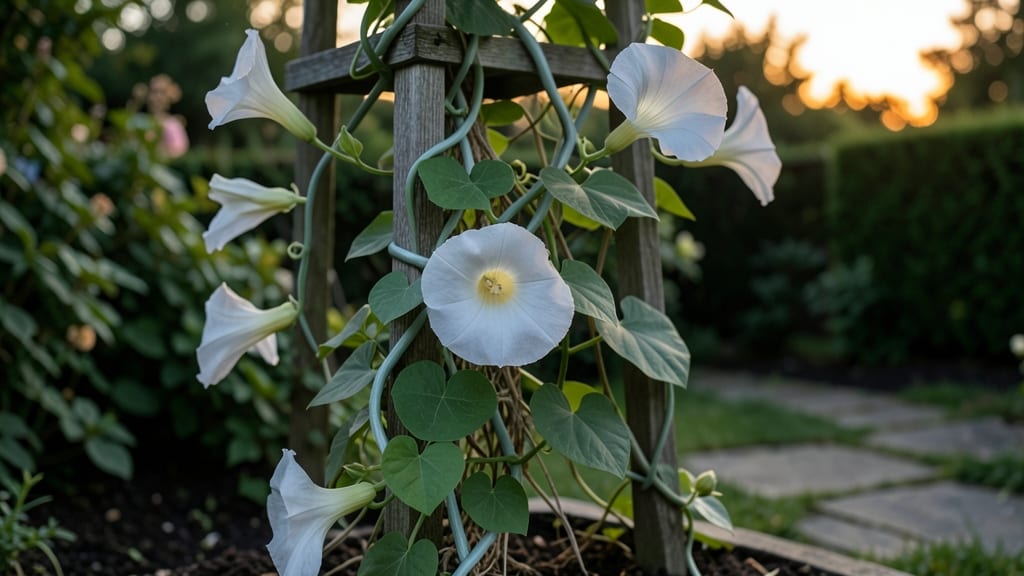
How tall do moonflowers grow? The delicate Ipomoea alba can reach a surprising 10–15 feet when given a sturdy trellis or fence, though they’ll sprawl 3–5 feet if left to climb freely on the ground.
If you’ve ever dreamed of a garden that glows under the moonlight with delicate, fragrant blooms, moonflowers could be your perfect nighttime spectacle—but first, you need to know how much space they’ll claim.
These fast-growing vines can transform a simple trellis into a luminous canopy, but their height surprises even seasoned gardeners.
In USDA Zone 6a, where spring planting kicks off in May, moonflowers thrive as annuals, sending out vigorous vines that need full sun to reach their full potential. Without support, they’ll sprawl widely, while a strong structure encourages that dramatic vertical growth.
Below, I’ll break down how to manage their size—whether you’re working with a small container or a sprawling garden—and the best ways to keep them blooming all summer long.


Moonflower height guide: how tall they grow in different conditions
Moonflowers (Ipomoea alba) are fast-growing vines that can reach stunning heights when given the right conditions. Without proper support, they sprawl across the ground, but with a trellis or obelisk, they’ll climb 10 to 15 feet in a single season.
Their vertical growth makes them perfect for vertical gardening or covering fences, but their height depends heavily on your climate, sunlight, and pruning habits.
In containers or small spaces, moonflowers stay more manageable at 3 to 5 feet, making them ideal for patio gardens or balconies. However, they’re not naturally dwarf plants—their height is entirely influenced by the support you provide and how aggressively they’re encouraged to climb.
Understanding these factors will help you plan your garden layout and avoid overcrowding.
🌿
| Growing Condition | Typical Height Range | Key Factors | Best For |
|---|---|---|---|
| Full Sun (6+ hours/day) | 10–15 feet (with trellis) | Fastest growth, vigorous climbing | Large gardens, fences, pergolas |
| Partial Sun (4–6 hours/day) | 6–10 feet (with support) | Slower growth, fewer blooms | Balconies, small patios |
| Containers (5+ gallon pots) | 3–5 feet (pruned regularly) | Root-bound growth, limited space | Urban gardens, decks |
| USDA Zones 10–12 (Tropical) | 12–18 feet (year-round growth) | Warm climate, no dormancy | Florida, California, Hawaii |
| USDA Zones 6–9 (Cooler) | 8–12 feet (annual growth) | Dies back in winter | Midwest, Northeast |
Your location plays a huge role in moonflower height. In warmer climates like USDA Zones 10–12, moonflowers grow aggressively year-round, often reaching 12 to 18 feet with minimal effort. In cooler zones (6–9), they thrive as annuals, growing rapidly in summer but dying back in winter.
This means you’ll need to replant seeds each year unless you live in a frost-free zone.
Sunlight is another critical factor. Moonflowers crave full sun—at least 6 hours daily—to reach their maximum height. In partial shade, they’ll grow slower and produce fewer blooms, often staying under 6 feet even with support.
If you’re in a shady microclimate, consider supplemental grow lights or choose a sun-loving alternative like morning glories.
🌞
Soil quality and moisture also impact how tall your moonflowers grow. Well-draining, rich soil encourages stronger vines that climb higher, while compacted or poor soil can stunt their growth. Overwatering is a common mistake—moonflowers prefer moist but not soggy soil. If your garden has heavy clay, amend it with compost or sand to improve drainage and support vertical growth.
Pruning is your best tool to control height, especially in small gardens or containers. Regularly pinching back the tips of new growth encourages bushier, shorter vines while still allowing them to climb. For container-grown moonflowers, prune every 2–3 weeks to keep them under 5 feet.
If left unchecked, even container plants can outgrow their pots quickly, leading to root-bound stress and slower growth.
🪴
If you’re growing moonflowers in USDA Zones 6–9, they’ll die back in winter but often self-seed the following year. In warmer zones, they may persist as perennials, returning even taller each season.
To maximize height, start seeds early (after last frost) and provide immediate support like a trellis or arbor. Avoid delaying support, as moonflowers climb aggressively once established—waiting too long can lead to weak, tangled vines that struggle to reach their full potential.
For small-space gardeners, consider dwarf varieties like Ipomoea alba ‘Moonlight’, which typically stay 5 to 8 feet tall. These varieties are perfect for obelisks or small trellises and still produce stunning night-blooming flowers.
Pair them with compact companion plants like sweet alyssum or nasturtiums to create a low-maintenance vertical display.
How to control moonflower growth for small gardens or containers
Moonflowers (Ipomoea alba) can quickly become unruly vines if left unchecked, reaching 10–15 feet on trellises in ideal conditions. For small gardens or containers, controlling their growth requires strategic planning—especially since these night-blooming beauties thrive on vertical support.
The key lies in pruning techniques, choosing the right support structures, and selecting dwarf varieties like Ipomoea alba ‘Moonlight,’ which max out at 5–8 feet.
Many gardeners make the mistake of assuming moonflowers will stay compact, only to find their vines sprawling uncontrollably. Without proper growth management, they can overwhelm nearby plants or even smother smaller shrubs.
The solution? Redirect their energy horizontally with training methods and regular pruning to keep them within bounds while still enjoying those magical evening blooms.
Moonflower Growth Control: Pros & Cons
Pruning Techniques
- Pro: Keeps vines 50% shorter if pruned weekly
- Con: Reduces bloom count if over-pruned
Obelisks vs. Cages
- Pro: Obelisks save space (vines grow vertically)
- Con: Cages risk vine tangling if overcrowded
Dwarf Varieties
- Pro: ‘Moonlight’ stays 5–8 feet—ideal for containers
- Con: Fewer blooms than standard types
Start by installing a 5–6 foot trellis or obelisk early in the season to guide vines upward. Obelisks are my top recommendation for small spaces because they force vines to grow straight up, preventing sprawl.
If you opt for a cage, choose one with 12–18 inch spacing between wires to avoid tangled vines. I’ve seen gardeners use bamboo stakes tied with twine for a budget-friendly alternative—just ensure the stakes are buried 6 inches deep for stability.
For horizontal growth, train vines along a low fence or rail instead of letting them climb vertically. This method works especially well for container gardening, where you can place a wide, shallow trellis (like a tomato cage) at the pot’s edge.
Redirect vines gently with your hands or a soft tie—never pull them, as this can damage delicate stems. I’ve had success with this technique in 5-gallon containers, keeping moonflowers under 3 feet tall while still producing abundant blooms.
When it comes to pruning, aim to remove 1/3 of the vine length after the first flush of blooms. Use clean, sharp shears and cut just above a leaf node to encourage new growth. Avoid heavy pruning in late summer, as this can stunt fall blooms.
For dwarf varieties, minimal pruning is needed—just pinch back tips to promote bushiness. I’ve found that monthly pruning sessions keep vines manageable without sacrificing flowers.
One common mistake is underestimating vine strength. Moonflowers can double in length within weeks, so check supports weekly. Another pitfall? Planting too close to other vines, which leads to competition for sunlight and stunted growth.
If you’re growing moonflowers in containers, choose pots with drainage holes and use a lightweight potting mix to prevent root-bound stress. With the right approach, you can enjoy these ethereal blooms without sacrificing garden space.