
Blooming
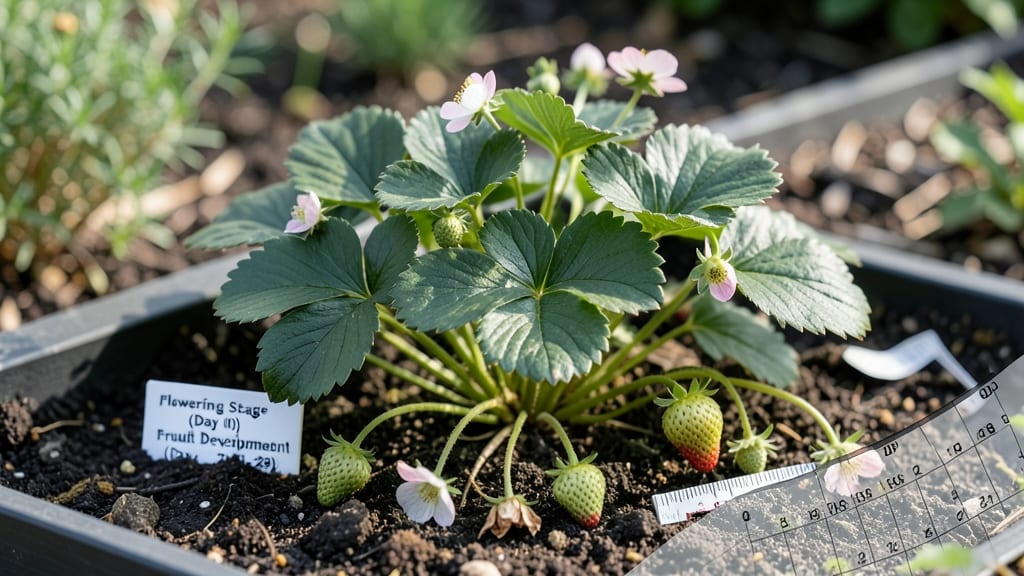
If your plants are flowering but not producing fruit, you’re not alone—this is where most gardeners hit a snag. The good news? A few key factors can speed up (or slow down) that timeline, and knowing them means you can tweak your care routine for a faster, more reliable harvest.
June-bearing varieties typically take the full 6 weeks from bloom to ripe fruit, while everbearing and day-neutral types often ripen in 4 to 5 weeks. But whether you’re growing one of these or a heirloom variety, sunlight, water, and temperature play a bigger role than you might think.
In this guide, I’ll break down the exact 4-6 week timeline from pollination to harvest, plus the simple adjustments you can make to ensure your strawberries ripen on schedule—no waiting around required.


Strawberry growth stages after flowering: the 4-6 week timeline explained
Once your strawberry plants bloom, the real magic happens—but how long until those juicy berries ripen? The journey from pollination to harvest typically takes 4-6 weeks, though several factors can speed up or delay this process. Understanding each growth stage helps you predict ripening times and troubleshoot delays early.
After flowering, strawberries go through three critical stages: fruit set (when tiny berries form), rapid growth (swelling phase), and maturation (color change and sweetening). Each stage requires specific conditions to ensure healthy development.
For example, June-bearing varieties usually take the full 6 weeks, while everbearing or day-neutral types may ripen in as little as 4 weeks under ideal conditions.
Environmental factors like temperature, sunlight, and watering play huge roles in this timeline. For instance, consistent warmth (70-85°F) accelerates growth, while cool nights or drought stress can stall development. Even soil nutrients—especially phosphorus and potassium—impact fruit size and sweetness. Let’s break down each stage so you can track progress like a pro.
| Stage | Timeframe | Key Changes | Care Tips |
|---|---|---|---|
| Pollination & Fruit Set | 0-7 days | Tiny green berries form; flowers wilt | Hand-pollinate if needed; ensure bees visit |
| Rapid Growth (Swelling) | 7-21 days | Berries double in size; turn pale green | Water deeply 2x/week; mulch to retain moisture |
| Color Development | 21-35 days | Berries turn pink/red; firm up | Reduce water slightly; protect from pests |
| Maturation & Ripening | 35-42 days | Fully colored; sweet and plump | Harvest promptly; avoid overripening |
The first 7 days after flowering are critical. This is when pollination occurs, and tiny berries begin forming.
If you notice unpollinated flowers (they drop off without setting fruit), gently shake the plants or use a small brush to transfer pollen. Bees are your best allies here—planting bee-friendly flowers nearby (like marigolds or lavender) can boost pollination rates by up to 30%.
Between days 7-21, your strawberries enter the swelling phase, where they grow rapidly. This is when you’ll see them double in size and turn from tiny green dots to pea-sized berries. Watering consistency is key here—too little causes stunted growth, while too much can lead to rotting.
Aim for 1-1.5 inches of water per week, delivered directly to the soil (not the leaves) to prevent fungal diseases like gray mold.
At the 3-week mark, your berries should start showing color—pink, red, or yellow, depending on the variety. This is the color development stage, where sugars begin accumulating. Sunlight exposure is critical now; partial shade can delay ripening by 1-2 weeks.
If your plants are in containers, rotate them weekly to ensure even light distribution. During this phase, also check for aphids or spider mites, which thrive on young fruit.
The final 2 weeks are all about maturation. Your berries will plump up, develop their full color, and become sweet and fragrant. Harvest timing is everything—pick them when they’re fully colored but still firm to the touch.
Overripe berries bruise easily and attract pests. Pro tip: June-bearing varieties like Jewel or Chandler take the full 6 weeks, while everbearing types like Seascape can ripen in just 4 weeks under ideal conditions.
One common misconception is that larger berries always mean better flavor. In reality, smaller strawberries often concentrate more sugar and acidity. If your berries are staying small, it could signal nutrient deficiency (try a balanced fertilizer like 10-10-10) or overcrowding (thin out runners to improve airflow).
For maximum yield, remove the first few blossoms on June-bearing plants to encourage larger fruit later in the season.
Temperature swings can drastically alter your timeline. For example, hotter-than-average summers (above 90°F) can cause berries to ripen 2-3 weeks early, while cool springs (below 50°F) may extend the process by 1-2 weeks.
If you’re in a high-altitude area (like the Rockies), expect a longer timeline due to cooler
5 Key factors that speed up or slow down strawberry ripening
Your strawberry plants may be flowering beautifully, but the fruit ripening timeline can vary wildly based on simple factors you control. From temperature swings to pollination gaps, each element acts like a speed dial for your harvest.
Understanding these 5 key factors lets you adjust care to get ripe berries in as few as 4 weeks—or troubleshoot delays when fruit lingers green.
Let’s break down how each factor influences your strawberry growth timeline and what you can do to optimize it. Whether you’re dealing with June-bearing, everbearing, or day-neutral varieties, these principles apply.
Small tweaks in your garden routine can mean the difference between a 6-week wait and a 3-week sprint to harvest.
If your strawberries are taking longer than expected, check your temperature logs first—cool nights or heatwaves are the most common culprits. For example, a 55°F morning can pause ripening for 3–5 days until temperatures rise.
Meanwhile, overwatering or poor drainage leads to blossom end rot, causing fruit to drop before ripening.
Pro tip: Everbearing varieties like Albion or Seascape ripen faster in ideal conditions (as little as 3 weeks after flowering), while June-bearing types like Jewel may need the full 6 weeks.
Adjust your harvest expectations based on your variety and local climate. For example, gardeners in Zone 8 often see 2-week faster ripening than those in Zone 5.
Ready to fine-tune your strawberry care? Start by monitoring your plants’ microclimate—use a soil thermometer and sunlight tracker to spot delays early. Small adjustments in watering schedules or shade protection can shave days off your harvest timeline. The key is consistency: strawberries thrive on routine, not guesswork.