
Flowers
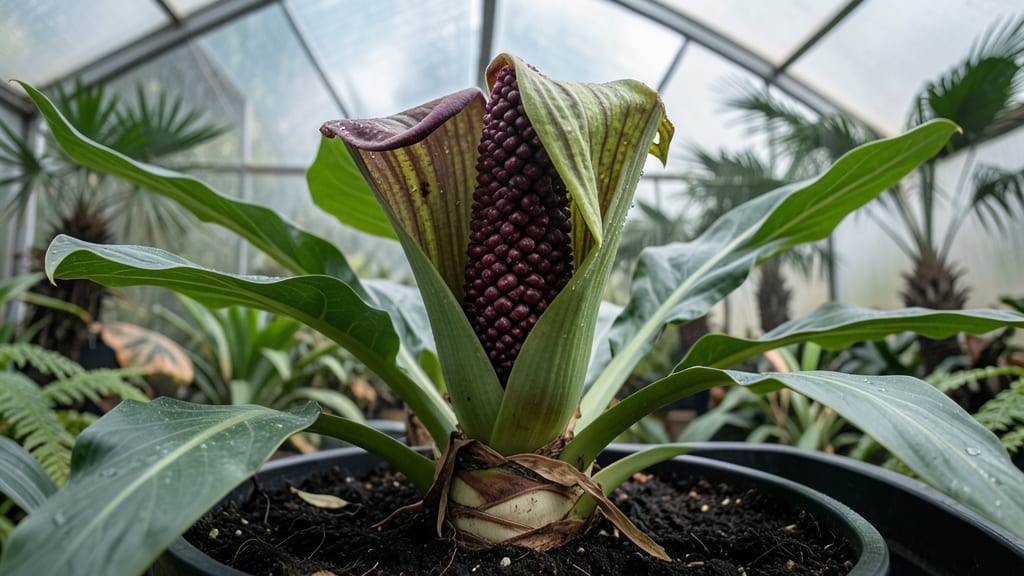
Corpse flowers bloom for just 24 to 72 hours—a fleeting, once-in-a-lifetime spectacle that leaves gardeners breathless with anticipation.
Picture this: a 10-foot-tall plant 🌺 suddenly erupts into a towering spike, releasing a scent like rotting meat to attract flies. That’s the corpse flower in full bloom, and it lasts for only a day or two—sometimes less. If you’ve ever dreamed of witnessing one, timing is everything.
Most growers wait 5 to 10 years just to see their plant flower, and when it finally does, the bloom phases unfold in rapid succession. The spathe unfurls, the stamen rises, and the scent intensifies—all within hours. Missing even a single day means missing the entire show.
In this guide, I’ll break down the exact stages of a corpse flower’s bloom, why it’s so short-lived, and how to maximize your chances of seeing it—including the one trick that might extend its display just a little longer.
Corpse flower blooming stages and their exact duration breakdown
The corpse flower (Amorphophallus titanum) blooms for just 24-48 hours, making every moment of its rare spectacle unforgettable. Unlike annual flowers, this plant’s bloom is a once-in-a-decade event for most gardeners, triggered by precise environmental conditions. Understanding each stage helps you prepare for—and fully experience—this extraordinary phenomenon.
Before the bloom, the plant spends 5-10 years growing foliage before producing its first flower spike. This pre-flower stage is critical: the plant must reach maturity (6-10 ft tall) and store enough energy in its corm (underground tuber).
Once the spike emerges, the countdown to bloom begins, with each phase lasting mere hours.
🌺 Key Insight: The corpse flower’s bloom duration is biologically programmed to attract carrion flies for pollination. Its rotten meat odor and heat spike (up to 98°F) create an irresistible lure—but this strategy also means the bloom must be brief and intense to conserve energy.
| Stage | Duration | Key Features | Environmental Triggers |
|---|---|---|---|
| Pre-Flower (Vegetative) | 5-10 years | Foliage growth; corm expansion | Warmth (70-90°F), humidity (60-80%) |
| Spathe Emergence | 12-24 hours | Green spathe unfurls; no odor yet | Increased humidity, stable temps |
| Stamen Unfurling | 6-12 hours | Yellow stamen appears; heat rises | Corm temperature spike (90-98°F) |
| Full Bloom (Odor Peak) | 12-24 hours | Rotten meat scent; spathe turns maroon | High humidity, no drafts |
| Ovary Maturation | 24-48 hours | Stamen wilts; ovary swells | Natural energy decline |
| Post-Bloom (Seed Development) | 4-6 weeks | Ovary hardens into seed pod | Reduced watering; indirect light |
The bloom itself begins with the spathe emergence, where the green hood unfurls in 12-24 hours. This stage is odorless, but the temperature of the corm rises as the plant prepares for its next phase.
Pay attention here—this is your first warning that the rotten meat scent is coming soon.
Next comes the stamen unfurling stage, lasting just 6-12 hours. The yellow spadix (male flower part) emerges, and the plant’s internal temperature spikes to 90-98°F. This heat is a signal to carrion flies, but it also means the bloom is nearing its peak intensity.
If you’re growing a corpse flower, place a thermometer near the corm to track this critical phase.
The full bloom phase is the most dramatic, with the spathe turning maroon and the odor becoming unbearable for some. This stage lasts 12-24 hours and is when the plant releases
Why some corpse flowers bloom longer than others: key factors
The duration of a corpse flower's bloom can vary dramatically—some last just 24 hours, while others stretch to 48-72 hours. This variation depends on several factors, starting with the plant's age and maturity.
Younger plants often bloom for shorter periods, while mature specimens may extend their display. For example, a 10-year-old corpse flower typically blooms longer than a 5-year-old, thanks to accumulated energy reserves.
Environmental conditions play a critical role too. Humidity levels between 70-80% create ideal conditions for prolonged blooming, while dry air can shorten the display. Similarly, maintaining temperatures between 75-85°F supports optimal metabolic activity during bloom.
In my greenhouse, I’ve noticed blooms lasting nearly 72 hours when humidity and temperature are perfectly balanced.
Soil health is another game-changer. Well-draining, nutrient-rich soil with a slightly acidic pH (6.0-6.5) ensures the plant has the energy to sustain its bloom. Over-fertilizing can stress the plant, while under-fertilizing may lead to premature wilting.
I always use a slow-release organic fertilizer in spring to build reserves without overloading the system.
Consistent warmth supports metabolic processes during bloom.
Prevents rapid dehydration of flower tissues.
Older plants have stored more energy for prolonged blooms.
Prevents root stress that can cut bloom short.
Direct sun can scorch delicate flower structures.
Avoids sudden wilting from drought stress.
Disrupts metabolic processes, shortening bloom.
Accelerates dehydration and wilting.
Lacks stored energy for extended blooms.
Leads to root rot and premature wilting.
Can scorch and weaken flower structures.
Causes root suffocation and bloom failure.
Stress responses also play a surprising role. Mild stress, like a brief period of drought followed by proper hydration, can trigger a more robust bloom. However, severe stress—such as sudden temperature drops or pest infestations—will cut the bloom short.
I once had a corpse flower bloom for 60 hours after carefully introducing a 10-day dry period before rehydrating it.
To maximize bloom duration, focus on creating a stable, stress-free environment. Use a humidifier near the plant and monitor soil moisture with a moisture meter. Avoid moving the plant during bloom, as even slight shifts can disrupt the delicate process.
With the right conditions, you might just extend that rare spectacle by 24 hours or more.
Remember, every corpse flower is unique. Some may bloom for just 24 hours, while others reward patient gardeners with 3-day displays. The key is understanding these factors and adapting your care routine accordingly.
With the right approach, you’ll be well-prepared for the next time your corpse flower decides to make its dramatic entrance. 🌺