
Flowers
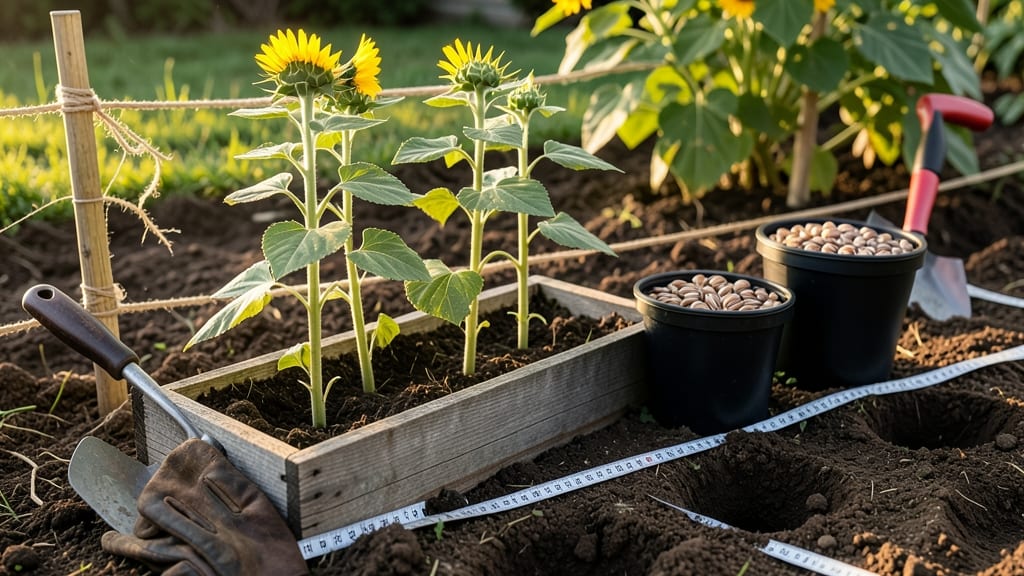
To grow sunflowers with strong stems and plump blooms, knowing how far apart should sunflowers be planted is the secret weapon you’ve been missing.
Sunflowers aren’t just beautiful—they’re sun-loving giants that need the right spacing to thrive. Plant them too close, and you’ll end up with weak stems, disease risks, and disappointing blooms. But get the spacing right, and you’ll unlock towering stems, abundant seeds, and a garden that turns heads.
Most gardeners assume all sunflowers follow the same rules, but the truth is variety matters. A 6-foot dwarf like ‘Teddy Bear’ needs 12 inches between plants, while a 14-foot giant like ‘Mammoth’ demands 24 inches or more.
Throw in soil type, climate, and garden layout, and you’ve got a puzzle worth solving.
In this guide, I’ll break down the exact spacing you need for every sunflower type, how to adjust for crowded plots or poor soil, and the 3 most common mistakes that ruin even the best-intentioned gardens. Ready to grow sunflowers that reach for the sky?
Sunflower spacing by variety: giant vs. dwarf vs. hybrid planting distances
Sunflowers come in stunning varieties, from 14-foot giants like 'Mammoth' to 2-foot dwarfs like 'Teddy Bear'. Each type needs different spacing to prevent competition for sunlight, nutrients, and air circulation. Proper spacing ensures strong stems, disease resistance, and maximum seed production.
Let’s break down the ideal distances for each category so you can plan your sunflower garden like a pro.
Spacing isn’t just about avoiding overcrowding—it’s about giving each plant room to grow vertically and access sunlight. Tall varieties need wide rows and deep soil to support their towering heights, while dwarf types thrive in tight clusters for pollinator-friendly displays.
Even hybrid varieties have unique needs, often balancing height and bushiness. Let’s explore the specifics to help you choose the perfect layout for your garden.
Why spacing matters: Too close, and you’ll get weak stems that snap in wind or rain, plus increased disease risk from poor airflow. Too far apart, and you’ll waste space or miss out on the full potential yield. The right distance ensures each plant gets 6-8 hours of sunlight and enough nutrients to flourish. Let’s dive into the details for each variety type.
| Variety Type | Planting Distance (inches) | Row Spacing (feet) | Mature Height | Sunlight Needs |
|---|---|---|---|---|
| Giant Varieties (e.g., 'Mammoth', 'Russian Giant') | 18-24 inches apart | 3-4 feet apart | 10-14 feet | Full sun (6+ hours) |
| Standard Varieties (e.g., 'Autumn Beauty', 'ProCut') | 12-18 inches apart | 2-3 feet apart | 6-10 feet | Full sun (6+ hours) |
| Semi-Dwarf Varieties (e.g., 'Teddy Bear', 'Moulin Rouge') | 6-12 inches apart | 1.5-2 feet apart | 2-5 feet | Full sun (6+ hours) |
| Hybrid Varieties (e.g., 'Sunbright', 'Evening Sun') | 12-16 inches apart | 2-3 feet apart | 5-8 feet | Full sun (6+ hours) |
| Dwarf Varieties (e.g., 'Pole Star', 'Sunspot') | 4-8 inches apart | 1-1.5 feet apart | 1-3 feet | Full sun (6+ hours) |
🌻 Pro Tip: Always plant seeds 1 inch deep and thin seedlings to the recommended spacing once they reach 3-4 inches tall.
For giant sunflowers like 'Mammoth', spacing them 18-24 inches apart in rows 3-4 feet apart gives their 10-14-foot stems the stability they need. These varieties are heavy seed producers, so proper spacing prevents stems from toppling over.
Plant them in well-draining soil with compost mixed in to support their rapid growth.
Standard varieties, such as 'Autumn Beauty' or 'ProCut', strike a balance between height and manageability. Space these 12-18 inches apart with rows 2-3 feet apart. Their 6-10-foot heights make them ideal for cut flowers or birdseed, but they still need room to access sunlight without shading neighbors.
If you’re growing them for cutting, leave extra space to avoid damaging stems during harvest.
Semi-dwarf varieties like 'Teddy Bear' are perfect for small gardens or container growing. Space them 6-12 inches apart in rows 1.5-2 feet apart. Their 2-5-foot heights make them great for pollinator gardens or border plantings. These varieties often have multiple blooms per stem, so closer spacing can actually increase yield while keeping the garden dense and attractive.
Hybrid sunflowers, such as 'Sunbright' or 'Evening Sun', are bred for specific traits like disease resistance or early blooming. Space them 12-16 inches apart in rows 2-3 feet apart to accommodate their 5-8-foot heights.
Hybrids often outperform open-pollinated varieties in yield and vigor, but they still need proper spacing to avoid competition. If you’re growing hybrids for seed
How to adjust sunflower spacing for soil, climate, and garden layout
Your sunflowers' spacing needs can shift dramatically depending on where you live and what your soil looks like. In poor, rocky soil, for example, you’ll want to space them 12-18 inches apart to give roots room to explore.
Meanwhile, in rich, well-draining soil, you can tighten that to 6-12 inches for compact gardens. Climate also plays a role—high-altitude areas with thinner air often need slightly wider spacing to prevent leggy growth.
Even the layout of your garden affects spacing. If you’re planting in rows, standard spacing is 18-24 inches apart with 3 feet between rows. But in raised beds or containers, you might reduce spacing to 8-12 inches while still maintaining airflow.
The key is balancing sunlight access and root competition—too close, and you’ll lose those iconic towering blooms.
Adjusting Sunflower Spacing: Pros & Cons
✅ Pros of Wider Spacing (18-24")
- Stronger stems with better airflow
- Reduced disease risk like powdery mildew
- Taller, sturdier plants for seed production
- Easier maintenance (weeding, harvesting)
❌ Cons of Tighter Spacing (6-12")
- Weak stems prone to snapping
- Increased pests (aphids, beetles)
- Smaller blooms due to competition
- Higher disease risk from humidity
🔄 Adjustments by Scenario
| Scenario | Spacing Adjustment | Why? |
|---|---|---|
| Poor soil | 12-18" | Roots need room to seek nutrients |
| Compact garden | 6-12" | Maximizes vertical space |
| High altitude | 18-24" | Prevents leggy growth |
| Container growing | 8-12" | Limited root space |
For crowded planting scenarios, consider interplanting with companion plants. Pair sunflowers with beans or borage—their deep roots won’t compete, and they’ll deter pests like aphids. In small plots, try a staggered grid pattern (like checkerboard) to squeeze in more plants while keeping airflow optimal.
Just avoid planting near corn, as they share diseases.
If your climate is hot and dry, increase spacing to 24 inches to reduce water stress. In cooler, wetter regions, you can tighten to 12 inches since humidity isn’t as much of a concern.
Always thin seedlings to your target spacing—this prevents overcrowding early and gives roots room to establish before competition kicks in.
Pro tip: Use trellises or stakes for tall varieties to save space. This lets you plant 12-18 inches apart while keeping stems upright. Just ensure stakes are buried deeply (at least 12 inches) to support those 10-foot giants.
For dwarf varieties, you can even tuck them into flower borders at 6-inch intervals.
Remember, proper spacing isn’t just about yield—it’s about healthy, happy sunflowers. With the right adjustments, you’ll enjoy bigger blooms, fewer pests, and easier care, all while making the most of your garden’s unique conditions. Happy planting! 🌻