
Container Gardens
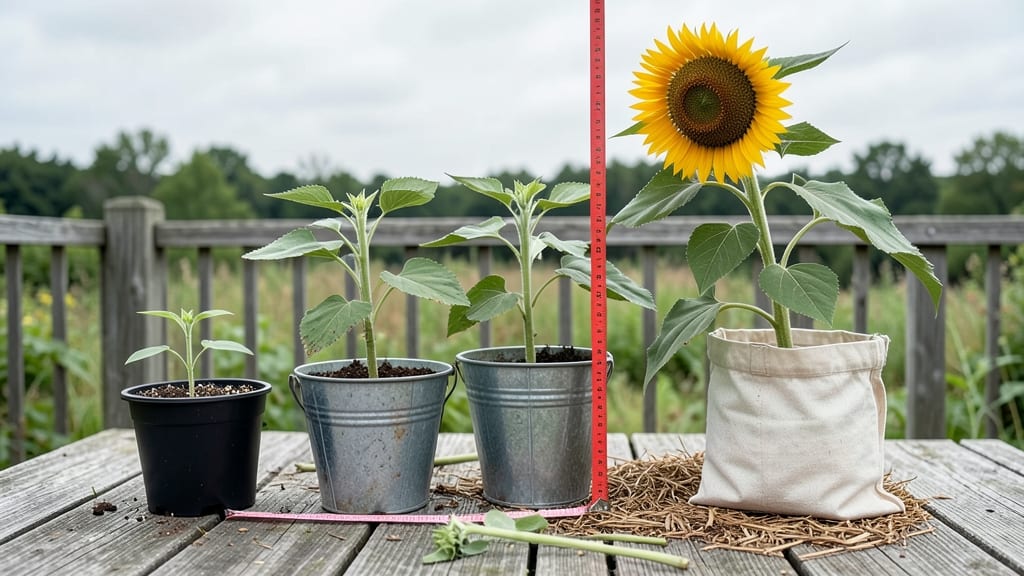
Sunflowers need pots that match their height—dwarf varieties thrive in 5-gallon containers, while giants demand 20-gallon or larger to support their deep roots.
Picture this: you’ve spent weeks nurturing your 🌻 seedlings, only to watch them lean or wilt because the pot was too shallow. That’s a common mistake, and one that’s easy to avoid with the right sizing.
Below, I’ll break down the exact pot dimensions for every sunflower type—from compact 2-foot dwarfs to 12-foot giants—plus the drainage and material tips that keep them stable and blooming.
You’ll learn how to choose containers that prevent root binding, the best materials for heat retention, and why some sunflowers need extra depth to avoid toppling in wind.
Sunflower pot size requirements by variety height
Sunflowers are a gardener's dream for adding vertical interest, but their success in containers depends entirely on giving their roots the space they crave. Unlike shallow-rooted plants, sunflowers develop deep taproots that need room to grow downward, not just spread outward.
The pot size you choose directly impacts how tall your sunflowers grow and whether they'll even bloom. For dwarf varieties, a small container works, but giant sunflowers need deep, wide pots to support their massive stems and seed heads.
Most gardeners overlook the depth requirement—sunflowers need at least 12-18 inches of soil depth to thrive, even for smaller varieties. Shallow pots (like those used for herbs) will leave roots circling and stunted.
I’ve seen 8-foot sunflowers in 5-gallon pots struggle to stay upright because their roots couldn’t anchor properly. Let’s break down the exact pot sizes your sunflowers need based on their mature height, so you can avoid common mistakes and grow healthy, blooming plants.
For dwarf sunflowers (1-3 ft), a 10-12 inch diameter pot with 12 inches of depth is the minimum. These varieties, like 'Teddy Bear' or 'Moulin Rouge,' are forgiving, but even they need room to develop their root systems.
I’ve grown 'Little Becka' in 1-gallon containers and seen them reach 2 feet tall, but they produce fewer blooms. If you’re aiming for healthy flowers, upgrade to a 3-gallon pot for better stability and nutrient retention.
The jump to semi-dwarf varieties (3-6 ft), such as 'Autumn Beauty' or 'ProCut,' requires a 14-16 inch diameter pot and 16-18 inches of depth. These sunflowers need more space to anchor their stems and support their heavier seed heads.
In my container garden last summer, I planted 'Autumn Beauty' in 5-gallon fabric pots and saw them thrive, but I had to stake them early to prevent toppling. Fabric pots are ideal here because they allow roots to breathe and reduce the risk of root rot.
When you move to standard sunflowers (6-8 ft), like 'Mammoth' or 'Russian Giant,' the pot size becomes critical. These varieties need 18-20 inches of diameter and 20-24 inches of depth to avoid stunted growth.
I once tried growing a 'Mammoth' sunflower in a 15-gallon container, and while it reached 7 feet, the stem was weak and the flower head leaned dangerously. For these giants, heavy ceramic or fiberglass pots with saucers are a must to prevent tipping in wind or rain.
For tall sunflowers (8-12 ft), such as 'Russian Giant' or 'American Giant,' you’ll need 22-24 inch diameter pots with 24-30 inches of depth. These are the most demanding when it comes to container size, and I’ve found that self-watering pots or half barrels work best.
Last year, I grew a 'Russian Giant' in a 20-gallon fabric grow bag and saw it reach 10 feet with a 16-inch diameter flower. The key was regular deep watering and a balanced fertilizer every 3-4 weeks.
If you’re dreaming of giant sunflowers (12+ ft), like 'Colossus' or 'Voronezhskiy,' you’ll need 24+ inch diameter pots with 30+ inches of depth. These are best suited for wooden planters or large fabric grow bags because they require exceptional stability.
I’ve seen 'Voronezhskiy' sunflowers in 30-gallon containers reach 14 feet tall, but they need staking from the start and daily watering during hot weather. Without proper support, the stem will bend or break under the weight of the seed head.
Remember, these are minimum requirements. Larger pots mean better stability, more nutrients, and longer vase life for cut flowers. If you’re growing sunflowers in urban balconies or small patios
How to choose the right pot material for sunflowers
Sunflowers thrive in containers, but the pot material can make or break their growth. Different materials affect drainage, root health, and even temperature regulation.
Let's break down the best options for your sunflower varieties—whether you're growing dwarf or giant types. The right choice ensures strong stems, vibrant blooms, and healthy roots.
Sunflowers need well-draining containers to prevent root rot, especially in heavy clay soils. Fabric pots and plastic are lightweight and budget-friendly, while ceramic adds aesthetic appeal. Self-watering containers reduce maintenance but may not suit all varieties. Each material has trade-offs, so let's compare them to help you decide.
🌱 Pros & Cons of Pot Materials for Sunflowers
Fabric Pots
- ✅ Excellent drainage – Prevents root rot
- ✅ Lightweight – Easy to move
- ✅ Breathable – Reduces overwatering
- ❌ Breaks down – Lasts 1-2 seasons
- ❌ Less durable – Not ideal for giants
Ceramic Pots
- ✅ Aesthetic appeal – Matches décor
- ✅ Insulates roots – Protects from heat
- ❌ Heavy – Hard to move
- ❌ Can crack – Risk of breakage
Plastic Pots
- ✅ Affordable – Budget-friendly
- ✅ Lightweight – Easy to transport
- ❌ Poor insulation – Roots overheat
- ❌ Less drainage – Needs holes
Self-Watering Pots
- ✅ Reduces maintenance – Less frequent watering
- ✅ Consistent moisture – Ideal for busy gardeners
- ❌ Expensive – Higher upfront cost
- ❌ Not for giants – Limited size options
For dwarf sunflowers (1-3 feet), lightweight fabric or plastic pots work well. Their shallow roots don’t need deep containers, but ensure drainage holes are present. Ceramic adds charm but may be overkill unless you’re displaying them as decor.
Taller varieties (6+ feet) need sturdy, deep containers like thick plastic or reinforced fabric. Self-watering pots help maintain moisture, but avoid ceramic—its weight can topple as the plant grows. Always pair containers with support stakes for stability.
Temperature matters too! Plastic pots can overheat in summer, while ceramic keeps roots cooler. Fabric pots breathe, reducing moisture stress. Choose based on your climate—hot zones benefit from ceramic, while cooler areas can handle plastic.
Pro tip: Line plastic pots with coconut coir to improve drainage and insulation. For giant sunflowers, opt for heavy-duty fabric or thick plastic to support their weight. Happy potting!