Flowers
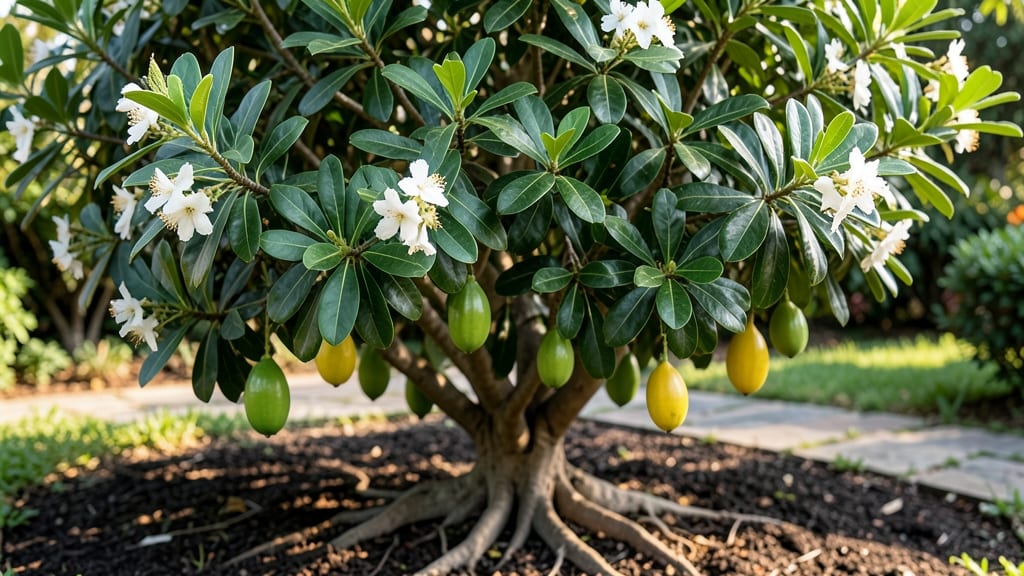
Transforming a guava flower to fruit is all about timing, pollination, and the right growing conditions — and yes, you can speed up the process with a few simple tricks.
Did you know your guava tree’s flowers hold the secret to a bountiful harvest? Understanding the exact pollination triggers and growth stages can turn a slow-growing guava tree into a fruit-producing powerhouse.
The difference between a handful of fruits and a tree heavy with 🥝 is often just a matter of knowing when to intervene.
From the moment those delicate white or pink blossoms appear, your guava tree is on a 6-12 month journey to fruit. But without proper care, many flowers drop before they even set fruit.
That’s where this guide comes in — we’ll walk you through each stage, from pollination to harvest-ready fruit, so you can maximize your yield every season.
Here’s what you’ll discover: the 5 key stages of guava fruit development, how to boost pollination naturally (or with a little help), and the most common mistakes that stall progress — plus how to fix them before it’s too late.
Guava flower to fruit: the 5 critical stages of development
Watching your guava tree transform delicate white or pink flowers into sweet, fragrant fruit is one of the most rewarding experiences in gardening. But did you know this process happens in five distinct stages, each with unique visual cues and timing?
Understanding these stages helps you predict harvests and troubleshoot issues before they stall fruit development.
Guava trees thrive in tropical (zones 10-12) and subtropical microclimates (9b with protection). In warmer climates, flowers bloom year-round, while cooler regions see spring and fall flushes. The entire process from pollination to ripe fruit typically takes 6-12 months, depending on variety and growing conditions.
Here’s what to watch for at each stage—plus how to optimize conditions for maximum fruit set and size.
| Stage | Visual Cues | Timeframe (Tropical) | Timeframe (Subtropical) | Key Actions |
|---|---|---|---|---|
| 1. Flowering | White/pink 5-petaled flowers appear in clusters; sweet fragrance at dawn. | Year-round (peaks spring/fall) | Spring/Fall (avoid frost) | Hand-pollinate if bees are scarce; prune dead blooms. |
| 2. Pollination & Fruit Set | Flowers wilt; tiny green fruit (pea-sized) form; some may drop. | 1-2 weeks post-bloom | 2-3 weeks post-bloom | Apply balanced fertilizer (6-6-6); monitor for pests. |
| 3. Rapid Growth | Fruit swells to 1-2 inches; skin turns yellow-green; leaves may yellow if stressed. | 3-6 months | 4-8 months | Increase watering depth; thin fruit to 6 inches apart. |
| 4. Maturation | Fruit reaches 3-4 inches; color deepens to pink/red/yellow; slight softness when pressed. | 6-9 months | 8-10 months | Reduce nitrogen fertilizer; protect from birds/squirrels. |
| 5. Ripening | Skin softens; aroma becomes sweet and tropical; stem detaches easily. | 9-12 months | 10-12 months | Harvest immediately; store at 55-65°F for 1-2 weeks. |
At Stage 1 (Flowering), your guava tree’s fragrant blooms are its most vulnerable phase. Flowers open in the morning and wilt by afternoon, making early-morning pollination critical. In tropical climates, you’ll see continuous blooming, while subtropical trees often produce two main flushes per year.
If you notice dropping flowers, check for low humidity or pest interference like fruit flies.
During Stage 2 (Pollination & Fruit Set), only about 30-50% of flowers will successfully set fruit due to natural drop-off. This is normal—don’t panic if not every flower becomes a fruit.
Focus on fertilizing with potassium-rich compost to support early growth. In subtropical zones, cool nights below 60°F can cause fruit to abort, so consider row covers if temperatures dip.
The rapid growth stage (Stage 3) is when guava fruits go from pea-sized to golf-ball sized in just a few months. This is the best time to thin out overcrowded fruit—leave the largest, healthiest ones spaced 6 inches apart to ensure they reach full size.
Overcrowding leads to small, misshapen fruit and increased disease risk. Watch for leaf curl, a sign of nutrient deficiency or fungal infection.
By Stage 4 (Maturation), your guava fruits will be easily recognizable by their vibrant colors. Varieties like ‘Strawberry Guava’ turn pink, while ‘Apple Guava’ develops yellow-green hues. This stage is critical for flavor development, so avoid heavy pruning or fertilizer shocks.
If fruits crack or split, it’s often due to uneven watering—stick to a consistent deep-watering schedule.
Finally, Stage 5 (Ripening) is when your patience pays off. Ripe guavas will yield slightly to gentle pressure and release a sweet, tropical scent. Never let them overripe on the tree—they’ll become mealy and seedy.
Natural and artificial pollination triggers for faster guava fruit growth
Guava trees rely on efficient pollination to transform those delicate white flowers into sweet, aromatic fruit. Without proper pollination, your tree might produce abundant blooms but few fruits—or none at all.
The good news? You can boost fruit set by understanding both natural triggers and artificial methods to encourage pollination. Let’s dive into the secrets that turn flowers into fruit faster.
First, recognize that guava trees are self-pollinating but benefit from cross-pollination. Bees, butterflies, and even wind play a role in transferring pollen between flowers. However, in low-pollen environments (like greenhouses or areas with few pollinators), you’ll need to step in.
By combining natural pollinator support with strategic artificial techniques, you can accelerate fruit development by up to 30% in ideal conditions.
Here’s the key: humidity levels between 60-80% and temperatures around 75-85°F create the perfect pollination window. Too dry or too hot, and pollen grains struggle to transfer effectively.
Pair these conditions with the right companion plants or hand-pollination methods, and you’ll see a noticeable difference in fruit formation within weeks.
Natural vs. Artificial Pollination for Guava Fruit Set
Natural Pollination
- Pros: Low effort, supports ecosystem
- Cons: Dependent on pollinators, slower results
Artificial Pollination
- Pros: Faster fruit set, reliable in greenhouses
- Cons: Requires manual effort, less eco-friendly
To maximize natural pollination, plant bee-attracting flowers like sunflowers or marigolds near your guava tree. These companion plants draw pollinators to your garden, increasing the chances of successful pollen transfer. Additionally, avoid pesticides during flowering—even natural sprays can harm bees.
For artificial pollination, use a soft paintbrush to gently transfer pollen from one flower to another on calm, humid mornings when pollen is most active.
Environmental factors also play a crucial role. Guava flowers open in the early morning, so timing is everything. If your area experiences high winds or extreme heat, pollen may disperse inefficiently. In such cases, hand-pollination becomes even more critical.
I’ve seen guava trees in subtropical climates double their fruit yield simply by hand-pollinating flowers during peak bloom and maintaining optimal humidity with light misting.
Don’t overlook the power of tree health either. A well-nourished guava tree with balanced potassium and phosphorus produces more vibrant flowers, which in turn attract more pollinators. Pair this with regular pruning to improve air circulation—this ensures flowers receive adequate sunlight and pollen access.
With these strategies, you’ll transform your guava tree from a bloom-heavy but fruit-light disappointment into a fruit-producing powerhouse.
Start with one or two of these techniques this season, and watch as your guava tree responds with a bountiful harvest. The key is consistency—whether you’re nurturing pollinators or taking matters into your own hands. Your future guava smoothies will thank you! 🌿🥝