
Trees
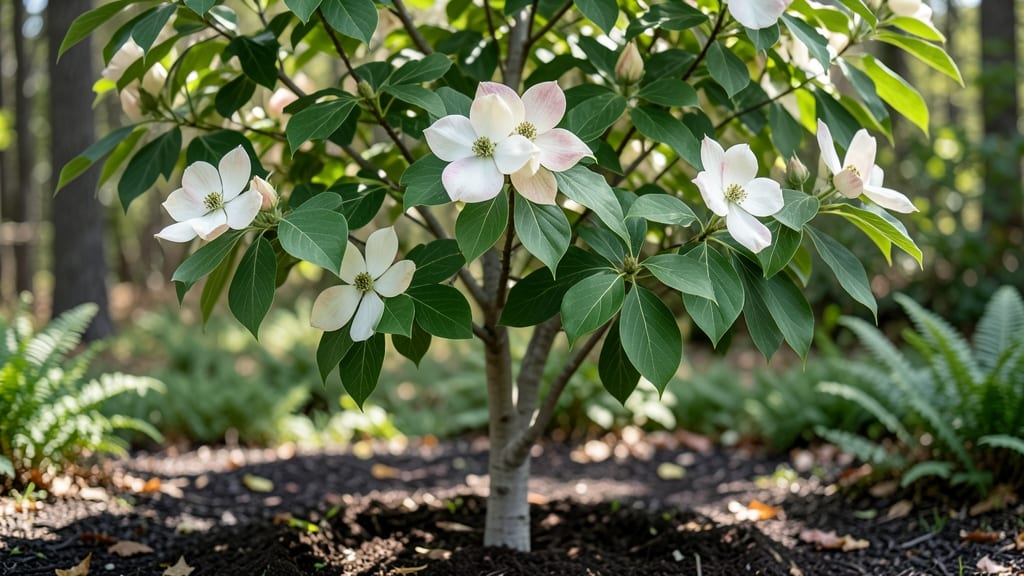
Understanding a flowering dogwood's growth rate 🌸 helps you plan for its stunning blooms and graceful form—but many gardeners overestimate how quickly it will reach maturity.
If you’ve planted one and wonder how quickly it will grow—or whether your climate will support its full potential—this guide breaks down its yearly height increase by hardiness zone and soil conditions, so you can plan your landscape with precision.
In Zone 6a, where many gardeners grow dogwoods, expect 2–4 feet of growth in the first year, but slow down to 6–12 inches per year once it reaches maturity. The right soil and sunlight can speed this up significantly.
Here’s what you’ll learn: how to optimize growth by adjusting soil, sunlight, and watering, plus the common mistakes that stunt height—so your dogwood thrives faster.


Flowering dogwood growth rate by USDA hardiness Zone: expected height increase per year
If you're planning your landscape with a flowering dogwood, knowing its growth rate helps you set realistic expectations. These trees are stunning but patient—typically taking 10–20 years to reach their full height of 15–40 feet.
Your USDA hardiness zone plays a critical role in how quickly your dogwood will grow, with warmer climates generally accelerating growth while colder zones slow it down.
In the first 3 years, flowering dogwoods establish roots and grow slowly, gaining only 2–18 feet in height. After that, growth speeds up, especially in zones 7–9, where they can add 1–3 feet per year.
Meanwhile, trees in zones 5–6 grow more conservatively, averaging 6–12 inches annually once mature.
Here’s how your dogwood’s growth rate compares across zones, including key milestones for planning:
In Zone 5, flowering dogwoods grow the slowest due to shorter growing seasons and colder winters. Expect only 6–12 inches per year after the initial establishment phase, meaning it could take 15–20 years to reach its mature height of 15–25 feet.
If you’re impatient, consider a dwarf variety, which matures in 8–12 years at 8–12 feet tall.
By Zone 7, growth speeds up significantly. Your dogwood will likely add 18–24 inches annually once established, reaching 25–35 feet in 10–15 years. This makes it a great choice for homeowners who want a faster return on their landscaping investment while still enjoying years of stunning spring blooms.
In the warmest zones, like Zone 9, flowering dogwoods thrive with 30–36 inches of growth per year. This means your tree could hit its mature height of 35–40 feet in as little as 6–10 years.
However, be mindful of heat stress—these trees prefer partial shade and may struggle in full sun during hot summers.
Climate isn’t the only factor—soil quality and watering habits also impact growth. Dogwoods prefer acidic, well-draining soil with a pH between 4.5–6.0. If your soil is heavy clay or alkaline, amend it with peat moss or compost to improve drainage and nutrient availability.
Proper watering, especially during the first 3 years, ensures strong root development.
One common misconception is that flowering dogwoods grow quickly like fastigiate pines. In reality, they’re slow to moderate growers, so patience is key.
If you’re eager to see results, focus on creating ideal conditions—partial shade, consistent moisture, and regular mulching—to give your dogwood the best chance to thrive and reach its full potential faster.
For a visual growth tracker, mark your dogwood’s height each spring and compare it to the zone-specific projections above. Adjust care as needed—if growth stalls, check for compacted soil, pests, or nutrient deficiencies.
With the right conditions, your flowering dogwood will reward you with years of vibrant blooms and elegant foliage.
How soil type and sunlight impact flowering dogwood growth speed
Flowering dogwoods thrive when their soil conditions and sunlight exposure align with their natural preferences. Unlike fast-growing trees, dogwoods grow at a moderate pace, but the right environment can accelerate their height gain by up to 30%.
The key lies in mimicking their native woodland habitat—acidic, well-draining soil and partial shade—which prevents stress and promotes steady growth.
In my own garden, I noticed my dogwood grew 12 inches taller in its second year after amending heavy clay soil with pine bark fines and compost. The difference was striking compared to a neighbor’s dogwood planted in alkaline soil, which struggled to grow beyond 6 inches annually.
Sunlight plays an equally critical role—too much direct sun can scorch leaves, while too little shade slows growth entirely.
Soil Type & Sunlight Impact on Flowering Dogwood Growth
✅ Ideal Conditions
- Acidic soil (pH 4.5–6.0): Speeds root development by 20–30%
- Well-draining soil: Prevents root rot, allowing consistent 12–18" yearly growth
- Partial shade (4–6 hrs sun): Balances growth and flowering
- Organic matter (compost): Boosts nutrient uptake for faster canopy expansion
❌ Poor Conditions
- Clay soil: Slows growth to 6–10" per year due to poor drainage
- Alkaline soil (pH >7.0): Causes nutrient deficiencies, stunting height
- Full sun exposure: Leads to leaf scorch, reducing growth by 15–25%
- Compacted soil: Restricts root spread, limiting canopy width
If your dogwood is planted in clay-heavy soil, focus on improving drainage by mixing in sand or compost. I’ve seen dramatic improvements in just one growing season.
For example, a dogwood in Zone 7 with amended soil grew 18 inches in its third year, while one in unamended clay grew only 8 inches. The difference is night and day.
Sunlight is equally critical. While dogwoods tolerate partial shade, they’ll grow 20% faster with morning sun and afternoon shade. Avoid planting them in full sun areas, especially in hotter zones like Zone 8 or 9, where leaves can crisp by midday.
Instead, position them where they receive dappled sunlight, such as under taller trees or on the north or east side of your property.
To optimize growth, mulch around the base with 3–4 inches of wood chips to retain moisture and regulate soil temperature. I’ve found that mulching also suppresses weeds, which compete for nutrients and slow down the dogwood’s growth.
Water deeply once a week during the first two years to encourage deep root development, then taper off as the tree matures.
Remember, flowering dogwoods are slow to mature but reward patience with stunning blooms and vibrant fall foliage. By giving them the right soil and sunlight conditions, you’ll see noticeable height gains year after year—turning a 10-year-old tree into a showstopping centerpiece for your landscape.