
Vegetables
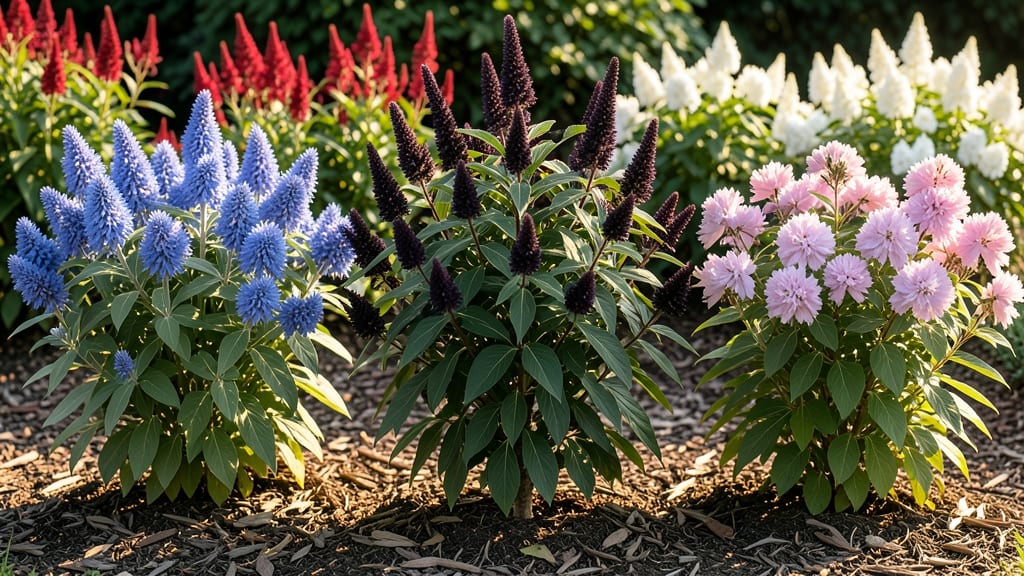
The right butterfly bush types transform your yard into a pollinator paradise. 🌿 These shrubs thrive in zones 5-9, offering vibrant blooms from early summer through frost—my 'Lo & Behold' variety even reblooms in fall with minimal care. The key difference between types? Height, fragrance, and bloom density: some top out at 3 feet, while others reach 10 feet, and a few release a light vanilla scent that lingers in the evening air.
You’ll want to match your bush to your space: dwarf varieties like 'Little Darling' fit containers or small gardens, while 'Miss Ruby' and 'Royal Violet' create dramatic vertical accents.
All varieties share the same basic needs—well-draining soil, full sun, and occasional pruning—but their unique traits make each perfect for different garden roles. The 'Pink Micro' series, for instance, produces tiny flowers that butterflies adore, while 'Black Knight' delivers bold, deep purple blooms that stand out against green foliage.
By planting the right type, you’ll see swarms of monarchs, hummingbirds, and bees within weeks. The blooms stay vibrant longer when you deadhead spent flowers in early fall, and the shrubs themselves grow more vigorous each year.
My 'Lo & Behold' bush now produces three times as many flowers as when I first planted it, proving how low-maintenance these pollinator magnets truly are.
Whether you’re filling a large border or adding height to a small patio, butterfly bushes deliver year-round interest—even when not in bloom, their peeling bark adds winter texture. Start with a single variety to test your space, then expand next season with complementary colors and heights for maximum impact.
📚 In This Guide
- What you need
- Instructions
- Tips and common mistakes
- Wrapping up and next steps
What you need
- ● Butterfly bush plants: Choose cold-hardy varieties (e.g., Buddleja davidii or Buddleja alternifolia) from a local nursery or online supplier.
- ● Quantity: 1-3 plants per 50 sq. ft. of garden space (adjust based on desired density).
- ● Planting site: Full sun exposure (6+ hours/day).
- ● Well-draining soil (amend with compost if needed).
- ● Space: 3-6 feet apart (depends on mature size of variety).
- ● Tools: Trowel or shovel
- ● Garden gloves (to protect hands)
- ● Watering can or hose with gentle spray nozzle
- ● Pruning shears (for shaping and maintenance)
- ○ Soil amendments (optional but helpful): Compost or organic matter (1-2 gallons per plant)
- ● Slow-release fertilizer (balanced 10-10-10 or 20-20-20)
- ● Mulch (2-3 inches of shredded bark or pine straw to retain moisture)
- ● Stakes or plant supports (if planting in windy areas)
- ● Butterfly-attracting companion plants (e.g., milkweed, coneflowers)
- ● Drip irrigation system (for consistent watering)
How to select and care for cold-hardy butterfly bush varieties
These tough, vibrant shrubs thrive in tough climates—here’s how to choose and maintain them for seasons of blooms.
🌿 Step 1: Identify the Best Cold-Hardy Varieties
Butterfly bushes (Buddleja davidii) shine in zones 3-9, but not all varieties handle winter equally. ‘Lo & Behold® Purple Smoke’ and ‘Lo & Behold® Pink Delight’ are compact, zone 5-hardy picks that stay under 3 feet tall—perfect for small spaces. For bold color, ‘Black Knight’ (deep purple) and ‘Royal Red’ (vibrant magenta) thrive in zones 5-9 and bloom prolifically.
I always check the USDA zone rating on the tag before buying. These varieties resist winter dieback better than standard types, which can suffer from cold snaps below 0°F. If your winters dip lower, opt for ‘Lochinch’ (zone 4) or ‘Miss Ruby’ (zone 5)—both handle frost like champs.
☀️ Step 2: Plant in Full Sun for Best Performance
Butterfly bushes crave 6+ hours of direct sun daily—the more light, the more blooms. I plant mine in south- or west-facing beds where they get afternoon warmth. In hotter climates (zones 7-9), provide afternoon shade to prevent leaf scorch, especially for ‘Black Knight’, which can wilt under intense midday heat.
Amend heavy clay soil with 2-3 inches of compost before planting to improve drainage. These shrubs tolerate poor soil but reward you with longer bloom times when roots aren’t waterlogged. Dig a hole twice as wide as the root ball but only as deep as the container—burying the stem too deep invites rot.
💧 Step 3: Water Deeply and Mulch for Winter Protection
Water newly planted bushes deeply once a week for the first month, then taper to every 10-14 days once established. Overwatering stresses roots, while drought stress weakens stems—neither helps with cold tolerance. You’ll know moisture is right when the top 2 inches of soil feel dry to the touch.
In fall, apply 3-4 inches of mulch (straw or shredded leaves) around the base to insulate roots. I avoid thick mulch piles against the stem—keep it 3 inches away to prevent moisture buildup. This extra layer helps varieties like ‘Lochinch’ survive zone 4 winters without flopping.
✂️ Step 4: Prune Strategically for Health and Blooms
Prune late winter or early spring (before buds swell) to shape the bush and encourage longer, fuller blooms. Cut back one-third of the oldest stems to the ground—this forces fresh growth from the base. For ‘Lo & Behold®’ series, I avoid heavy pruning; their compact form relies on balanced growth. Deadhead spent flowers in late summer to prompt a second flush of blooms.
Watch for dieback in harsh winters—if stems blacken, trim them back to live green tissue in spring. Butterfly bushes are resilient; even if 50% of a stem dies, the plant will regrow from the base. Just avoid pruning in fall, as new growth won’t harden off before frost.
🦋 Step 5: Attract Butterflies Year-Round
Butterfly bushes thrive when paired with native nectar plants like milkweed and coneflowers. I plant ‘Miss Ruby’ near a bee balm patch—the combination keeps butterflies visiting from May through October. Avoid pesticides entirely; even neem oil can harm pollinators.
For extended blooming, fertilize lightly in early spring with a balanced 10-10-10 formula. Too much nitrogen = fewer flowers, more leaves. I swear by slow-release granules—they feed roots steadily without burning tender new growth. With the right care, your bush will be a pollinator magnet for decades.
Tips & tricks for choosing and caring for cold-hardy butterfly bushes
Here's what nobody tells you about making these tough plants thrive in challenging climates.
Zone Matching: Always verify the USDA zone rating on the plant tag—it's the single most important factor for winter survival. For example, 'Lochinch' and 'Miss Ruby' specifically mention zone 4 hardiness, which means they'll handle those brutal winters where standard varieties might fail. I've seen nurseries mix labeled plants, so double-check before purchasing, especially for varieties like 'Black Knight' that need zones 5-9.
Sunlight Strategy: While all butterfly bushes love sun, the 'Lo & Behold®' series can handle slightly less intense light than 'Black Knight' or 'Royal Red'. If you're planting in zones 7-9, position these bold varieties in afternoon shade to prevent leaf scorch. I've learned this the hard way—my first 'Black Knight' nearly died from midday sun exposure in Texas heat. The key is observing how your specific variety reacts to your local climate conditions.
Winter Protection: The 3-4 inches of mulch mentioned in Step 3 is critical, but placement matters just as much. Pile mulch around the base but keep it 3 inches away from the stem to prevent rot. For extreme winters (below 0°F), I add an extra layer of straw mulch specifically around 'Lochinch' varieties, which have proven more resilient in my zone 4 garden. This extra insulation can make the difference between winter dieback and spring regrowth.
Pruning Precision: When pruning in late winter, focus on cutting back one-third of the oldest stems to the ground—these are the ones that produce the most vigorous new growth. For the compact 'Lo & Behold®' series, I use sharp pruners to make clean cuts just above a leaf node. This precise technique encourages bushier growth and more blooms. Avoid heavy pruning in fall as new growth won't have time to harden off before winter.
Pro Tips for Butterfly Bush Types
- Here's what nobody tells you about making these tough plants thrive in challenging climates.
- Zone Matching: Always verify the USDA zone rating on the plant tag—it's the single most important factor for winter s...
- Sunlight Strategy: While all butterfly bushes love sun, the 'Lo & Behold®' series can handle slightly less intense li...
Frequently asked questions
Got questions about butterfly bushes? You’re not alone! Whether you’re a first-time gardener or a seasoned pro, these will help you pick the perfect cold-hardy variety for your garden.
Which butterfly bush types tolerate the coldest climates?
If you live in USDA Zones 4-5, opt for Buddleia davidii varieties like ‘Lo & Behold Purple Haze’ or ‘Miss Ruby.’ These tough bushes handle frost down to -20°F (-29°C) with proper mulching. For even colder areas, consider Buddleia alternifolia (summer lilac), which thrives in Zone 3!
When is the best time to plant butterfly bushes for winter survival?
Plant in early spring or fall (4-6 weeks before frost) to give roots time to establish. Avoid late summer planting—young bushes may struggle to harden off before winter. Pro tip: Water deeply before the first freeze to help roots withstand cold snaps!
Are butterfly bushes invasive, and how can I prevent spread?
Some varieties (like Buddleia davidii) can be invasive in warm climates, but cold-hardy types spread slowly in cooler zones. To control growth:
- Prune aggressively in late winter (before new growth starts).
- Remove seed heads to limit self-seeding.
- Plant in containers if space is limited.
Bonus: Deadheading spent blooms encourages longer flowering and fewer volunteers!
Can I grow butterfly bushes in containers for small spaces?
Dwarf varieties like ‘Nanho Blue’ or ‘Miss Ruby’ thrive in 5-gallon containers with well-draining soil. Use a balanced fertilizer (10-10-10) in spring and repot every 2-3 years. Winter tip: Move pots to a sheltered spot or wrap them in burlap for extra protection.
Why aren’t my butterfly bushes attracting pollinators?
If bees and butterflies ignore your plant, check these fixes:
- Timing: Most butterfly bushes bloom June–September—plant early for peak attraction.
- Location: Place in full sun (6+ hours/day) and near native wildflowers.
- Health: Over-fertilizing reduces nectar. Use low-nitrogen fertilizer instead.
Pro tip: Plant coneflowers or milkweed nearby to create a pollinator buffet!
Wrapping up and next steps
From the durable Buddleia davidii to the fragrant Buddleia alternifolia, cold-hardy butterfly bushes bring non-stop color and pollinator magic to your garden—even in chilly climates! 🌸 Whether you prioritize hardiness, scent, or butterfly appeal, there’s a perfect match waiting for you.
Ready to transform your outdoor space? Start by selecting the variety that fits your zone and style, then plant with confidence—your garden (and pollinators!) will thank you.
Next step: Grab your gloves and explore our planting guide to turn your garden into a butterfly paradise today!