
Fertilization
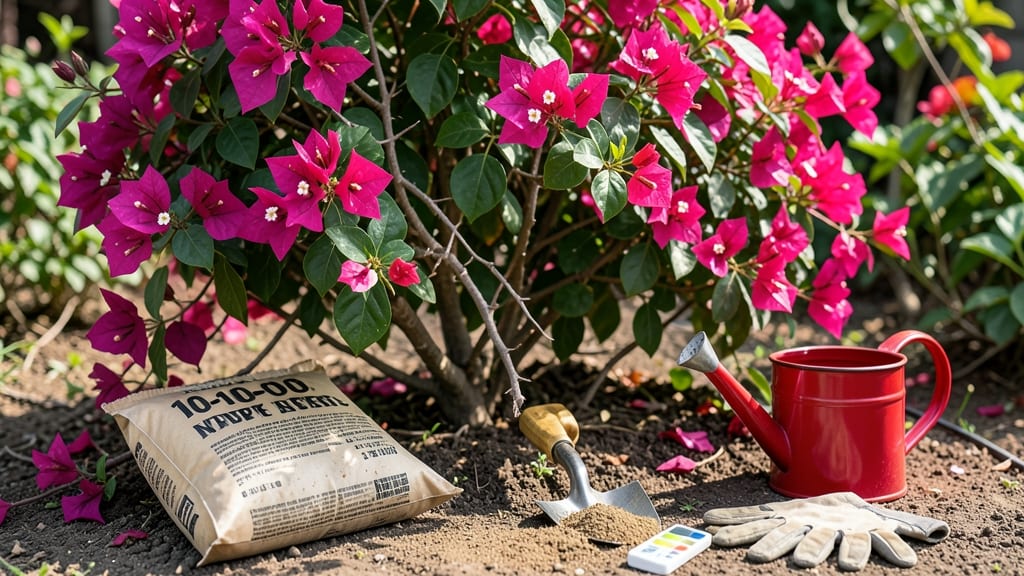
To get your bougainvillea 🌸 flowering like a vibrant tropical explosion, you need the right fertilizer—and timing it perfectly is the game-changer.
Struggling to get your bougainvillea to burst into vibrant, long-lasting blooms? The secret lies in a precise fertilizer schedule tailored to its flowering needs—and doing it wrong can actually kill those colorful bracts before they even appear.
Most gardeners overdo it with nitrogen-heavy feeds, sending their bougainvillea into leafy overgrowth instead of show-stopping blooms. The trick is a low-nitrogen, high-phosphorus-potassium blend, applied just as the buds begin to form.
Below, I break down the exact fertilizer types to use, the seasonal schedule that keeps blooms coming year-round, and how to spot the warning signs of over-fertilizing before it’s too late.

Best fertilizers for bougainvillea flowering: types, ratios, and when to use them
Your bougainvillea’s vibrant bracts (the colorful parts we call "flowers") need a precise nutrient balance to thrive. Too much nitrogen leads to leafy growth at the expense of blooms, while phosphorus and potassium are the real bloom boosters.
The key is choosing the right fertilizer and applying it at the right time—seasonal timing matters just as much as the formula.
Bougainvillea responds best to low-nitrogen, high-phosphorus-potassium fertilizers with micronutrients like magnesium, calcium, and iron. Organic options like fish emulsion or bone meal work well, but synthetic bloom boosters can deliver faster results.
The NPK ratio should lean toward 5-10-10 or 7-7-7 during active growth, shifting to 0-10-20 when flowering peaks.
Let’s break down your options with a comparison table of the best fertilizers for bougainvillea, including organic and synthetic choices, their NPK ratios, and ideal application times. This will help you pick the perfect formula for your plant’s needs.
| Fertilizer Type | NPK Ratio | Best For | Application Time | Frequency |
|---|---|---|---|---|
| Fish Emulsion (Organic) | 5-1-1 | Early Growth | Spring | Every 4 weeks |
| Bone Meal (Organic) | 3-15-0 | Flowering Boost | Late Spring/Summer | Every 6 weeks |
| 7-7-7 Balanced (Synthetic) | 7-7-7 | Year-Round Growth | Spring-Fall | Every 6 weeks |
| 10-10-10 Bloom Booster | 10-10-10 | Peak Flowering | Summer-Fall | Every 4 weeks |
| 0-10-20 (High Potassium) | 0-10-20 | Late Summer Blooms | Late Summer | Every 8 weeks |
| Compost Tea (Organic) | Varies (Low N) | Soil Health | Year-Round | Monthly |
For organic options, fish emulsion and bone meal are my top picks. Fish emulsion provides a gentle nitrogen kick to jumpstart growth in spring, while bone meal delivers a phosphorus punch to encourage root development and flowering. Both break down slowly, reducing the risk of nutrient burn.
If you prefer synthetic fertilizers, a 7-7-7 or 10-10-10 formula works year-round, but switch to a high-potassium option like 0-10-20 when your bougainvillea is in full bloom. Potassium helps strengthen cell walls, leading to longer-lasting bracts and better color intensity.
Don’t overlook micronutrients like magnesium and iron. These are critical for preventing yellowing leaves (a common issue called chlorosis). A chelated iron supplement can work wonders if your bougainvillea’s foliage starts turning pale between the veins—this often happens in alkaline soils.
Timing
Seasonal bougainvillea fertilizing schedule: month-by-month bloom-boosting plan
Your bougainvillea thrives when you align its fertilizer schedule with its natural growth cycles. Unlike many plants, bougainvillea blooms best when fed phosphorus and potassium—not nitrogen—which is why a balanced 7-7-7 or 10-10-10 formula works wonders.
The key is timing: too much fertilizer in winter can burn roots, while skipping spring feeding stunts blooms. Let’s break down the perfect month-by-month plan to keep your plant bursting with color year-round.
Start with a soil test to check pH (ideal: 6.0–7.5). If your soil is nutrient-poor, amend it with compost before applying fertilizer. For potted bougainvillea, refresh the soil every 2–3 years to prevent salt buildup from fertilizers.
Always water thoroughly before and after feeding to prevent root burn—a common mistake that kills blooms faster than you’d think.
🌸 Monthly Bougainvillea Fertilizer Guide
Watch for signs of over-fertilization, like yellowing leaves, leaf drop, or a white crust on soil. If you see these, flush the soil with water and hold off on feeding for 4–6 weeks.
Under-fertilized bougainvillea shows sparse blooms and slow growth—adjust your schedule if you notice these after 2–3 months. For organic options, try fish emulsion (diluted to 10-10-10 strength) or bone meal for phosphorus.
Pro tip: Pair your fertilizer schedule with regular pruning in late winter. Cut back 1/3 of the plant’s growth to encourage bushier, more vibrant blooms. This also improves air circulation, reducing fungal risks from overwatering or dense foliage. Pair pruning with your first spring feeding for the best results.
Remember, bougainvillea blooms on new wood, so consistent feeding in spring and summer keeps those colorful bracts coming. Stick to this schedule, and you’ll enjoy year-round blooms—even in cooler months with the right adjustments. Happy growing! 🌷